
How to Paint Dragon Wings on Miniatures (Realistic Membrane & Wing Texture Guide)

Dragon wings are often the centerpiece of a miniature. They dominate the silhouette, frame the entire model, and naturally draw the viewer’s attention. A beautifully painted pair of wings can transform an ordinary dragon into a stunning display piece.
Many painters focus heavily on the scales while rushing through the wings. However, realistic dragon wings contain subtle color transitions, translucent membranes, weathering, and dramatic lighting that make the creature feel truly alive.
In this guide, you’ll learn how to paint convincing dragon wings using layering, glazing, and texture techniques suitable for dragons of every color and style.
Understanding Dragon Wing Anatomy

Dragon wings are inspired by bat wings.
The bones provide structure, while the membrane stretches tightly between each finger-like support. Because the membrane is thinner than scales, it reflects light differently and often appears slightly translucent.
Think about where the light naturally hits. Raised bones receive the brightest highlights, while the stretched membrane transitions smoothly between light and shadow.
Understanding this structure makes painting much easier.
Choosing Your Color Palette

The wing color should complement the rest of your dragon.
Popular combinations include:
- Black → Dark Grey
- Dark Red → Orange
- Green → Yellow Green
- Blue → Cyan
- Purple → Magenta
- Brown → Tan
Using two or three closely related colors creates much more believable wings than relying on a single paint.
Painting the Base Coat

Start by applying a smooth base coat across the entire wing.
Use several thin layers to preserve all the sculpted wrinkles, folds, and veins.
Keep the color consistent while avoiding thick paint that could hide the fine membrane texture.
A clean foundation is essential for smooth blending later.
Blending the Wing Membrane

The membrane should appear soft and organic.
Layer progressively lighter colors toward the areas where light naturally strikes. Keep the deepest shadows near the wing bones and inside folds.
Apply transparent glazes between each layer to soften transitions.
Large, gradual blends make dragon wings look far more realistic than sharp color changes.
Highlighting the Wing Bones

The skeletal structure defines the entire wing.
Use lighter tones to highlight the bones running from the wing joint to each tip.
Concentrate your brightest highlights on the upper edges that catch the strongest light.
This creates the illusion of thickness and gives the wings impressive depth.
Adding Veins and Weathering

Older dragons rarely have perfect wings.
Thin scratches, tiny tears, faded edges, and darker veins add years of history to the creature.
Use subtle glazes to darken the folds while keeping the membrane itself relatively smooth.
Less is more—small imperfections often have the biggest visual impact.
Painting Magical Dragon Wings

Fantasy dragons allow endless creativity.
Arcane dragons can feature glowing blue veins.
Fire dragons may have orange and yellow membranes that appear illuminated from within.
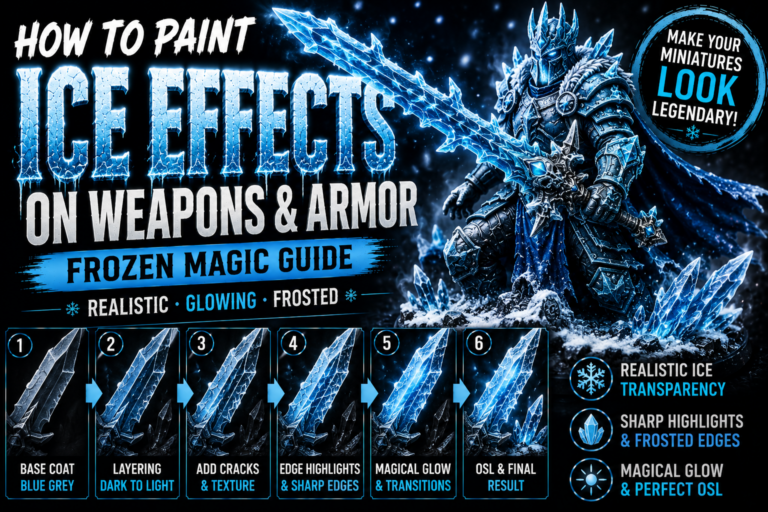
Ice dragons benefit from icy blue highlights and frosted edges.
Whatever style you choose, keep the lighting consistent across the entire miniature.
Common Mistakes to Avoid

Avoid these common mistakes:
- Using one flat color across the wing.
- Ignoring the wing bones.
- Creating harsh blends.
- Over-highlighting the membrane.
- Painting every wing section identically.
- Forgetting subtle weathering.
Natural variation gives dragon wings their realism.
Final Thoughts
Dragon wings deserve as much attention as the scales covering the body. By combining smooth blending, carefully placed highlights, subtle weathering, and thoughtful color choices, you can turn a dragon into the centerpiece of your miniature collection.
Whether you’re painting a terrifying red dragon, an elegant silver wyrm, or an ancient black dragon, these techniques will help your wings look alive, powerful, and unforgettable.
Frequently Asked Questions
What’s the easiest dragon wing color for beginners?
Dark grey blended into lighter grey is one of the most forgiving combinations and works with almost every dragon.
Should the wing membrane be lighter than the body?
Usually, yes. The membrane is thinner than scales and often reflects more light.
How do I make dragon wings look realistic?
Focus on smooth blends, highlighted wing bones, and subtle weathering rather than using a single flat color.
Can I add glowing effects to dragon wings?
Absolutely. Magical dragons look incredible with glowing veins, enchanted membranes, or subtle OSL effects.
What’s the biggest mistake when painting dragon wings?
Treating the entire wing as one flat surface instead of emphasizing the bones, membrane, and natural light transitions.
If you would like free D&D STL miniatures, visit our homepage and download yours now:https://echoartstudios.net/