
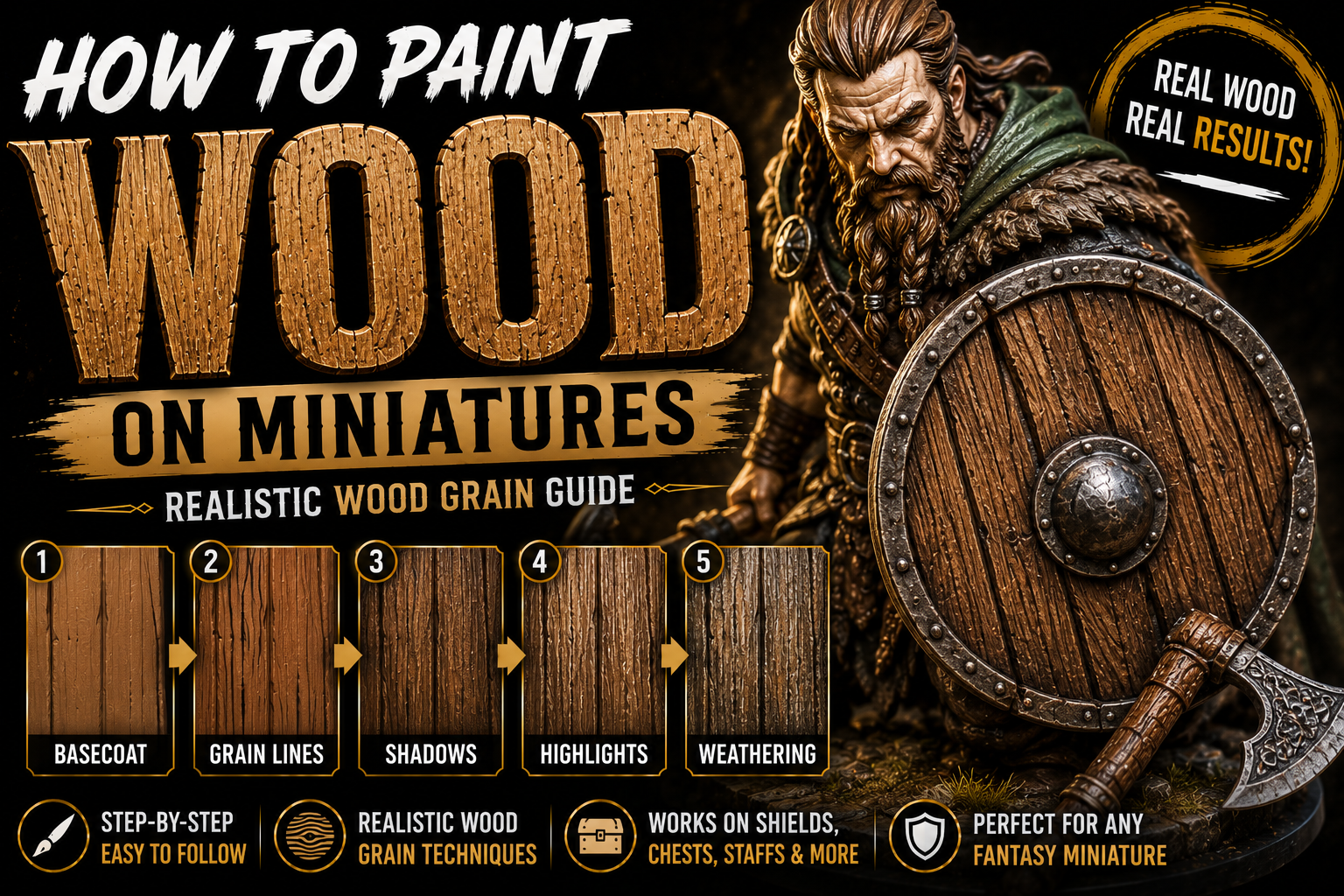
How to Paint Wood on Miniatures (Realistic Wood Grain Painting Guide)

Wood appears everywhere in fantasy miniatures. From shields and spear shafts to barrels, treasure chests, carts, staffs, and ruined buildings, realistic wood instantly adds warmth and authenticity to a model.
Many painters simply cover wooden surfaces with brown paint and move on. However, real wood has grain, subtle color variation, scratches, weathering, and years of natural wear that tell a story.
In this guide, you’ll learn how to paint realistic wood grain, aged timber, polished wood, and weathered planks using techniques that work for every fantasy miniature.
Understanding Wood Texture
Before painting, spend a few minutes studying real wood.
Every plank has unique grain patterns that flow in one direction. Fresh wood appears richer and smoother, while older wood develops cracks, faded colors, knots, and rough textures.
Wood is never perfectly uniform. Even a polished shield contains subtle differences in color and tone.
Observing these small details will dramatically improve your miniature painting.
Choosing Your Wood Colors

Different woods create different moods.
Popular combinations include:
- Light Oak
- Walnut Brown
- Dark Mahogany
- Weathered Grey Wood
- Red Brown
- Golden Oak
Using two or three browns together creates much more realistic wood than relying on a single paint color.
Painting the Base Coat
Begin with a smooth mid-brown base coat.
Apply multiple thin layers until the surface is evenly covered while preserving every sculpted detail.
Avoid starting too dark or too light. A medium brown gives plenty of room for both shadows and highlights later.
Patience during the base coat makes the grain much easier to paint.
Creating Realistic Wood Grain

Wood grain is what transforms brown paint into believable timber.
Using a fine detail brush, paint thin, irregular lines following the direction of the wood.
Allow some lines to split, curve, and fade naturally. Avoid perfectly straight or evenly spaced strokes.
Afterward, glaze lightly with your base color to soften the grain and blend it into the surface.
Adding Shadows and Highlights

Apply darker brown into deep recesses between planks or around metal fittings.
Then build lighter highlights along raised grain, edges, and worn areas using tan or light beige.
Keep the brightest highlights small and controlled.
This combination gives wooden surfaces convincing depth.
Painting Weathered Wood

Old wood tells a story.
Apply thin grey-brown glazes to fade the original color while preserving the grain underneath.
Small scratches, cracks, and faded highlights suggest years of exposure to rain, sunlight, and harsh weather.
This technique works beautifully for ruined buildings, carts, fences, and abandoned structures.
Painting Polished Wood

Not every wooden object should look ancient.
Royal shields, wizard staffs, furniture, and ceremonial weapons often feature polished wood.
Use smoother blends, richer brown tones, and fewer scratches.
Finish with carefully placed highlights to create the illusion of a clean, well-maintained wooden surface.
Common Mistakes to Avoid

Avoid these common mistakes:
- Using only one brown color.
- Painting perfectly straight grain lines.
- Making every plank identical.
- Applying highlights that are too bright.
- Forgetting subtle weathering.
- Using thick paint that hides texture.
Natural variation is the key to realistic wood.
Final Thoughts
Realistic wood painting is all about observation and restraint. By combining multiple brown tones, delicate grain lines, soft glazes, and carefully placed highlights, you can transform simple wooden objects into convincing pieces of fantasy craftsmanship.
Whether you’re painting a Viking shield, an ancient treasure chest, a wizard’s staff, or an abandoned tavern, these techniques will make every wooden surface look richer and more believable.
Frequently Asked Questions
What’s the easiest wood color for beginners?
Medium brown is the most forgiving because it provides plenty of room for shadows and highlights.
How do I paint realistic wood grain?
Use a fine brush to paint thin, irregular lines following the natural direction of the wood, then soften them with transparent glazes.
Should old wood be grey?
Partially. Weathered wood often develops subtle grey tones while still retaining hints of its original brown color.
Can I use these techniques on shields and staffs?
Absolutely. They work perfectly on shields, spear shafts, staffs, barrels, treasure chests, carts, and wooden terrain.
What’s the biggest mistake when painting wood?
Treating it as a flat brown surface without adding grain, variation, or weathering.
If you would like free D&D STL miniatures, visit our homepage and download yours now:https://echoartstudios.net/