How to Paint Bones and Skeletons on Miniatures (Realistic Bone Painting Guide)

Skeletons, skulls, and ancient bones are among the most iconic elements in fantasy miniatures. From undead armies and necromancers to dragon trophies and dungeon terrain, realistic bone effects instantly add age, atmosphere, and storytelling to a model.
The biggest mistake beginners make is painting every bone pure white. In reality, bone is made up of subtle ivory, beige, brown, and grey tones that become richer with age and weathering.
In this guide, you’ll learn how to paint realistic bones and skeletons using simple layering, glazing, and weathering techniques suitable for every fantasy miniature.
Understanding Bone Color

Real bone is surprisingly colorful.
Fresh bone has warm ivory tones, while older bones become darker, stained, and slightly grey or brown after years of exposure.
Cracks, porous surfaces, and accumulated dirt all contribute to a realistic appearance.
Looking at museum skeletons or animal skulls provides excellent painting references.
Choosing Your Color Palette

A realistic bone palette often includes:
- Ivory
- Bone White
- Beige
- Khaki
- Light Brown
- Dark Brown
- Soft Grey
Using multiple warm neutrals creates much more convincing bone than relying on pure white.
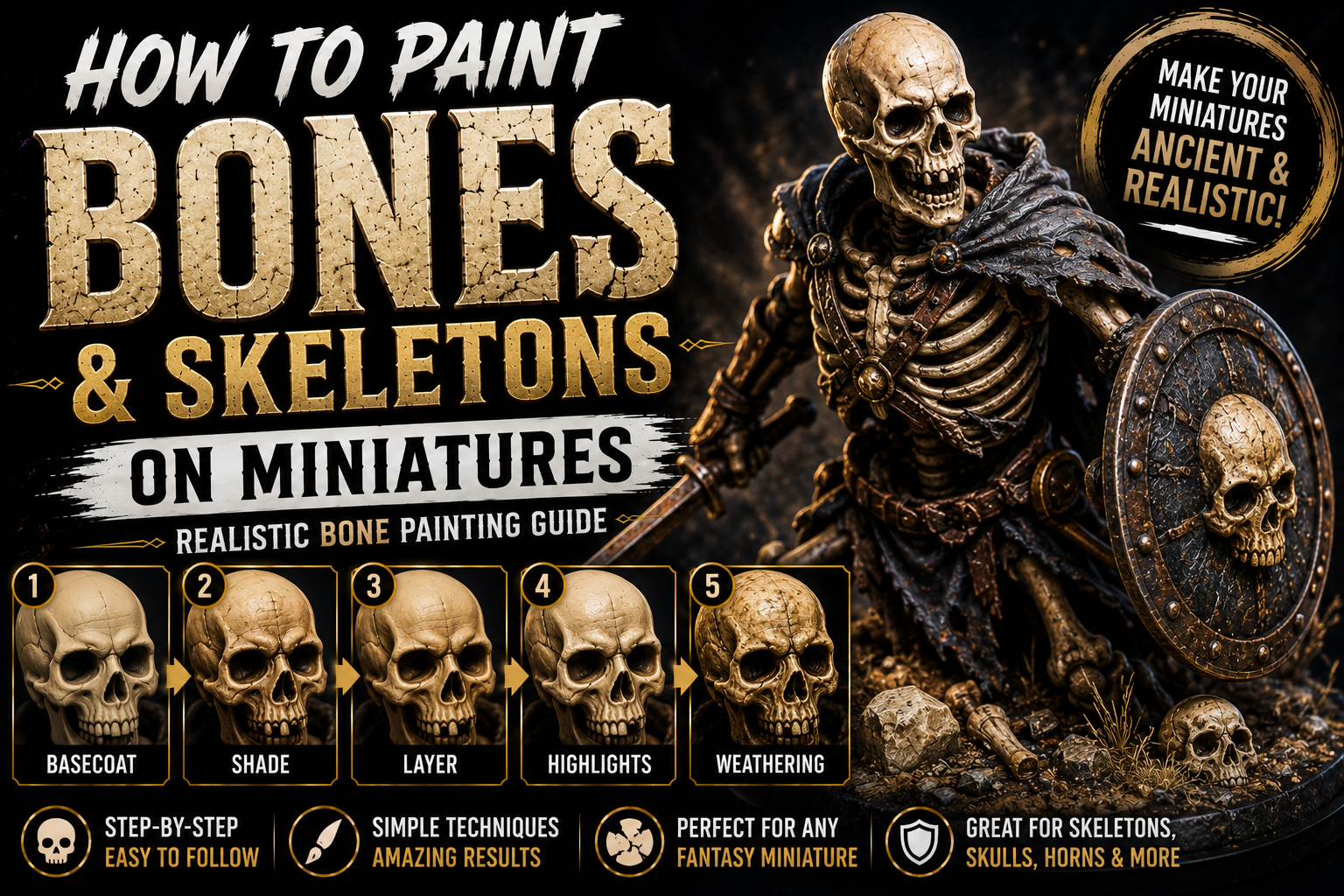
Painting the Base Coat
Begin with a smooth ivory or khaki base coat.
Apply two or three thin coats to preserve sculpted details such as teeth, ribs, joints, and cracks.
Avoid starting with pure white, as it leaves very little room for highlights later.
A warm mid-tone provides the best foundation.
Creating Natural Shadows

Bone gains most of its realism from the shadows.
Apply a thin brown wash or glaze into the eye sockets, between ribs, around teeth, and inside cracks.
If the shadows become too dark, soften them with a glaze of your base color.
Natural shadows make every sculpted detail stand out.
Building Smooth Highlights
Once the shadows are dry, begin layering lighter bone colors.
Highlight:
- Skull edges
- Cheekbones
- Teeth
- Finger bones
- Ribs
- Knees
- Elbows
Finish with tiny touches of off-white on the highest points.
The contrast should remain soft and natural.
Adding Age and Weathering

Ancient bones tell a story.
Use thin brown, green, or grey glazes to simulate dirt, moisture, moss, or centuries of decay.
Concentrate weathering around the base of the skeleton, inside cracks, and anywhere dirt would naturally collect.
Subtle weathering adds incredible realism without overwhelming the miniature.
Painting Horns and Antlers

The same techniques work beautifully for horns and antlers.
Unlike skulls, horns usually transition from darker colors near the base to lighter colors at the tips.
Apply layered highlights following the natural ridges of the sculpt.
This simple gradient creates convincing organic growth.
Common Mistakes to Avoid

Avoid these common mistakes:
- Starting with pure white.
- Making shadows pure black.
- Using only one color.
- Skipping weathering.
- Over-highlighting every surface.
- Ignoring natural staining.
Bone should feel aged and organic rather than perfectly clean.
Final Thoughts
Painting realistic bones is all about subtle warmth, smooth highlights, and believable weathering. By combining ivory tones, transparent washes, and controlled layering, you can create skeletons, skulls, horns, dragon trophies, and ancient ruins that immediately enhance the atmosphere of your fantasy miniatures.
Since bones appear across nearly every fantasy setting, this technique is one you’ll use again and again.
Frequently Asked Questions
What’s the best base color for bone?
Ivory or khaki works much better than pure white because it leaves room for highlights.
Should skeletons be white?
Not usually. Most realistic skeletons contain ivory, beige, brown, and grey tones.
How do I make bones look old?
Apply thin brown and grey glazes, concentrating weathering in cracks and lower areas.
Can I use these techniques on horns?
Yes. Horns, antlers, tusks, claws, and teeth all benefit from the same layering techniques.
What’s the biggest mistake when painting skeletons?
Using pure white with black washes, which creates harsh contrast instead of realistic aged bone.
If you would like free D&D STL miniatures, visit our homepage and download yours now:https://echoartstudios.net/