How to Paint Blood Effects on Miniatures (Realistic Gore and Battle Damage Guide)

Nothing tells the story of a fierce battle like realistic blood effects. Whether you’re painting a barbarian fresh from combat, a terrifying vampire, or a monstrous demon, convincing blood splatter can dramatically increase the visual impact of your miniature.
The key is restraint. Too much blood makes a model look messy rather than realistic. Real blood behaves according to gravity, movement, and the point of impact. Understanding these patterns allows you to create effects that look natural instead of random.
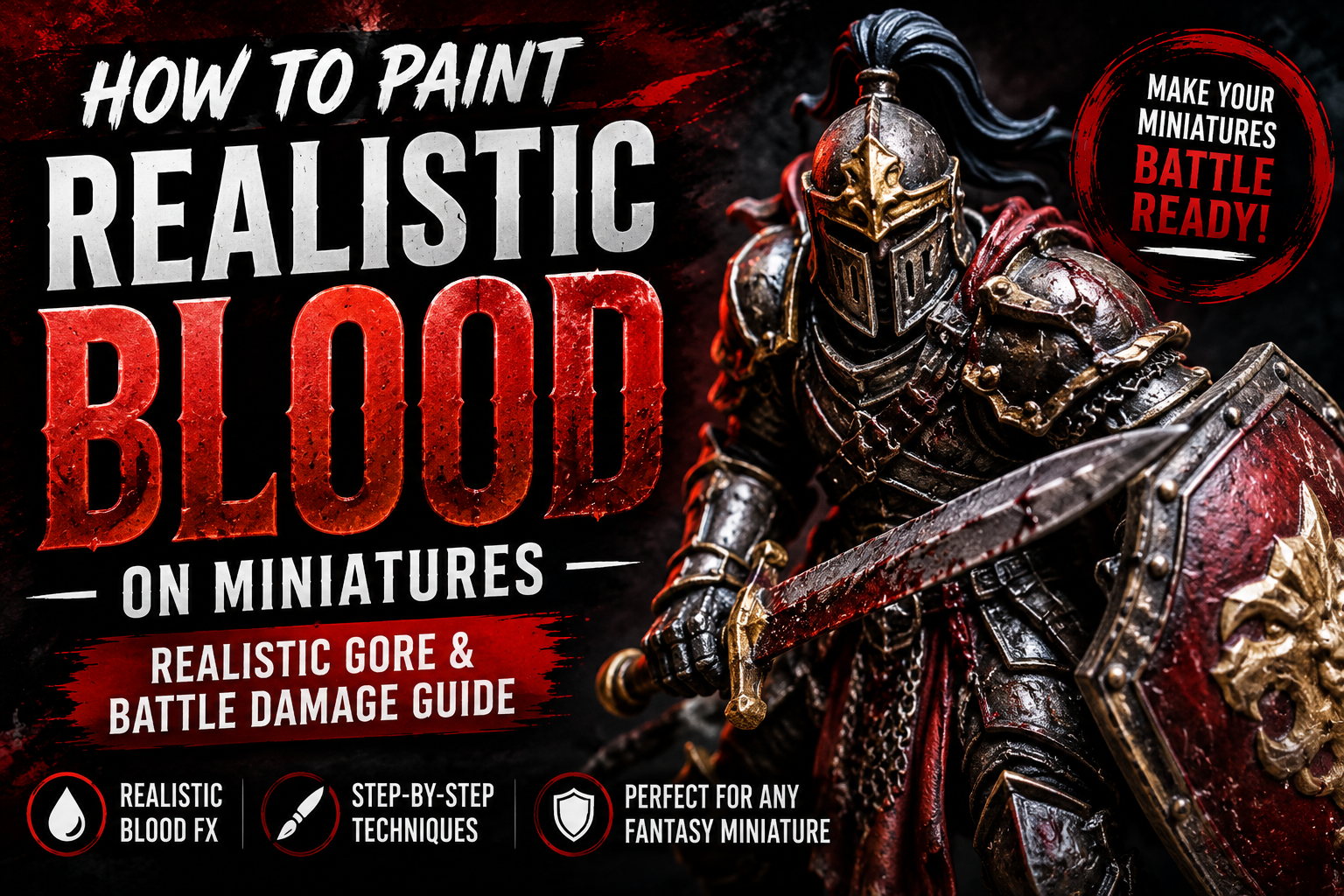
In this guide, you’ll learn how to paint fresh blood, dried blood, splashes, smears, and weapon stains that bring your fantasy miniatures to life.
Understanding How Blood Behaves
Before painting, think about how blood moves.
Fresh blood is glossy, dark red, and collects in low areas. Older blood becomes darker, thicker, and more brown as it dries. Fast weapon swings create thin splashes, while heavy impacts often leave larger stains and droplets.
Consider where injuries would naturally occur. Sword blades, axe heads, claws, shields, boots, and armor edges are common places where blood accumulates after combat.
Using real-world references helps produce far more convincing results.
Choosing the Right Colors

Many beginners use bright red straight from the bottle.
Realistic blood usually combines several tones:
- Dark Red
- Crimson
- Burgundy
- Brown
- Black
- Gloss Varnish
Fresh blood should remain deep red with a glossy finish, while dried blood benefits from darker brown and black tones.
Building layers with multiple colors creates much richer effects.
Painting Fresh Blood

Start by applying dark red to the area where blood is needed.
Concentrate it near wounds, blade edges, or impact points. Add a slightly brighter crimson toward the center while leaving darker edges visible.
Once the paint is completely dry, apply gloss varnish to give the blood its characteristic wet appearance.
The shine immediately separates fresh blood from dried stains.
Creating Dried Blood

Old blood tells a different story.
Mix dark brown with burgundy to create deep, dried stains. Apply these around armor joints, old wounds, or ancient weapons.
Unlike fresh blood, dried blood should have a matte or satin finish.
Using small irregular patches makes the weathering appear much more natural.
Adding Blood Splatter

Blood splatter adds movement and energy to a miniature.
Load an old brush with slightly thinned dark red paint and gently flick the bristles toward the model. Practice on paper first to control the size and direction of the droplets.
Keep the effect concentrated around weapons, enemies, or areas where the action occurred.
Small splatters almost always look more realistic than large random stains.
Painting Bloody Weapons

Weapons rarely become completely covered in blood.
Instead, apply most of the effect near the cutting edge, blade base, or impact points. Thin streaks running downward help simulate gravity after combat.
Adding tiny metallic highlights over portions of the blood suggests that the weapon has continued to strike enemies, creating a layered and believable finish.
Less Is More

One of the biggest mistakes is overusing blood.
A few carefully placed stains often tell a stronger story than covering the entire miniature.
Think about your character. A disciplined knight may have only a bloodied sword, while a berserker or monster could have blood across armor, claws, and face.
Let the miniature’s narrative determine how much gore to include.
Common Mistakes to Avoid

Avoid these common errors:
- Using bright scarlet alone.
- Making every blood stain identical.
- Covering the whole miniature.
- Forgetting gloss on fresh blood.
- Applying blood in unrealistic locations.
- Ignoring gravity and movement.
Correct placement is more important than the amount of blood used.
Final Thoughts
Blood effects are one of the fastest ways to add drama and storytelling to fantasy miniatures. By combining rich dark reds, subtle browns, glossy finishes, and realistic placement, you can create battle-worn heroes, terrifying monsters, and unforgettable display pieces.
Remember that believable weathering comes from observation. Study how blood behaves in real life, use it sparingly, and always let the miniature’s story guide your decisions.
Frequently Asked Questions
What color looks most realistic for blood?
Dark red mixed with burgundy and small amounts of brown creates the most natural appearance.
Should fresh blood be glossy?
Yes. A gloss varnish or blood-effect paint makes fresh blood appear wet and convincing.
How do I paint dried blood?
Mix dark brown with deep red and apply it with a matte finish for old stains.
Can I use blood effects on fantasy miniatures?
Absolutely. Blood works well on barbarians, vampires, demons, undead, monsters, and battle-damaged warriors.
How much blood should I use?
Less is usually better. Small, carefully placed effects create a much stronger visual impact than covering the entire miniature.
If you would like free D&D STL miniatures, visit our homepage and download yours now:https://echoartstudios.net/