
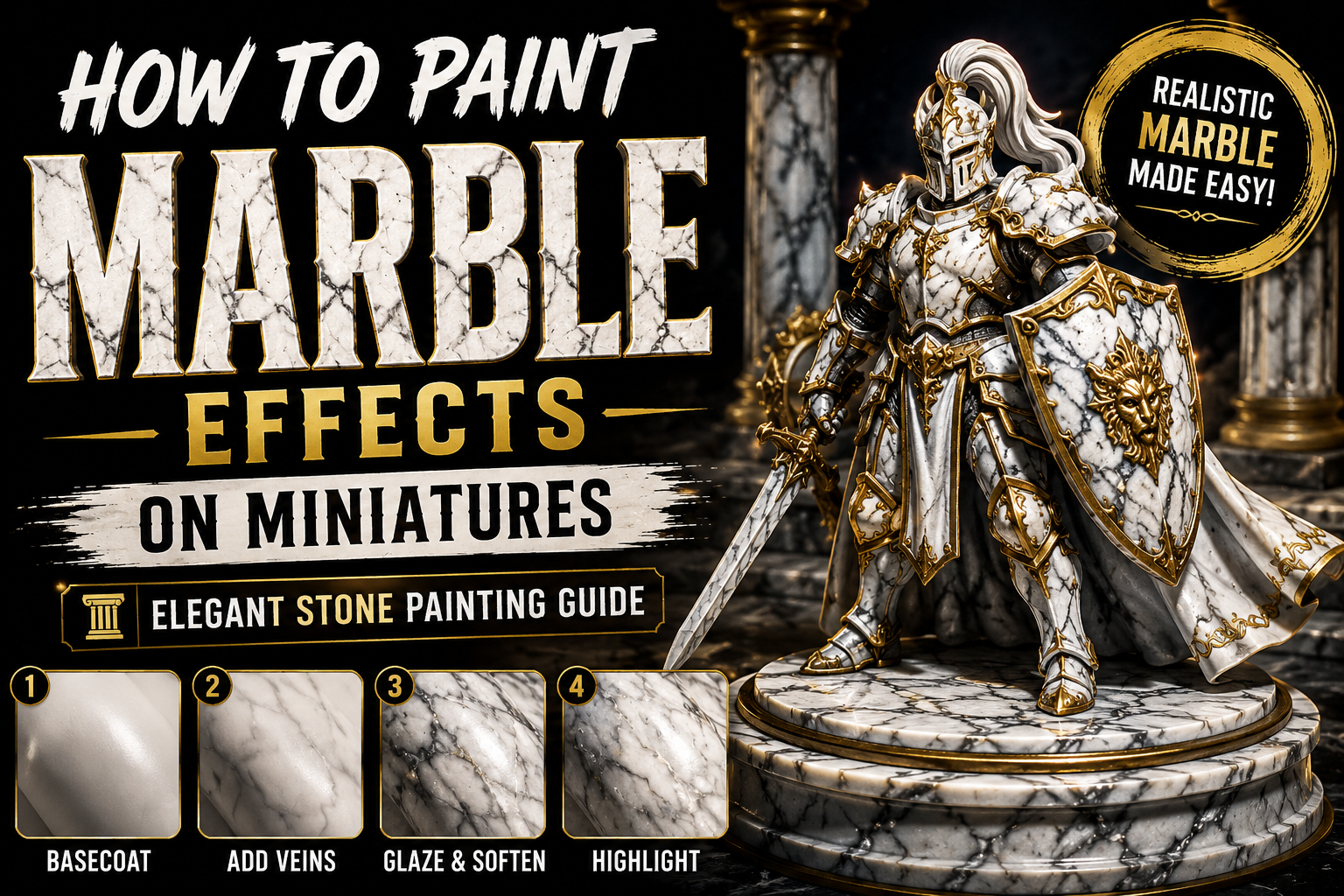
How to Paint Marble Effects on Miniatures (Elegant Stone Painting Guide)

Marble is one of the most elegant finishes you can add to a miniature. Whether you’re painting an ancient temple, a divine statue, an ornate shield, or the armor of a celestial warrior, realistic marble instantly elevates the model from tabletop quality to display quality.
The challenge isn’t the colors—it’s creating convincing natural veins without making them look like random lines. Real marble has depth, subtle color variations, and organic patterns that developed over thousands of years.
In this guide, you’ll learn how to paint realistic marble on miniatures using simple techniques that work for armor, weapons, bases, columns, statues, and scenic terrain.
Understanding Real Marble

Before picking up a brush, study real marble.
No two pieces are identical. Marble veins twist, branch, fade, and sometimes disappear completely before reappearing elsewhere. The background color is rarely pure white—it usually contains soft greys, creams, or cool blue tones.
Avoid perfectly straight lines. Nature is irregular, and that’s exactly what makes marble believable.
Collecting a few photo references before painting makes a huge difference.
Choosing Your Marble Colors

Classic white marble is the most popular choice, but fantasy miniatures allow much more creativity.
Popular combinations include:
- White with grey veins
- Black marble with white veins
- Green marble with pale highlights
- Red marble with dark brown veins
- Blue marble for magical environments
- White marble with gold veins for divine characters
Keep your base colors soft so the veining remains the main visual feature.
Creating the Marble Base

Begin with a smooth base coat.
Build the color gradually using thin layers rather than one thick coat. A clean, satin-smooth surface allows the veins to appear much more natural later.
If you’re painting white marble, use a very light grey instead of pure white. Save pure white for the final highlights.
Smooth transitions are far more important than strong contrast at this stage.
Painting Natural Marble Veins

This is where the illusion comes to life.
Using a fine brush, paint thin irregular lines across the surface. Let them split into smaller branches before fading away. Some veins should be bold, while others remain barely visible.
After the veins dry, apply a thin glaze of the base color over portions of them. This softens the lines and makes them appear embedded inside the stone rather than sitting on top.
Layering is the secret to realistic marble.
Adding Depth and Texture

Real marble isn’t perfectly flat.
Apply subtle glazes of cool grey or warm cream to create gentle variations across the surface. These changes should be almost invisible but help break up large flat areas.
Highlight edges with nearly pure white to create the polished appearance of carved stone catching light.
The result should feel clean, refined, and luxurious.
Painting Black Marble

Black marble creates a dramatic fantasy aesthetic.
Start with a charcoal grey rather than pure black. Add fine white veins across the surface using extremely thin paint, then soften sections with dark grey glazes.
Sharp edge highlights help define the sculpt while preserving the polished stone effect.
This technique works especially well for evil temples, necromancers, and dark fantasy scenery.
Applying Marble to Bases and Terrain

Marble isn’t limited to armor.
Temple floors, ruined columns, staircases, statues, fountains, and decorative bases all benefit from marble finishes.
Large flat surfaces allow the natural veining to shine, while weathering around cracks and corners helps tell the story of ancient ruins.
Combining polished marble with moss or gold trim creates stunning fantasy scenery.
Common Mistakes to Avoid

Avoid these common mistakes:
- Painting veins too thick.
- Making every vein the same width.
- Using perfectly straight lines.
- Starting with pure white instead of light grey.
- Adding too many veins.
- Forgetting soft glazes over the finished pattern.
Less is often more when painting marble.
Final Thoughts
Marble effects reward patience more than complexity. By studying natural stone, using thin layers, and creating subtle organic veins, you can transform ordinary miniatures into elegant display pieces worthy of ancient palaces, divine temples, and legendary heroes.
Once you master marble, you’ll find countless opportunities to use it across fantasy miniatures, terrain, statues, scenic bases, and architectural details.
Frequently Asked Questions
What’s the easiest marble color to paint?
White marble with grey veins is the most beginner-friendly and works on almost any fantasy miniature.
Should marble be glossy?
A satin varnish often produces the most convincing polished stone appearance, although matte finishes also work for aged marble.
How do I make marble veins look realistic?
Use thin irregular lines, allow them to branch naturally, and soften them with transparent glazes.
Can I paint marble on armor?
Absolutely. Marble armor is popular for celestial warriors, gods, statues, paladins, and magical constructs.
What brush works best for marble veins?
A fine detail brush with a sharp tip gives you the most control over delicate branching patterns.
If you would like free D&D STL miniatures, visit our homepage and download yours now:https://echoartstudios.net/