How to Paint Stone on Miniatures (Realistic Rock & Stone Texture Guide)

Stone is everywhere in fantasy miniatures. Ancient ruins, dungeon walls, statues, castle floors, monuments, bases, and rocky terrain all rely on convincing stone textures to create atmosphere. While stone may seem simple to paint, realistic rock contains subtle color variation, weathering, cracks, and natural imperfections that make it feel authentic.
The mistake many painters make is covering every rock with a single grey paint. Real stone is far more complex. It contains warm and cool tones, patches of dirt, moss, erosion, and countless years of natural aging.
In this guide, you’ll learn how to paint realistic stone textures that work beautifully on terrain, bases, statues, ruins, and fantasy miniatures.
Understanding Natural Stone

Before painting, spend a few minutes studying real rock formations.
Natural stone is full of variation. Some areas appear warmer, others cooler. Cracks collect dirt, edges become lighter through wear, and moisture often creates darker patches.
No rock is perfectly uniform.
Observing real stone textures helps you recreate believable surfaces on miniatures.
Choosing the Right Color Palette

Different environments call for different stone colors.
Popular palettes include:
- Neutral Grey
- Granite Grey
- Warm Brown Stone
- Blue Grey
- Moss Green
- Sandstone Beige
Combining multiple subtle tones creates much richer results than painting everything with a single shade.
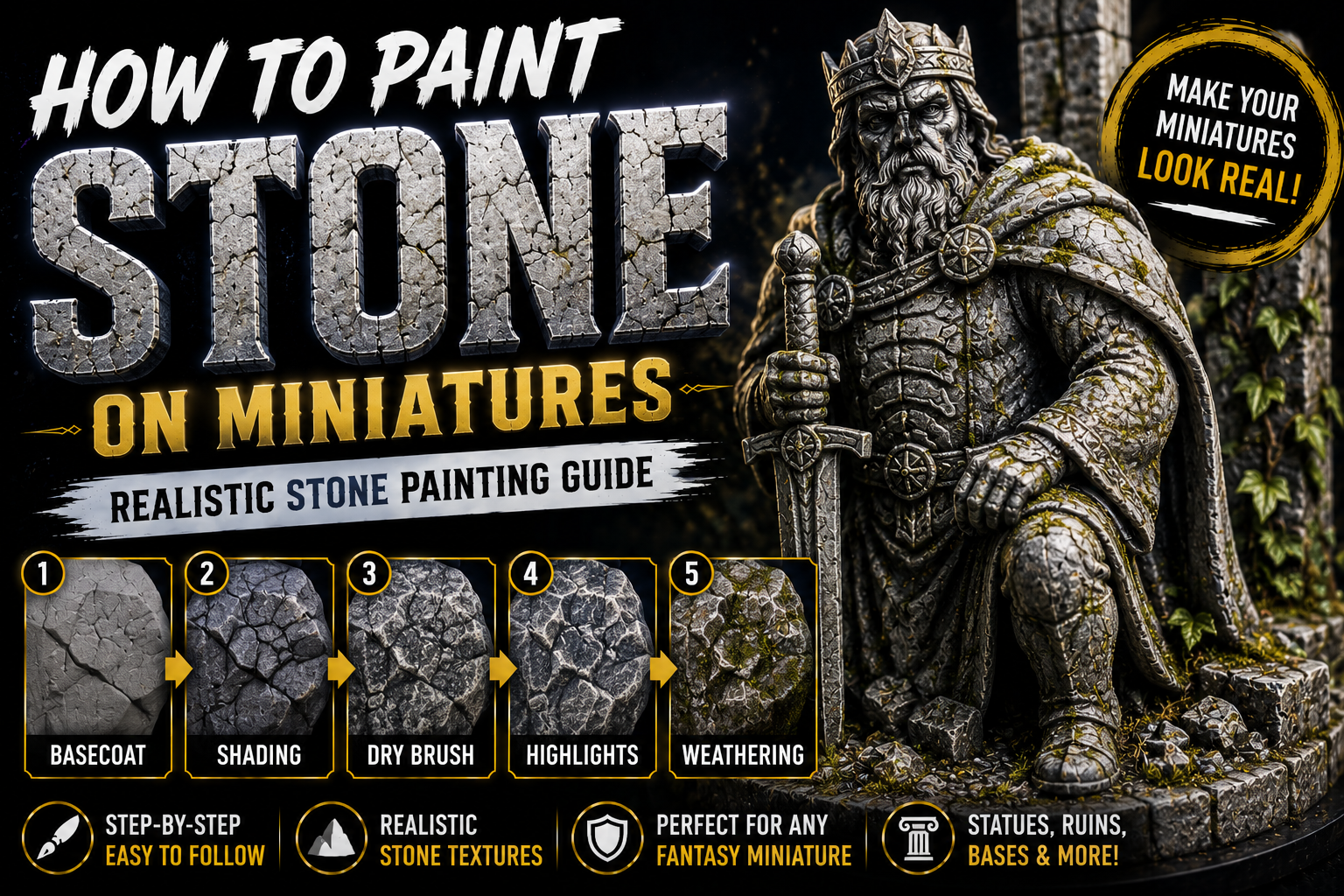
Painting the Base Coat

Start with a medium grey or brown-grey base coat.
Apply several thin coats while preserving all sculpted texture.
Don’t worry if the base looks flat—most of the realism comes from later shading and highlights.
A smooth, even foundation makes weathering much easier.
Building Texture with Dry Brushing

Dry brushing remains one of the best techniques for painting stone.
Use progressively lighter shades of grey and gently drag the brush across raised areas.
Allow darker colors to remain inside cracks and recesses.
Finish with a very light dry brush using pale grey or ivory on the sharpest edges.
This creates instant depth and natural-looking rock texture.
Adding Cracks and Weathering

Old stone always tells a story.
Paint thin cracks with dark grey or brown, varying their length and direction.
Apply brown glazes near the ground to simulate dirt accumulation.
Small green glazes can represent moss or algae growing in damp environments.
These tiny details dramatically increase realism.
Painting Ancient Stone Statues

Stone statues deserve a slightly different approach.
Use softer highlights and slightly warmer greys to suggest carved stone rather than rough rock.
Apply subtle moss around the feet, shoulders, and deep recesses where moisture naturally collects.
A few fine cracks immediately make the statue appear centuries old.
Painting Dungeon Floors and Bases

Stone bases benefit from variation.
Alternate between slightly warmer and cooler grey tones on individual stones.
Avoid making every tile identical.
Small patches of dirt, moss, or worn edges help break repetition and create the feeling of an ancient dungeon.
Common Mistakes to Avoid

Avoid these common mistakes:
- Using only one shade of grey.
- Applying dry brushing too heavily.
- Ignoring dirt and weathering.
- Making every stone identical.
- Painting cracks perfectly straight.
- Using pure white for large highlights.
Natural stone is subtle and irregular.
Final Thoughts
Realistic stone painting is about embracing imperfection. By combining layered greys, careful dry brushing, weathering, and subtle color variation, you can transform ordinary scenery into ancient ruins full of character.
These techniques work equally well on dungeon terrain, castle walls, rocky bases, statues, monuments, cliffs, and fantasy scenery of every scale.
Frequently Asked Questions
What’s the easiest stone color for beginners?
Medium neutral grey is the easiest starting point because it blends well with both darker washes and lighter highlights.
Should I always dry brush stone?
Yes. Dry brushing is one of the fastest and most effective ways to bring out sculpted rock textures.
How do I make stone look old?
Use brown and green glazes, paint small cracks, and vary the color between individual stones.
Can I paint sandstone?
Absolutely. Replace the grey palette with warm beige, tan, and light brown tones while keeping the same highlighting techniques.
What’s the biggest mistake when painting stone?
Using a single flat grey without adding weathering, color variation, or texture.
If you would like free D&D STL miniatures, visit our homepage and download yours now:https://echoartstudios.net/