How to Paint Fur on Miniatures (Realistic Animal Fur Painting Guide)

Fur is one of the most striking textures you can paint on a fantasy miniature. Whether it’s the heavy wolf pelt of a barbarian, the white fur cloak of a northern king, or the thick hide of a monstrous beast, realistic fur instantly adds depth, realism, and character.
The biggest mistake painters make is treating fur like ordinary cloth. Unlike fabric, fur catches light unevenly, has thousands of tiny strands, and changes color depending on its thickness and direction.
In this guide, you’ll learn how to paint convincing fur textures using simple layering and brush techniques that work for every skill level.
Understanding Fur Texture

Before painting, study real animal fur.
Notice how the strands naturally flow in one direction instead of pointing randomly. Fur also becomes lighter toward the tips while remaining darker close to the skin.
Long fur creates dramatic highlights, while short fur appears smoother with softer transitions.
Following the sculpted direction of the fur is one of the easiest ways to improve realism.
Choosing the Right Colors

Natural fur rarely consists of a single color.
Popular combinations include:
- Dark Brown → Tan
- Black → Dark Grey
- Grey → Light Grey
- Chocolate Brown → Beige
- White → Ivory
- Red Brown → Orange Tan
Using two or three shades creates much richer texture than painting everything one flat color.
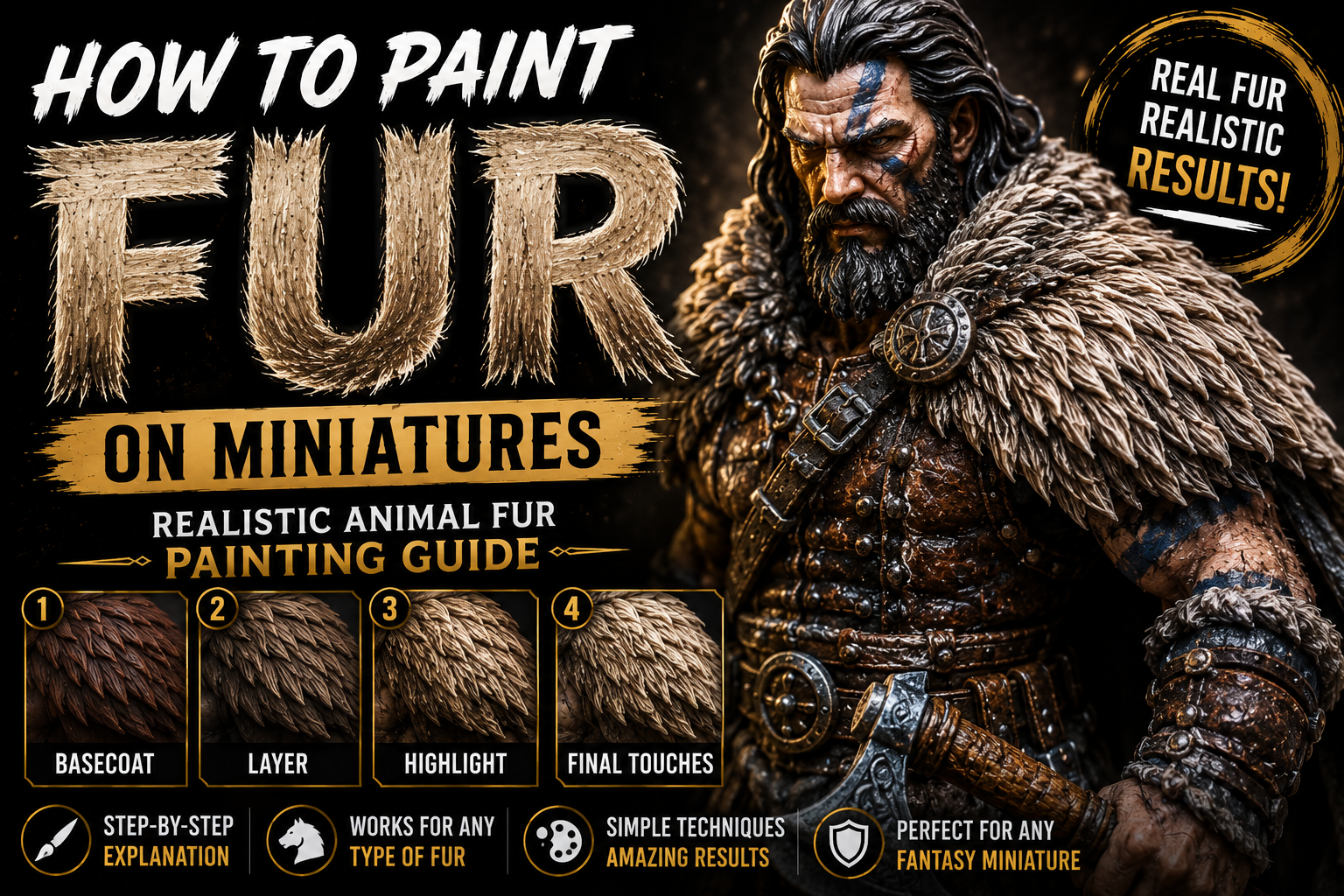
Painting the Base Coat

Begin with your darkest fur color.
Apply thin coats while preserving every sculpted strand. Fur relies heavily on surface texture, so thick paint quickly ruins the effect.
Allow the base coat to dry completely before moving to highlights.
This dark foundation creates natural shadows between individual strands.
Building Natural Highlights

Layer progressively lighter colors across the raised fur.
Instead of highlighting every strand individually, lightly dry brush the texture while keeping darker colors visible deep inside the fur.
Finish with selective edge highlights on the longest strands using a fine brush.
This combination creates depth without becoming overly time-consuming.
Painting White Fur

White fur requires careful shading.
Start with a very light grey instead of pure white. Build brighter highlights gradually until only the outermost strands receive pure white.
Adding subtle blue-grey shadows helps white fur appear colder and more realistic, especially on winter-themed miniatures.
Avoid covering everything with bright white.
Painting Monster Fur

Fantasy creatures allow more creative freedom.
You can introduce subtle greens, blues, reds, or purple glazes while keeping the overall texture believable.
Large monsters benefit from stronger contrast because their fur is visible from farther away.
Adding slight color variation between different body sections creates an even more natural appearance.
Adding Weathering

Not every cloak should look brand new.
Dust, mud, snow, and worn tips all tell a story.
Apply thin earth-colored glazes near the bottom of cloaks or around boots to simulate accumulated dirt.
For winter characters, subtle frost effects along the fur tips create impressive realism.
Common Mistakes to Avoid

Avoid these common mistakes:
- Using only one brown color.
- Painting fur like smooth cloth.
- Applying thick paint.
- Over-dry brushing.
- Ignoring the direction of the strands.
- Using pure white too early.
Building texture gradually always produces better results.
Final Thoughts
Realistic fur combines careful observation with controlled layering. By respecting the direction of the sculpt, using multiple shades, and applying subtle highlights, you can create cloaks, pelts, monsters, and beasts that look incredibly lifelike.
Because fur appears on so many fantasy miniatures, mastering this technique will improve everything from Vikings and barbarians to wolves, bears, dragons, and mythical creatures.
Frequently Asked Questions
What’s the easiest fur color for beginners?
Brown fur is the most forgiving because multiple shades blend together naturally.
Should I dry brush fur?
Yes. Dry brushing is one of the quickest ways to bring out sculpted texture, especially when followed by selective highlights.
How do I paint white fur without making it flat?
Start with light grey and gradually work toward pure white only on the highest strands.
Can I paint fantasy-colored fur?
Absolutely. Blue, green, red, and purple glazes work beautifully on magical creatures while keeping the texture realistic.
What’s the biggest mistake when painting fur?
Using only one color. Real fur always contains subtle variations in tone and brightness.
If you would like free D&D STL miniatures, visit our homepage and download yours now:https://echoartstudios.net/