How to Paint Cloth and Fabric on Miniatures (Smooth Cloth Blending Guide)

Cloth is one of the largest surfaces on most fantasy miniatures, yet it’s often overlooked in favor of armor or weapons. Whether you’re painting a flowing wizard robe, a knight’s cape, or a rogue’s hood, realistic fabric can dramatically improve the overall appearance of your model.
Unlike metal, leather, or fur, cloth has soft transitions, subtle folds, and smooth light reflections. Understanding how light behaves across fabric is the key to creating convincing results.
In this guide, you’ll learn how to paint realistic cloth and fabric using layering, glazing, and blending techniques suitable for beginners and advanced miniature painters alike.
Understanding How Fabric Reflects Light

Before painting, study real fabric.
Light naturally hits the tops of folds while the valleys remain in shadow. Unlike polished metal, cloth diffuses light softly, creating gradual transitions instead of sharp reflections.
Large flowing cloaks usually have broader highlights, while tight clothing produces smaller, more defined folds.
Observing real clothing is one of the fastest ways to improve your painting.
Choosing Your Color Palette

Almost any color works beautifully on fabric.
Popular choices include:
- Deep Red
- Royal Blue
- Forest Green
- Purple
- Black
- White
- Beige
- Crimson
Choose colors that complement the rest of your miniature rather than competing with metallic armor or glowing effects.
Painting the Base Coat

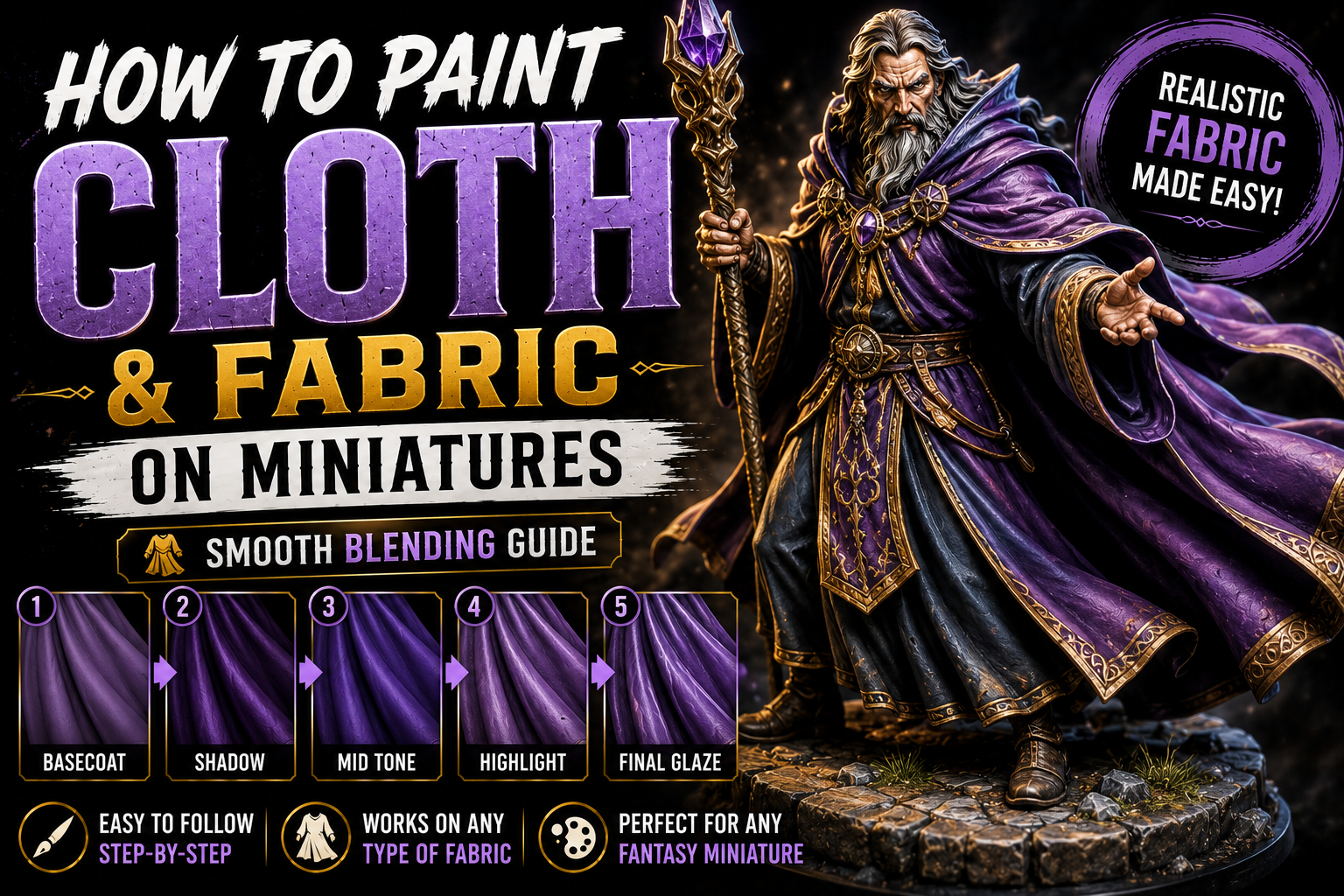
Begin with a smooth base coat using several thin layers.
Avoid thick paint, which quickly hides the sculpted folds that make cloth look realistic.
A clean base allows your later highlights and shadows to blend naturally into the fabric.
Patience at this stage makes every later step easier.
Building Smooth Highlights

Apply progressively lighter shades to the tops of the folds.
Each layer should cover a slightly smaller area than the previous one, gradually building contrast while preserving smooth transitions.
Avoid harsh edge highlights unless you’re painting extremely stiff fabric.
Multiple thin layers always outperform one thick highlight.
Deepening the Shadows

Rich shadows create depth.
Mix a darker version of your base color and apply it carefully inside the deepest folds.
Instead of using pure black, darken the original color with complementary tones to preserve richness.
Glazing several transparent shadow layers produces much more natural results.
Painting Different Fabric Types

Different materials reflect light differently.
Silk has brighter highlights and stronger contrast.
Linen appears soft and matte.
Velvet often shows deep shadows with concentrated highlights.
Heavy wool cloaks usually feature muted colors and gentle transitions.
Matching the painting style to the type of fabric makes the miniature feel more believable.
Using Glazes for Perfect Blends

Glazing is one of the most powerful tools for painting cloth.
Thin your paint heavily and apply multiple transparent coats over the transition areas.
Each glaze softens the blend between shadows and highlights without hiding the sculpted folds.
Professional-looking fabric often relies more on glazing than on complicated brush techniques.
Common Mistakes to Avoid

Avoid these common mistakes:
- Using thick paint.
- Creating harsh highlights.
- Ignoring the direction of the folds.
- Making shadows pure black.
- Highlighting every wrinkle equally.
- Skipping glazing.
Smooth transitions are what separate realistic fabric from flat-looking cloth.
Final Thoughts
Painting realistic cloth is all about understanding how light moves across soft surfaces. By combining careful layering, transparent glazes, and controlled shadows, you can create robes, cloaks, capes, banners, and clothing that instantly elevate your miniatures.
Since nearly every fantasy miniature includes some form of fabric, mastering this skill will improve almost every project you paint.
Frequently Asked Questions
What’s the easiest fabric color for beginners?
Deep blue and dark red are forgiving because they naturally hide small blending imperfections.
Should cloth have sharp highlights?
Generally no. Most fabrics benefit from smooth, gradual transitions instead of hard edge highlights.
How do I make fabric look soft?
Use multiple thin layers and transparent glazes to soften every transition.
Can I use dry brushing on cloth?
It’s usually better to use layering and glazing. Dry brushing often creates rough textures that don’t suit fabric.
What’s the biggest mistake when painting cloth?
Applying thick paint and creating highlights that are too harsh instead of smooth and gradual.
If you would like free D&D STL miniatures, visit our homepage and download yours now:https://echoartstudios.net/