How to Paint Poison Effects on Miniatures (Toxic Slime & Venom Guide)

Poison effects are a fantastic way to make fantasy miniatures look dangerous and alive. Whether you’re painting a venomous dagger, a plague-ridden monster, a cursed swamp creature, or an alchemist’s potion, realistic poison instantly tells a story before the miniature even reaches the battlefield.
The biggest mistake painters make is using only bright green paint. Realistic poison combines glowing liquids, transparent slime, subtle lighting, and natural color variation to create a convincing toxic appearance.
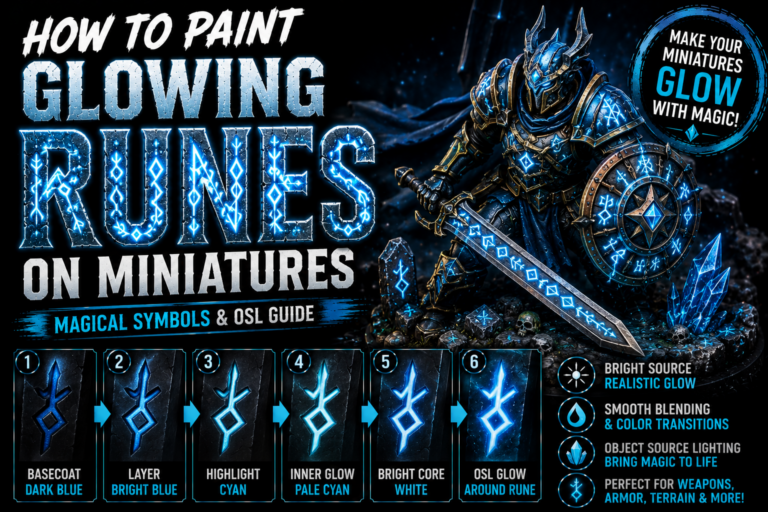
In this guide, you’ll learn how to paint realistic poison effects using layering, glazing, Object Source Lighting (OSL), and slime textures.
Understanding Toxic Effects

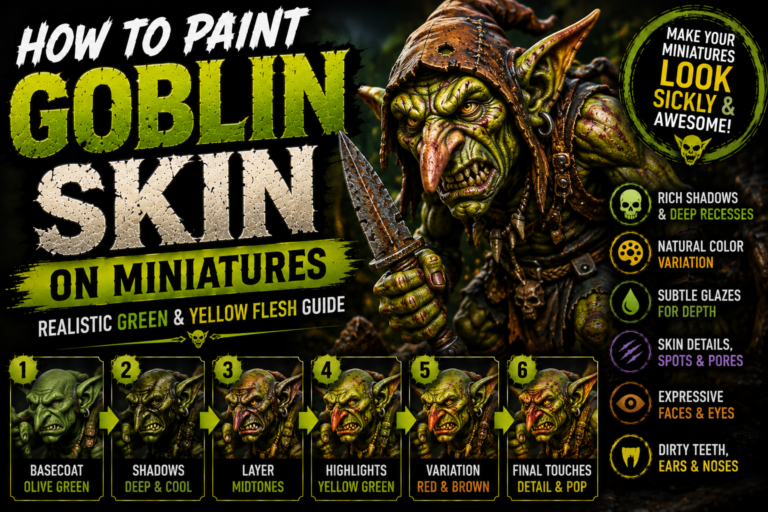
Poison isn’t always one solid color.
Fresh venom often appears translucent, while magical toxins may glow from within. Thick slime pools in recesses, stretches between surfaces, and reflects nearby light.
Think about how the poison interacts with its surroundings rather than simply painting everything green.
Observation leads to much more believable effects.
Choosing Your Poison Colors

Classic poison uses green, but fantasy gives you plenty of options.
Popular palettes include:
- Lime Green
- Emerald Green
- Yellow-Green
- Toxic Yellow
- Cyan Poison
- Purple Venom
Use bright colors sparingly and balance them with darker greens to create depth.
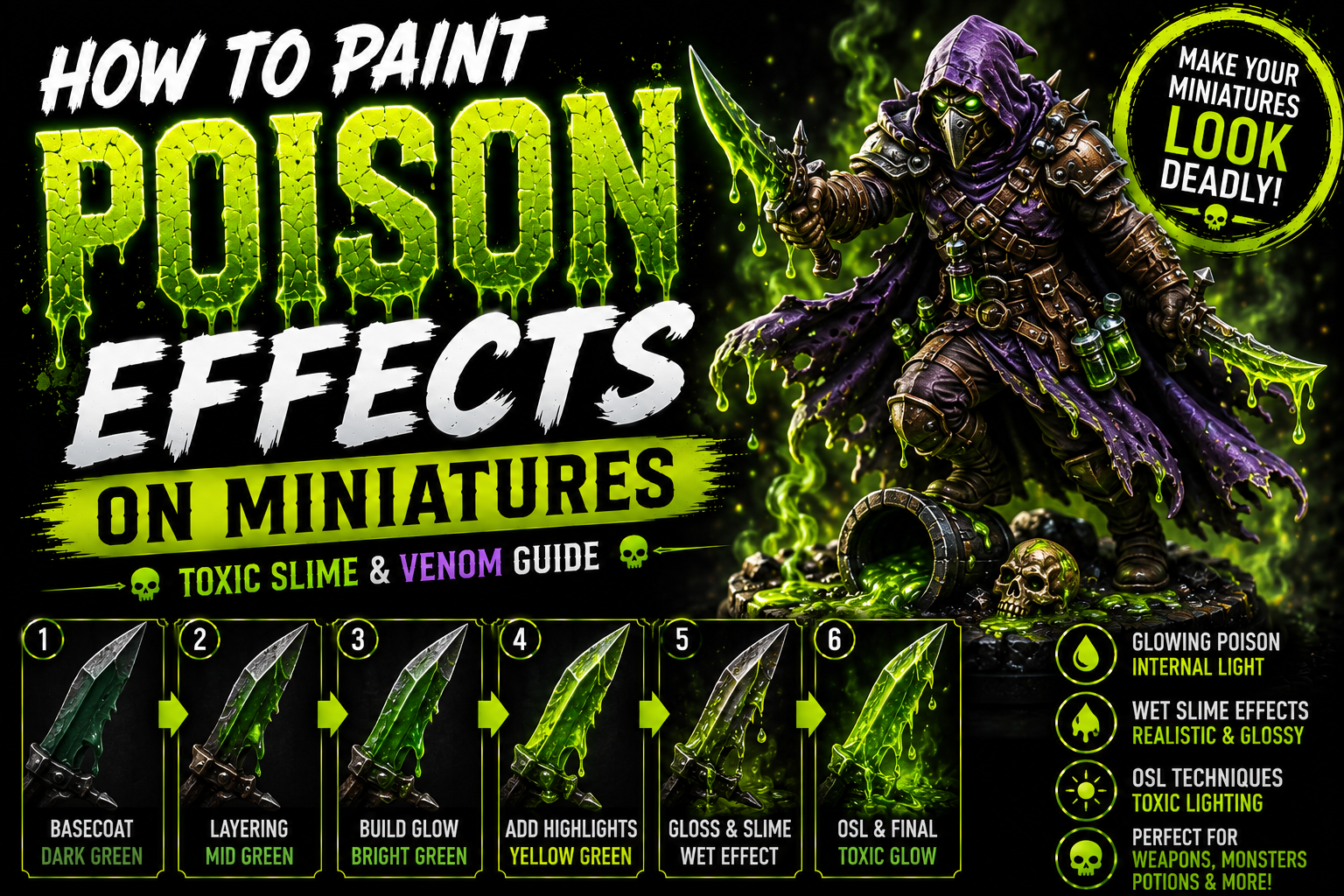
Painting the Base Coat

Begin with a dark green base.
Cover the poisoned area using several thin coats while preserving every sculpted detail.
If you’re painting slime or ooze, allow the darker color to remain inside the deepest recesses.
This foundation creates the contrast needed for later glowing effects.
Creating the Glow

Layer progressively lighter greens toward the center of the poisoned area.
Finish with tiny touches of yellow-green or pale yellow on the brightest points.
This creates the illusion that the poison is glowing internally.
Multiple thin layers produce smoother and more convincing results.
Painting Slime and Venom

Poison often appears as thick slime rather than flat paint.
Paint elongated drops, puddles, and dripping effects using bright highlights along the upper edges.
Apply a glossy varnish once the paint has dried to give the slime a wet appearance.
Even small glossy details dramatically improve realism.
Applying Object Source Lighting (OSL)

Glowing poison naturally illuminates nearby surfaces.
Thin your brightest green into a transparent glaze and lightly apply it to surrounding armor, rocks, weapons, or skin.
The strongest glow should remain closest to the poison before fading gradually.
Subtle OSL helps sell the illusion of magical toxicity.
Painting Different Poison Types

Different poisons create different moods.
Bright lime green works well for classic fantasy toxins.
Blue-green venom suggests magical corruption.
Purple poison creates an arcane appearance.
Yellow toxins look highly corrosive and dangerous.
Choose colors that match the story of your miniature.
Common Mistakes to Avoid
Avoid these common mistakes:
- Using only bright green.
- Skipping dark shadows.
- Making every poisoned area equally bright.
- Forgetting gloss on slime.
- Applying thick paint.
- Overusing OSL.
Balanced contrast creates much more convincing poison effects.
Final Thoughts
Poison effects combine vibrant colors, glowing light, and glossy textures to create some of the most visually striking details in miniature painting. By carefully layering greens, adding wet-looking slime, and using subtle OSL, you can transform ordinary weapons, monsters, and terrain into truly toxic fantasy creations.
These techniques work beautifully on assassins, plague monsters, venomous creatures, magical potions, cursed swamps, and corrupted artifacts.
Frequently Asked Questions
What’s the easiest poison color for beginners?
Lime green blended into yellow-green is easy to paint and instantly reads as poison.
Should poison always glow?
Not necessarily. Ordinary venom may simply look wet, while magical poison often benefits from glowing effects.
How do I make slime look realistic?
Apply glossy varnish after painting and concentrate highlights on the upper edges of each droplet.
Can I use poison effects on weapons?
Absolutely. Daggers, arrows, swords, claws, and monster fangs all look fantastic with subtle venom effects.
What’s the biggest mistake when painting poison?
Using a single bright green without adding darker shadows, highlights, and wet-looking texture.
If you would like free D&D STL miniatures, visit our homepage and download yours now:https://echoartstudios.net/