How to Paint Mud Effects on Miniatures (Realistic Dirt & Battlefield Weathering Guide)

Mud is one of the easiest ways to make a miniature feel like it actually belongs in its environment. Clean boots, spotless armor, and perfectly polished clothing can look impressive, but they don’t always tell a believable story.
A warrior crossing a battlefield should carry traces of that battlefield with them.
Mud around the boots, splashes across the legs, dirt trapped beneath armor plates, and wet soil across the base can transform a freshly painted miniature into a character that looks as though it has been fighting for hours.
The key to realistic mud is variation. Real mud isn’t simply brown paint. It changes according to moisture, depth, soil type, and where it lands.
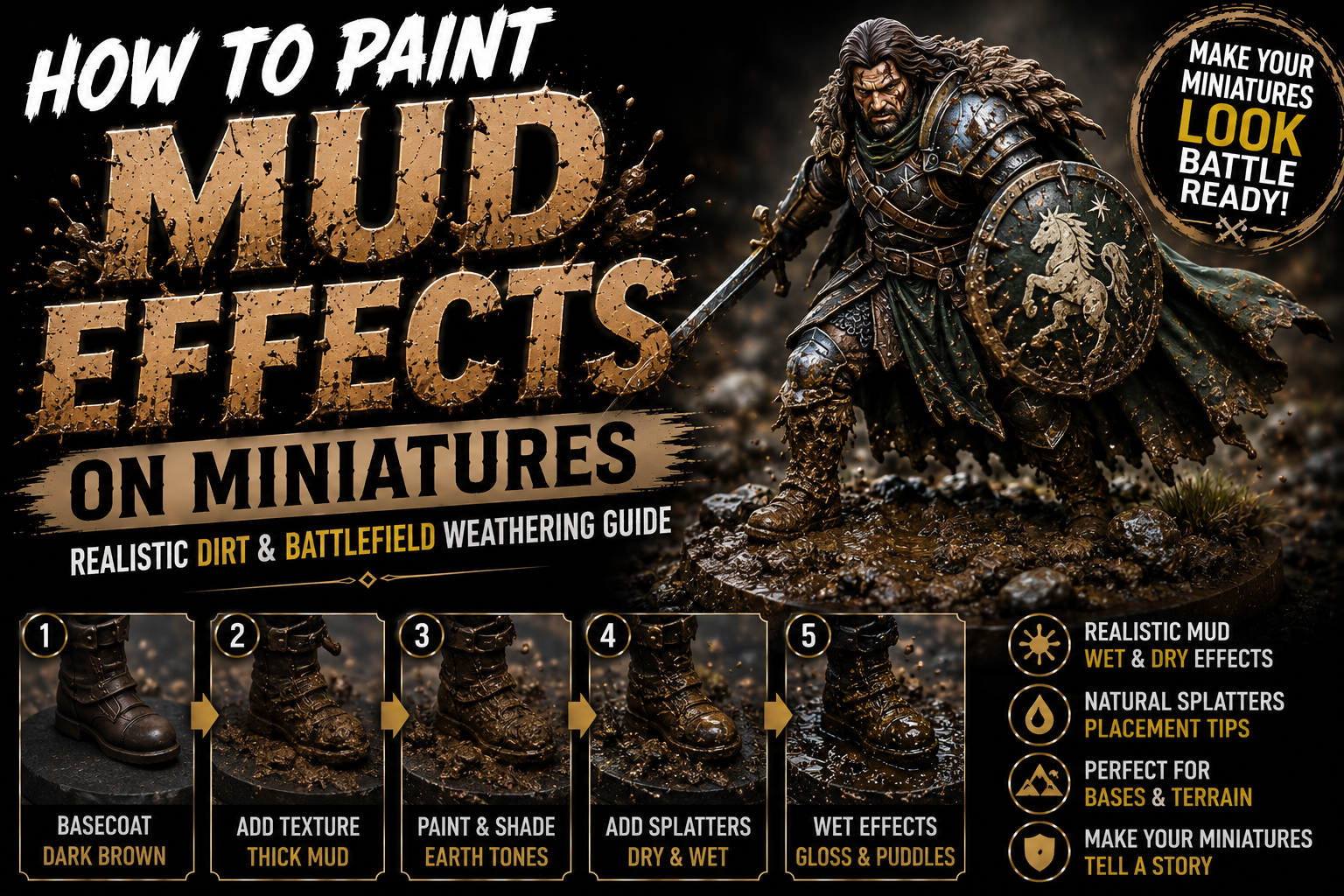
In this guide, you’ll learn how to paint realistic mud effects on miniatures using texture, layering, splattering, glazing, and wet effects.
Understanding How Real Mud Looks

Before painting mud, think about the environment surrounding your miniature.
Dry dirt usually appears lighter and more matte, while wet mud becomes darker, richer, and slightly reflective.
Fresh mud also collects differently depending on the surface.
Deep recesses around boots may contain thick deposits, while higher areas usually receive only small splashes.
This natural variation is what makes weathering believable.
If every dirty area receives exactly the same brown color, the effect quickly looks artificial.
Choosing Your Mud Color Palette

There isn’t one universal mud color.
Different environments produce completely different soil tones.
A useful realistic palette can include:
- Dark Brown
- Earth Brown
- Red Brown
- Tan
- Khaki
- Grey Brown
- Beige
Dark browns work beautifully for wet soil and swamps, while lighter tan colors are better for dried dirt.
Combining several earthy colors will immediately create more natural-looking weathering.
Painting the Ground First

Start with the miniature’s environment.
If the base represents a muddy battlefield, paint the soil before adding dirt to the character.
Use darker browns inside depressions and lighter earth tones across raised areas.
Rocks, broken wood, grass, footprints, and battlefield debris can help establish the environment.
Once the base looks convincing, you’ll know exactly what colors should appear on the miniature itself.
This keeps the entire scene visually connected.
Building Thick Mud Texture

Thick mud needs physical texture.
Texture paste, fine sand mixtures, or dedicated miniature mud products can create realistic deposits around boots and bases.
Apply the material irregularly.
Concentrate thicker deposits around:
- Boots
- Feet
- Wheels
- Lower armor
- Base recesses
Avoid covering every surface evenly.
Mud naturally gathers in some places while barely touching others.
Once dry, paint the texture using several shades of brown to create depth.
Creating Realistic Mud Splashes

Splashes are perfect for characters moving through wet terrain.
Using an old brush, load a small amount of thinned brown paint and carefully flick tiny droplets toward the miniature.
Keep most splashes concentrated around the feet and lower legs.
A few smaller droplets can travel higher, but they should become increasingly rare.
Use more than one brown shade.
Dark droplets can represent fresh mud, while lighter marks suggest older dried splashes.
This creates natural layers of battlefield grime.
Painting Wet Mud

Wet mud should look different from dry dirt.
Start with darker brown tones and create deep shadows around footprints, puddles, and heavy deposits.
Once everything is dry, apply small amounts of gloss varnish to selected areas.
Don’t make the entire base glossy.
Instead, concentrate the shine inside deeper mud, puddles, and freshly disturbed soil.
The contrast between matte dirt and glossy wet mud creates an extremely convincing effect.
Painting Dried Dirt and Dust

Older mud gradually dries and becomes lighter.
Use tan, beige, or light earth colors to create dried deposits around the edges of darker mud.
Dry brushing works particularly well here.
Gently brush lighter colors across textured surfaces while allowing dark brown to remain underneath.
This creates the impression of several layers of dirt accumulated over time.
Mixing wet and dry effects together makes the miniature feel much more realistic.
Weathering Armor and Clothing with Mud

Mud shouldn’t stop at the boots.
Characters moving through difficult terrain will often have dirt across lower armor plates, cloaks, shields, and equipment.
However, placement matters.
Heavy mud should remain close to the ground.
Higher areas should receive only subtle stains or tiny splashes.
For cloth, thin brown glazes work especially well because they stain the original color without completely covering it.
For armor, small textured deposits around joints and lower plates create a rugged battlefield appearance.
Adding Footprints and Environmental Storytelling

A great base doesn’t simply support the miniature—it tells part of the story.
Footprints pressed into wet soil immediately suggest movement.
Small puddles can indicate recent rain.
Broken weapons or damaged shields suggest a battlefield.
Grass partially buried beneath mud shows that the ground has been disturbed.
These environmental details don’t need to be large.
A few carefully placed elements can make the entire miniature feel like part of a larger world.
Common Mistakes to Avoid

Avoid these common mistakes:
- Using only one shade of brown.
- Covering the entire miniature with mud.
- Making every splash the same size.
- Using gloss varnish everywhere.
- Putting heavy mud too high on the character.
- Forgetting dried dirt around wet areas.
- Making the base and miniature use completely different soil colors.
Weathering should always support the story rather than hide your original paint job.
Final Thoughts
Mud effects are incredibly effective because they connect a miniature directly to its environment.
Instead of thinking of mud as simple brown paint, build it using different textures, colors, moisture levels, and patterns.
Start with the environment, establish your earth tones, add thicker deposits around the lowest areas, introduce irregular splashes, and finish by combining matte dried dirt with selective glossy wet mud.
These techniques work beautifully for D&D adventurers, medieval warriors, orcs, soldiers, monsters, horses, carts, battlefield terrain, and almost any miniature traveling through a dirty environment.
Sometimes the difference between a miniature that looks freshly painted and one that looks like it has actually survived an adventure is simply a little dirt.
Frequently Asked Questions
What’s the best color for miniature mud?
There isn’t one perfect color. Combining dark brown, earth brown, tan, and beige produces much more realistic results.
How do I make mud look wet?
Use darker colors and apply gloss varnish selectively to the deepest or freshest muddy areas.
How high should mud splashes go?
Most should remain around the boots and lower legs, with progressively fewer droplets appearing higher on the miniature.
Can I put mud on painted armor?
Absolutely. Thin glazes, small splashes, and textured deposits can create realistic battlefield weathering without hiding the armor underneath.
Should dried mud be lighter than wet mud?
Yes. Dry soil generally becomes lighter and more matte, while wet mud appears darker and more reflective.
What’s the biggest mistake when painting mud?
Applying the same brown color uniformly everywhere. Realistic mud requires variation in color, texture, placement, and moisture.
If you would like free D&D STL miniatures, visit our homepage and download yours now:
https://echoartstudios.net/