How to Paint Bones and Skeletons on Miniatures (Realistic Aged Bone Guide)

Skeletons are everywhere in fantasy miniature painting. From undead warriors guarding forgotten crypts to necromancers commanding entire armies, bone is one of the most useful textures a miniature painter can learn.
The problem is that simply painting a skeleton white usually makes it look flat and artificial.
Real aged bone contains warm ivory tones, dark recesses, stains, cracks, dirt, and subtle color variation. By combining these elements, even a basic skeleton miniature can become an incredibly atmospheric model.
In this guide, you’ll learn how to paint realistic bones and skeletons using layering, washes, controlled highlights, glazing, and weathering techniques.
Understanding the Color of Bone

Real bone isn’t pure white.
Fresh-looking bone may contain pale ivory tones, while older bone often develops yellow, brown, grey, and even subtle green discoloration.
For fantasy miniatures, this variation is extremely useful.
Dark colors inside joints and cracks create depth, while progressively lighter ivory colors across raised surfaces define the shape.
Pure white should normally be reserved for only the brightest final highlights.
Choosing Your Bone Color Palette

A versatile aged-bone palette can include:
- Dark Brown
- Leather Brown
- Tan
- Beige
- Ivory
- Off-White
For extremely ancient skeletons, subtle grey or green tones can also be introduced.
The important part is creating enough contrast between the deep shadows and raised bone surfaces.
That contrast prevents skeletons from looking like one large beige object.
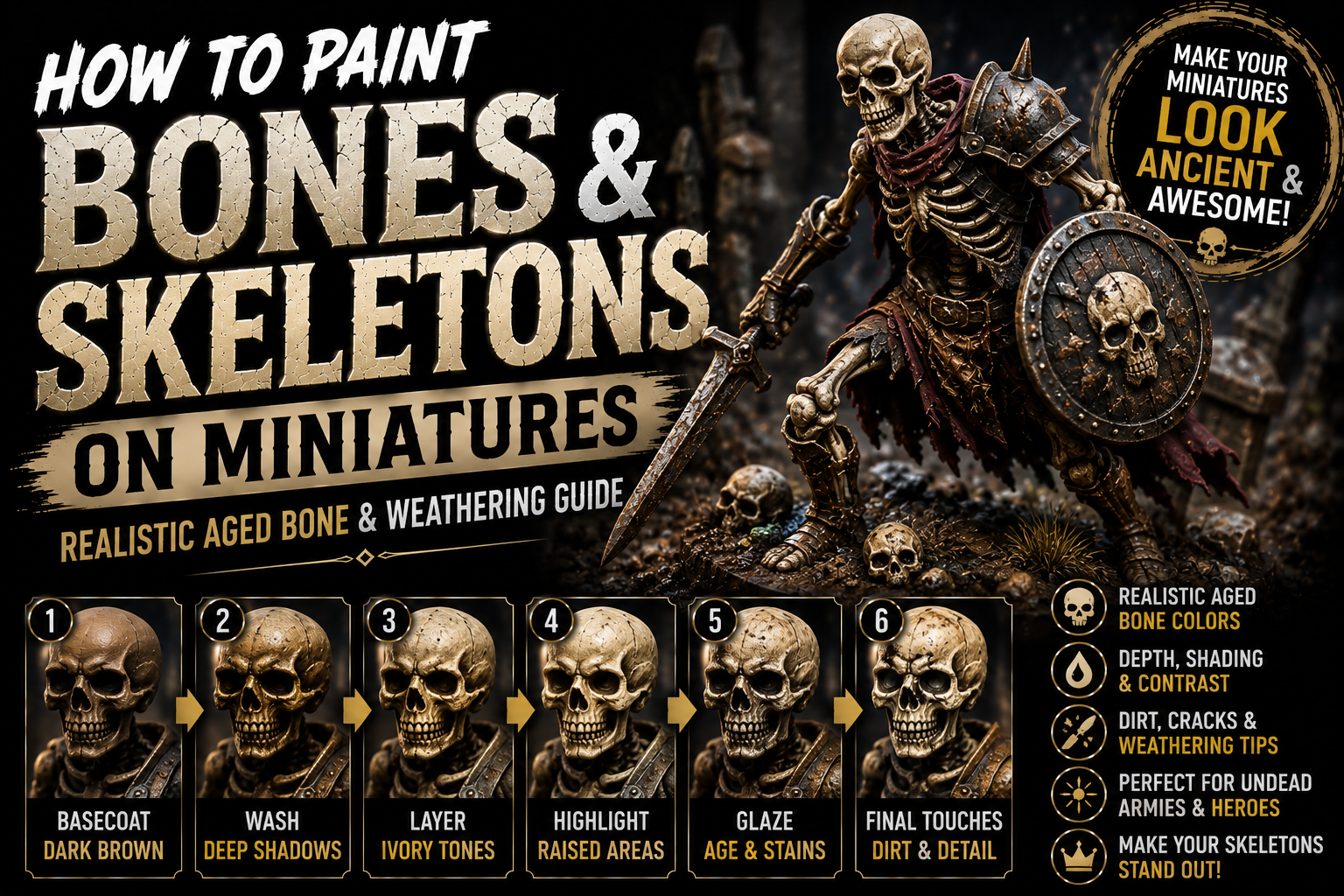
Painting the Base Coat

Start with a medium brown or dark beige base coat.
This may initially look much darker than expected, but it provides natural shadows underneath every later layer.
Make sure paint reaches between ribs, inside eye sockets, around joints, and between individual bones.
These dark recesses will become extremely important later.
Once the base coat is smooth and dry, you can begin building lighter bone tones.
Building the Bone Color

Gradually layer lighter beige and ivory colors across the raised surfaces.
Avoid completely covering the darker base.
Leave brown visible inside:
- Rib cages
- Eye sockets
- Joints
- Cracks
- Teeth gaps
- Armor contact points
Each lighter layer should cover a smaller area.
This naturally creates depth without requiring complicated blending.
Highlighting the Skeleton
Once the main bone color is established, concentrate your highlights on the most exposed areas.
The skull deserves particular attention because viewers naturally focus on the face.
Highlight the brow, cheekbones, nose cavity edges, teeth, and upper skull.
On the body, concentrate lighter colors along shoulders, ribs, knees, fingers, and raised joints.
Finish with small off-white highlights instead of covering everything with pure white.
Painting an Aged Skull

Skulls offer excellent opportunities for extra weathering.
Apply thin brown glazes around the teeth, eye sockets, cracks, and lower portions of the skull.
Yellow-brown stains can create the appearance of extremely old bone.
Tiny irregular lines painted with darker brown can also represent cracks.
Then place thin ivory highlights beneath selected cracks to create the illusion of depth.
Small details like these can make a miniature skull surprisingly realistic.
Adding Dirt and Ancient Weathering

An undead warrior buried for centuries shouldn’t look perfectly clean.
Apply subtle brown, grey, or green glazes to selected areas.
Dirt usually collects around feet, joints, lower legs, and areas touching armor or clothing.
Very subtle green tones can suggest moisture, moss, or centuries spent inside a damp crypt.
Don’t cover the entire skeleton.
Variation makes the weathering believable.
Painting Skeleton Armor and Weapon

Skeleton miniatures often carry old weapons, shields, and damaged armor.
These accessories provide an opportunity to contrast the warm bone with darker materials.
Rusty iron, tarnished bronze, damaged leather, and faded cloth all work beautifully.
Keep the equipment slightly darker than the skeleton so the bones remain visually readable.
Weathering the equipment also reinforces the idea that the character has been buried or wandering for decades.
Creating Necromantic Skeletons

Fantasy skeletons don’t need to remain completely realistic.
Adding magical energy can transform an ordinary undead warrior into something much more memorable.
Green, blue, or purple light can appear inside:
- Eye sockets
- Rib cages
- Magical weapons
- Runes
- Cracks
- Armor
Keep the brightest magical color concentrated near its source and add subtle OSL to nearby bone.
The contrast between aged ivory and supernatural light creates an excellent undead effect.
Common Mistakes to Avoid

Avoid these common mistakes:
- Painting bone pure white.
- Removing all dark recesses.
- Highlighting every bone equally.
- Using only one beige color.
- Making old skeletons perfectly clean.
- Applying extremely heavy washes.
- Forgetting contrast around the skull.
The goal isn’t perfectly clean bone.
It’s believable bone.
Final Thoughts
Painting realistic skeletons is primarily about building contrast and variation.
Start darker than you think you’ll need, preserve shadows inside joints and recesses, gradually build beige and ivory layers, and reserve your brightest colors for carefully selected highlights.
Then introduce subtle stains, dirt, cracks, and environmental weathering.
These techniques work on skeleton warriors, skulls, undead monsters, necromancers, dungeon scenery, graveyard bases, bone armor, and countless D&D miniatures.
Once you stop thinking of bone as simply “white,” painting skeletons becomes much more interesting—and your undead miniatures immediately begin to look centuries old.
Frequently Asked Questions
What’s the best base color for skeleton miniatures?
Medium brown or dark beige creates an excellent foundation because it naturally provides shadows underneath the lighter bone colors.
Should skeletons be painted white?
Not completely. Ivory, beige, tan, and brown generally produce much more realistic bone.
How do I make bones look old?
Add subtle brown and yellow staining, dark cracks, dirt, and occasional grey or green discoloration.
Can I dry brush skeleton miniatures?
Yes. Dry brushing can work extremely well, especially when painting large groups of skeletons quickly.
How do I make a skull stand out?
Increase the contrast around the eye sockets and facial recesses while placing your brightest highlights on the brow, cheekbones, teeth, and upper skull.
What’s the biggest mistake when painting skeletons?
Using white as the main color instead of gradually building toward ivory and off-white highlights.
If you would like free D&D STL miniatures, visit our homepage and download yours now:
https://echoartstudios.net/