How to Paint Fire Effects on Miniatures (Realistic Flames & OSL Guide)

Fire is one of the most eye-catching effects you can add to a fantasy miniature. Whether it’s a flaming sword, a wizard casting a fire spell, a dragon breathing flames, or a torch illuminating a dungeon, realistic fire instantly becomes the focal point of the model.
Many painters make the mistake of painting fire the same way they would paint ordinary objects. In reality, fire behaves differently—it is its own light source. The hottest parts are actually the brightest, while the outer edges become darker as the flames cool.
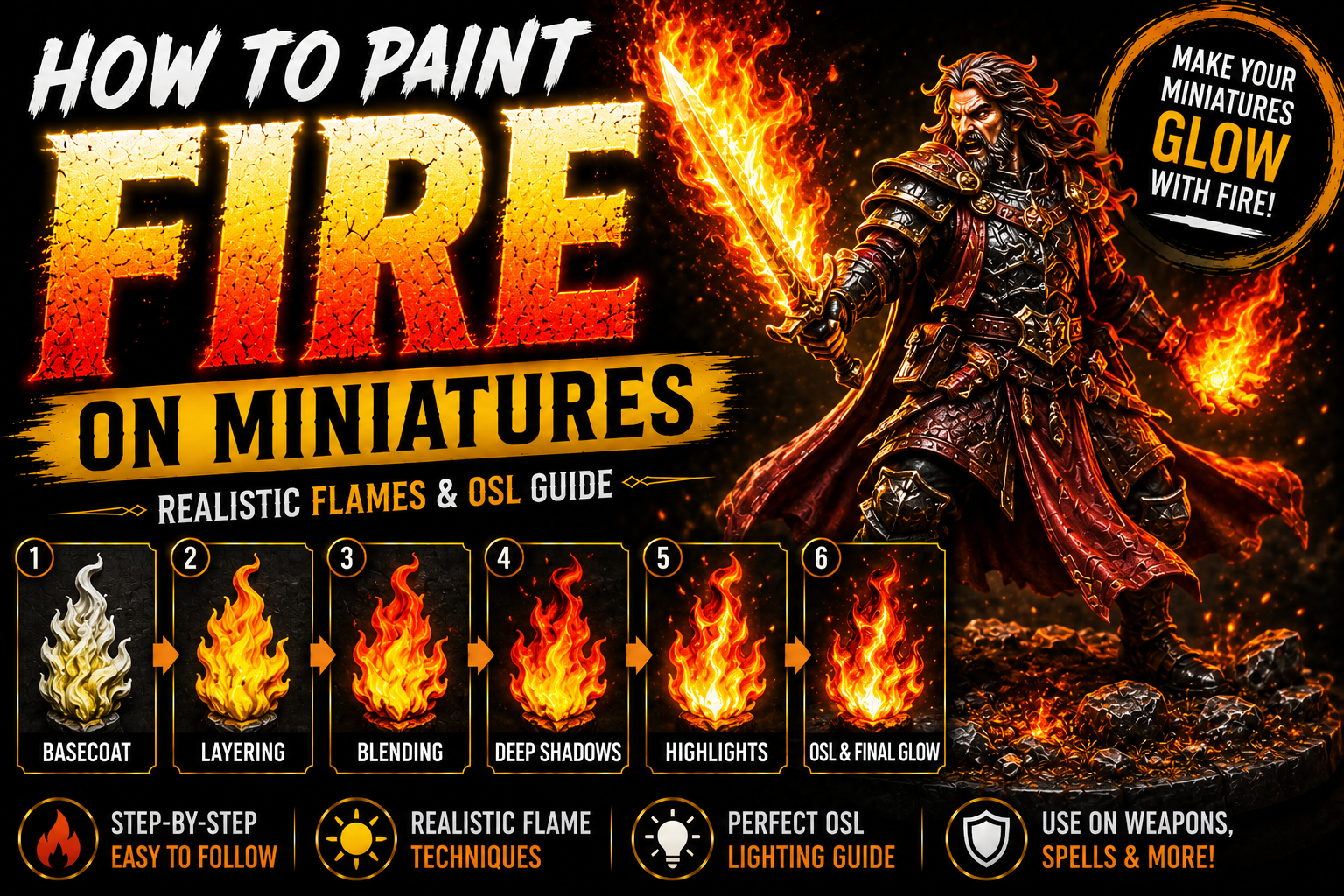
In this guide, you’ll learn how to paint realistic flames using layering, blending, and Object Source Lighting (OSL) techniques that bring your miniatures to life.
Understanding How Fire Works

Before painting, observe real flames.
The hottest area is located at the base of the flame and appears almost white or pale yellow. As the flame rises, it transitions through yellow, orange, red, and finally dark smoke near the tips.
Unlike most objects, fire is brightest at its center—not along its edges.
Understanding this simple principle immediately improves the realism of your flames.
Choosing Your Fire Colors

A realistic fire palette usually includes:
- White
- Pale Yellow
- Bright Yellow
- Orange
- Deep Orange
- Red
- Dark Red
Each color should blend smoothly into the next.
Avoid jumping directly from yellow to dark red without intermediate transitions.
Painting the Base Coat

Begin with the brightest colors.
Unlike most painting projects, start by applying white or pale yellow to the hottest parts of the flame.
From there, gradually layer darker colors outward.
This reverse highlighting technique follows the natural behavior of real fire.
Blending Smooth Flame Transitions

Smooth blends are essential.
Use thin layers to transition between white, yellow, orange, and red.
Allow each layer to overlap slightly so no harsh lines remain visible.
The smoother the transition, the more believable the flame becomes.
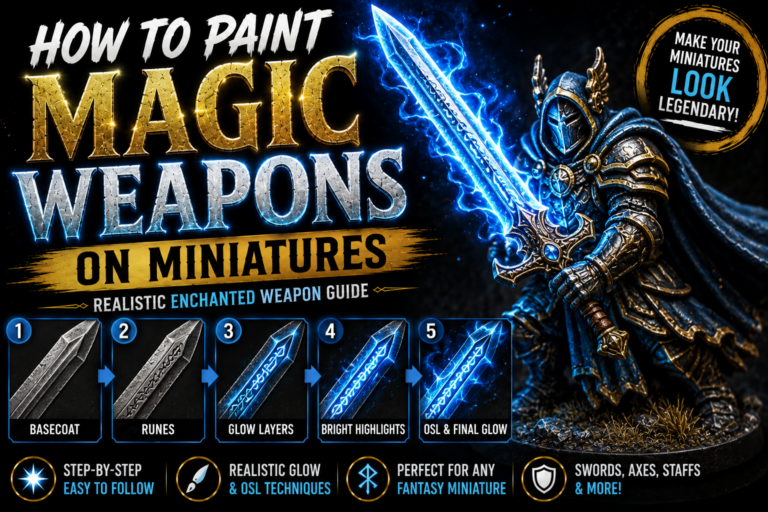
Painting Flaming Weapons

Flaming weapons require two separate effects.
First, paint the flame itself using the techniques above.
Then apply Object Source Lighting to nearby armor, hands, shields, or clothing.
Keep the strongest reflections closest to the flame.
This immediately creates the illusion that the weapon is emitting real light.
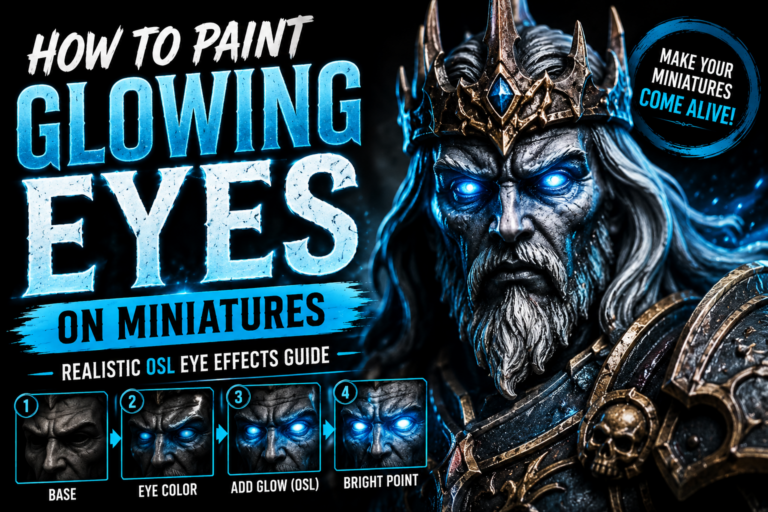
Adding Object Source Lighting (OSL)

Fire naturally illuminates everything nearby.
Thin orange and yellow paints into transparent glazes and gently apply them to surrounding surfaces.
Areas closest to the flame receive the brightest reflections.
Allow the light to fade naturally as it moves away from the source.
Subtle OSL creates much more believable magical fire.
Painting Different Fire Effects

Fantasy miniatures allow endless creativity.
Blue flames often represent magical energy.
Green fire works beautifully for necromancy or cursed weapons.
Purple flames create an arcane appearance.
Regardless of the color, always keep the brightest tones near the center of the flame.
Common Mistakes to Avoid

Avoid these common mistakes:
- Painting the tips white instead of the center.
- Creating harsh transitions.
- Using only orange.
- Forgetting OSL.
- Applying thick paint.
- Making every flame identical.
Natural variation makes flames feel alive.
Final Thoughts
Painting realistic fire is all about understanding light. By reversing your normal highlighting process, building smooth color transitions, and adding carefully controlled OSL, you can create flames that appear to glow right off the miniature.
These techniques work perfectly for dragons, wizards, flaming swords, torches, magical effects, lava monsters, and countless fantasy miniatures.
Frequently Asked Questions
Why is the center of the flame white?
The hottest part of a flame burns brightest, appearing white or pale yellow before transitioning to orange and red.
What’s the easiest fire effect for beginners?
Classic yellow-to-orange flames are the most forgiving and teach the fundamentals of fire painting.
Should I always add OSL?
Not always, but OSL dramatically improves realism whenever the flame is close to armor, clothing, or nearby objects.
Can I paint magical blue fire?
Absolutely. Simply replace the warm colors with white, light blue, cyan, and dark blue while keeping the same lighting principles.
What’s the biggest mistake when painting flames?
Painting them like ordinary objects instead of treating them as glowing light sources.
If you would like free D&D STL miniatures, visit our homepage and download yours now:https://echoartstudios.net/