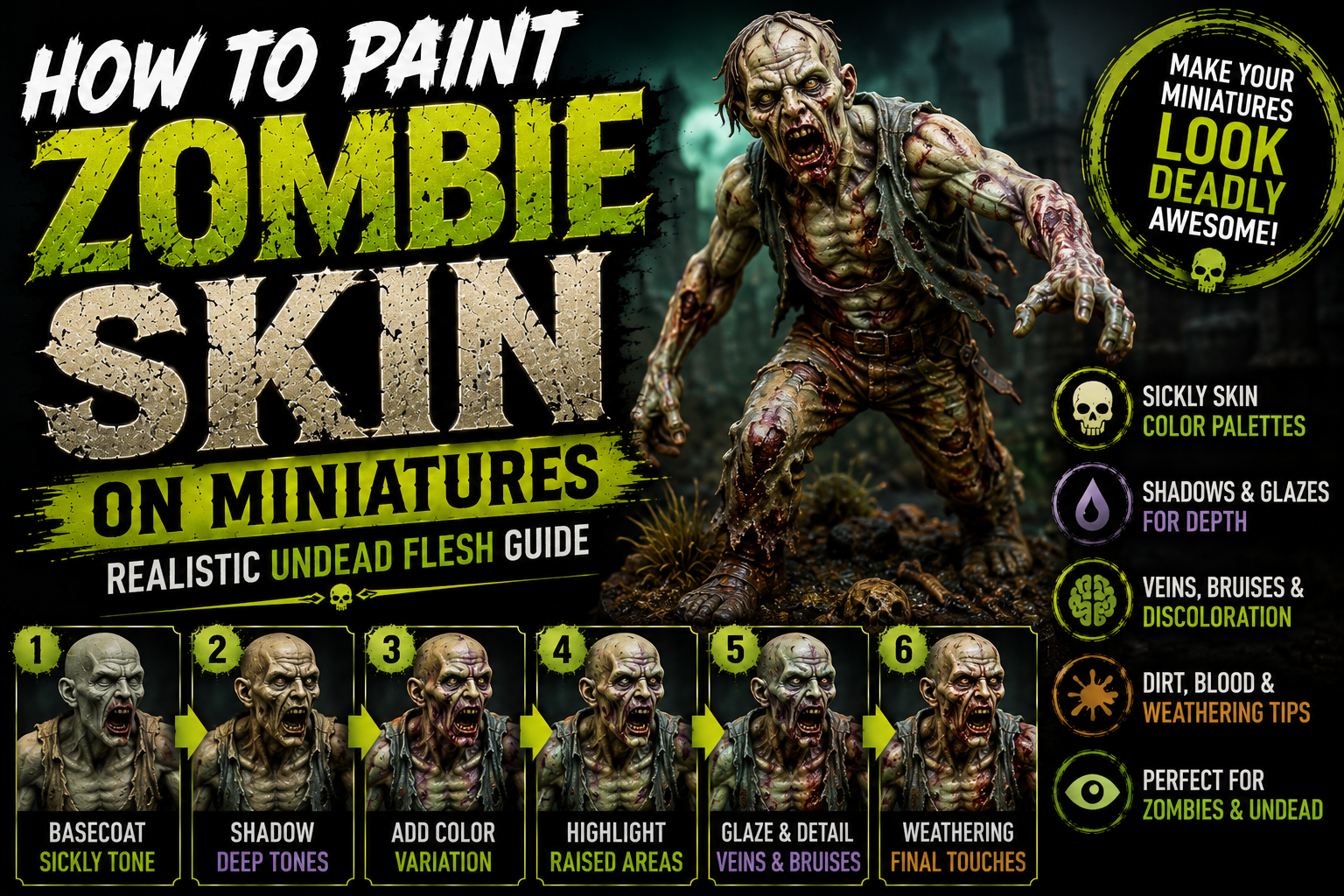
How to Paint Zombie Skin on Miniatures (Realistic Undead Flesh Guide)

Zombie skin is one of the most enjoyable fantasy textures to paint because it doesn’t need to look clean or perfect. Uneven colors, strange shadows, bruised areas, pale flesh, and sickly tones actually make the miniature more convincing.
The mistake many painters make is simply covering the entire zombie with green or grey paint. Realistic undead flesh becomes much more interesting when several subtle colors appear beneath the skin.
Purple around damaged areas, blue-grey shadows, pale highlights, and small amounts of sickly green can transform a simple zombie into something that looks ancient and unnatural.
In this guide, you’ll learn how to paint realistic zombie skin using layering, glazing, color variation, and weathering techniques.
Understanding Undead Skin

Zombie flesh should feel different from healthy human skin.
Instead of warm reds and natural flesh tones, undead skin usually works better with desaturated colors.
Think about combinations of grey, beige, pale green, purple, and blue.
The skin should also contain variation.
Hands, faces, joints, and damaged areas don’t need to share exactly the same color.
These subtle differences create the sickly appearance that makes undead miniatures interesting.
Choosing Your Zombie Skin Palette

A versatile zombie palette can include:
- Grey Green
- Pale Flesh
- Olive Green
- Purple
- Blue Grey
- Beige
- Off-White
Avoid using extremely saturated green across the entire miniature.
Instead, use green as one component of the skin while allowing grey and flesh tones to remain visible.
For older zombies, darker and more desaturated colors usually work especially well.
Painting the Base Coat

Begin with a muted mid-tone.
Grey-green, desaturated beige, or pale olive are excellent choices.
Apply several thin coats until the skin is evenly covered without filling the sculpted details.
Don’t worry if the base looks boring.
Most of the personality will appear during the shading and glazing stages.
Keeping the initial layer relatively neutral also gives you more freedom when adding color variation later.
Creating Deep Undead Shadows

Instead of using black for every shadow, experiment with dark purple, blue-grey, or brown.
Apply these colors inside:
- Eye sockets
- Cheeks
- Between fingers
- Around muscles
- Under the jaw
- Between ribs
- Around damaged clothing
Purple shadows work particularly well because they contrast naturally against greenish skin.
Use thin glazes so the transition remains smooth.
Adding Sickly Color Variation

This is where zombie skin becomes much more interesting.
Apply extremely thin glazes of different colors across selected areas.
Use purple around joints and damaged skin.
Add subtle blue around veins and colder areas.
Introduce green or yellow-green around sickly sections.
Small amounts of red-brown can create additional contrast around irritated or weathered areas.
The colors should remain subtle.
You’re creating variation beneath the skin rather than painting obvious colored patches.
Highlighting Zombie Flesh

Gradually mix pale flesh, beige, or ivory into your original skin color.
Apply highlights across raised areas such as:
- Forehead
- Nose
- Cheekbones
- Shoulders
- Knuckles
- Fingers
- Upper muscles
Keep the brightest highlights relatively small.
Avoid using pure white across large areas because it can make the miniature look chalky.
A slightly dirty ivory usually creates a more convincing undead appearance.
Painting Veins and Discoloration

Visible veins can add excellent detail to larger zombies.
Using heavily thinned blue or purple paint, create extremely fine irregular lines beneath pale areas of skin.
Don’t cover the entire miniature.
A few veins around the arms, chest, temples, or legs are usually enough.
After painting them, apply a thin glaze of your skin color over the veins.
This makes them appear beneath the surface instead of painted directly on top.
Painting Zombie Faces

The face should receive slightly more attention because it’s usually the miniature’s main focal point.
Darken the eye sockets significantly.
Add pale highlights to the forehead, nose, cheekbones, and jaw.
You can also introduce subtle purple or blue discoloration beneath the eyes.
For glowing undead eyes, use a bright magical color such as green, blue, or orange and keep the surrounding face relatively dark.
The additional contrast immediately draws attention toward the head.
Weathering Clothes and Equipment

Clean equipment can make an undead miniature feel disconnected from its story.
Zombie clothing should normally appear faded, dirty, and damaged.
Use brown and grey glazes around the lower portions of clothing.
Add small scratches to armor and weapons.
Rust effects work particularly well on old swords, chains, helmets, and shields.
Keeping equipment weathered helps reinforce the aged appearance of the zombie itself.
Common Mistakes to Avoid

Avoid these common mistakes:
- Painting the entire zombie bright green.
- Using pure black for every shadow.
- Making the skin completely uniform.
- Using too much purple or blue.
- Applying thick glazes.
- Highlighting every area equally.
- Keeping clothing and equipment perfectly clean.
Zombie skin benefits from controlled imperfection.
Variation is what makes it interesting.
Final Thoughts
Realistic zombie skin isn’t about finding one perfect undead color.
It’s about combining several subtle colors into one believable surface.
Start with a desaturated base, deepen the shadows with purple or blue-grey, introduce sickly green and purple variation through thin glazes, and gradually build pale highlights across the raised areas.
Then add small details such as veins, discoloration, dirty clothing, and weathered equipment.
These techniques work beautifully on zombies, undead warriors, necromancer servants, plague creatures, dungeon monsters, and countless D&D miniatures.
The more variation you introduce while keeping everything subtle, the more convincing your undead miniatures will become.
Frequently Asked Questions
What’s the best base color for zombie skin?
Grey-green, pale olive, and desaturated beige are excellent starting colors.
Should zombies always have green skin?
No. Grey, pale flesh, purple, blue, and beige can create much more interesting undead skin.
What’s the best color for zombie shadows?
Purple and blue-grey are excellent alternatives to black because they create colder, more natural-looking shadows.
How do I make zombie skin look old?
Use desaturated colors, subtle discoloration, pale highlights, visible veins, and weathering.
Can I paint several zombies with different skin colors?
Absolutely. Small variations between zombies make an undead army look much more natural.
What’s the biggest mistake when painting zombie skin?
Using one uniform green color across the entire miniature instead of creating variation with shadows, glazes, and highlights.
If you would like free D&D STL miniatures, visit our homepage and download yours now:
https://echoartstudios.net/