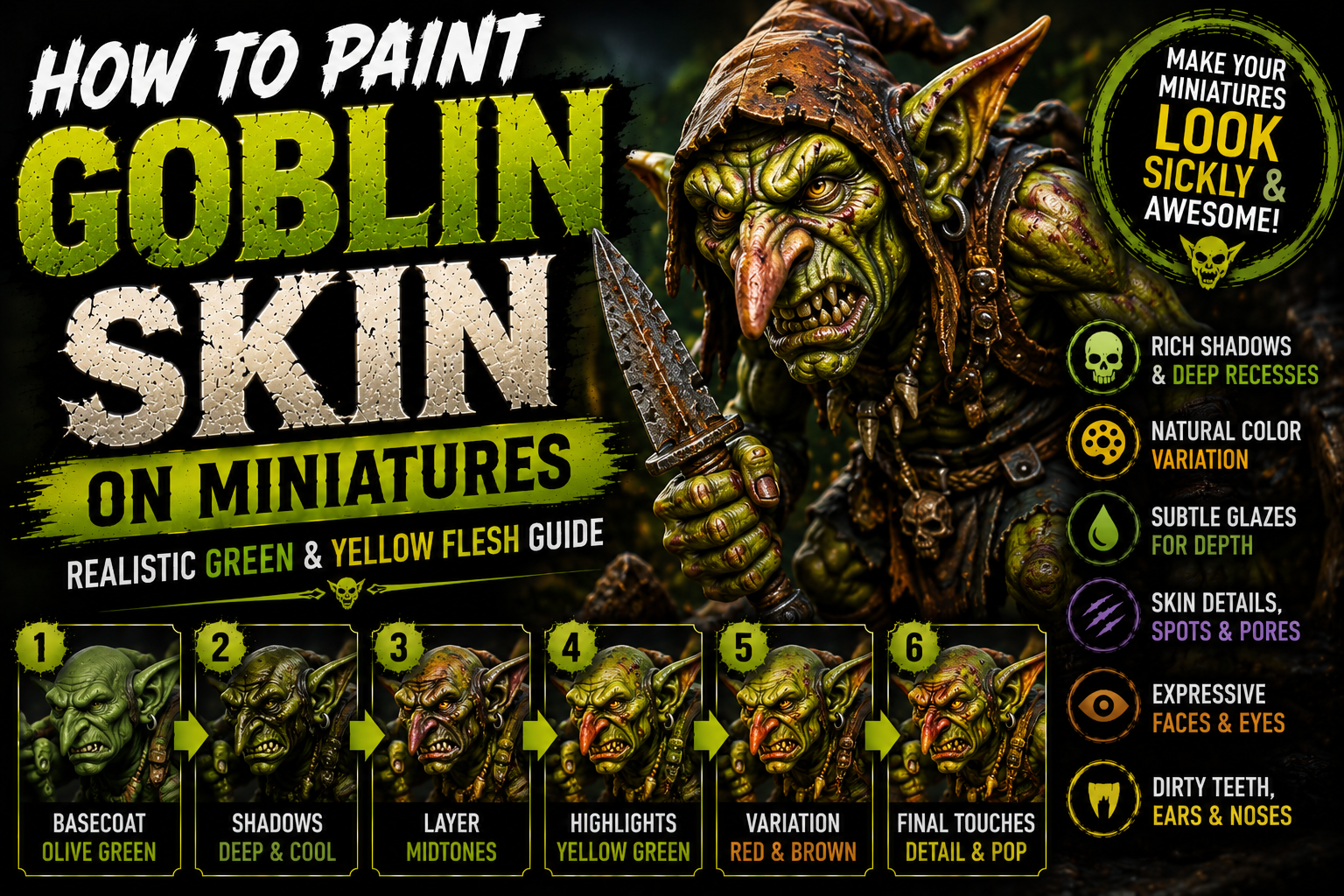
How to Paint Goblin Skin on Miniatures (Realistic Green & Yellow Skin Guide)

Goblin skin is one of the most expressive surfaces you can paint on a fantasy miniature. Unlike large muscular orcs, goblins usually have exaggerated faces, long noses, pointed ears, thin limbs, and deep wrinkles that give painters plenty of opportunities to experiment with color.
The biggest mistake is treating goblins like smaller orcs.
While both creatures are often green, goblin skin can benefit from much stronger yellow, olive, brown, and even reddish tones. These variations create a sickly, mischievous appearance that immediately separates them from heavier orc warriors.
In this guide, you’ll learn how to paint realistic goblin skin using layering, glazing, facial highlighting, color variation, and detailed skin textures.
Understanding Goblin Skin

Goblin anatomy creates natural opportunities for extreme contrast.
Large noses, pointed ears, pronounced cheekbones, wrinkles, and thin fingers all catch light differently.
Deep facial recesses should remain relatively dark.
Raised areas such as the nose, forehead, ears, and knuckles can become significantly brighter.
This exaggerated contrast works extremely well because goblins themselves are exaggerated fantasy creatures.
Instead of aiming for perfectly smooth skin, allow some roughness and irregularity to remain.
Choosing Your Goblin Skin Palette

A versatile goblin palette can include:
- Dark Olive
- Forest Green
- Yellow Green
- Khaki
- Mustard Yellow
- Brown
- Pale Beige
Compared with orcs, goblins often look great with more yellow mixed into their highlights.
You can also introduce subtle red, purple, and brown tones around specific areas.
This creates much richer skin than using green alone.
Painting the Base Coat

Begin with a medium-dark olive green.
Apply several thin coats until the skin is evenly covered while preserving every sculpted wrinkle.
Don’t begin with bright yellow-green.
The darker foundation creates natural shadows and gives you room to gradually increase brightness later.
For especially sickly goblins, you can mix a small amount of brown or grey into the base color.
This immediately creates a dirtier, more desaturated appearance.
Creating Deep Shadows

Goblin faces contain many deep recesses.
Dark green mixed with brown or purple works beautifully for these shadows.
Concentrate darker colors around:
- Eye sockets
- Under the nose
- Beneath cheekbones
- Inside ears
- Between fingers
- Under the jaw
- Around wrinkles
Don’t completely cover the skin with a dark wash.
Controlled shading keeps the miniature cleaner and preserves stronger contrast.
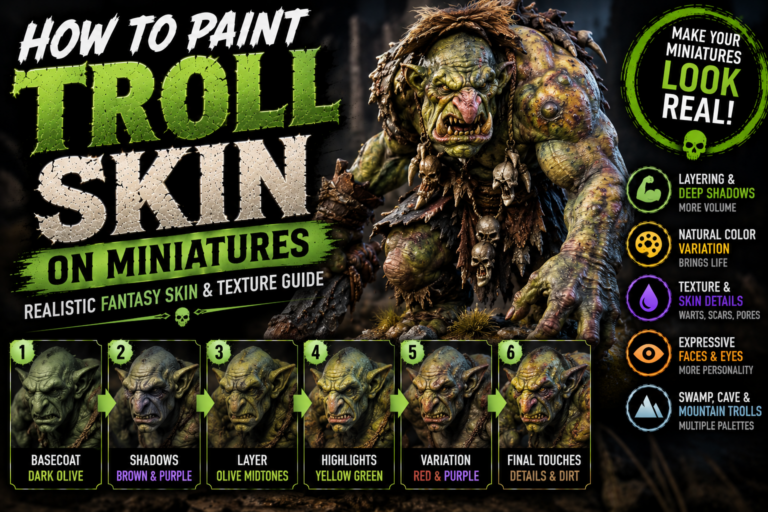
Building Yellow-Green Midtones

Once your shadows are established, restore the original green across raised surfaces.
Then gradually introduce yellow-green.
Each new layer should cover a smaller area.
Follow the shape of the face and muscles rather than painting highlights randomly.
The transition from dark olive to yellow-green creates the characteristic goblin skin appearance.
Several thin layers will produce much smoother results than one thick highlight.
Adding Natural Color Variation

Color variation can give goblins enormous personality.
Apply extremely thin red, purple, or brown glazes around selected areas.
Good places include:
- Nose
- Ears
- Elbows
- Knuckles
- Lips
- Knees
A subtle reddish nose can make the face especially expressive.
Purple shadows around the eyes can create a more sinister appearance.
Keep these colors transparent so they blend naturally into the green underneath.
Highlighting the Goblin Face

The face is usually the most important part of a goblin miniature.
Concentrate your brightest highlights on the forehead, nose, cheekbones, chin, and upper edges of the ears.
Mix yellow, khaki, or pale beige into your green for the final highlights.
The nose can receive particularly strong highlights because it often protrudes significantly from the face.
This creates an expressive focal point that remains visible even from tabletop distance.
Painting Goblin Ears

Large pointed ears deserve additional attention.
Start with your normal skin color, then introduce subtle red or purple glazes toward the inner ear.
Keep the outer edges brighter.
A thin pale highlight along the very edge can suggest that light is passing through the thinner skin.
This simple detail can dramatically improve the realism of large goblin ears.
Painting Goblin Eyes and Teeth

Goblin faces often contain large eyes and exaggerated teeth.
For the eyes, yellow, orange, red, or pale green can create excellent fantasy expressions.
Keep the pupil carefully defined whenever possible.
For teeth, avoid pure white.
Start with brown or beige before gradually highlighting toward dirty ivory.
Uneven tooth colors often look better than perfectly clean teeth.
Goblins aren’t exactly known for dental hygiene.
Adding Spots, Freckles and Skin Texture

Tiny skin details can make larger goblin miniatures especially interesting.
Using heavily thinned brown, green, or purple paint, add a few irregular dots across the nose, shoulders, or back.
These can represent freckles, pigmentation, dirt, or rough skin.
Don’t create an even pattern.
Natural skin variation should remain irregular.
A few carefully placed marks are usually more effective than covering the entire miniature.
Weathering Goblin Clothing and Equipment

Goblin equipment usually looks better when it isn’t perfectly maintained.
Rusty weapons, dirty leather, torn fabric, and worn armor complement the irregular skin tones beautifully.
Use brown glazes around clothing edges and lower areas.
Metal can receive rust and scratches.
Leather can contain lighter worn edges.
Keeping the equipment dirty helps reinforce the goblin’s chaotic personality.
Common Mistakes to Avoid

Avoid these common mistakes:
- Painting goblins exactly like orcs.
- Using only bright green.
- Ignoring yellow and olive tones.
- Using black for every shadow.
- Making every part of the skin identical.
- Painting teeth pure white.
- Overusing red around the nose and ears.
Controlled variation is what makes goblin skin interesting.
Final Thoughts
Painting goblin skin gives you an excellent opportunity to experiment with colors while still practicing fundamental skin-painting techniques.
Start with a darker olive foundation, establish strong shadows, gradually build yellow-green midtones, and concentrate brighter highlights around the exaggerated facial features.
Then introduce subtle red, purple, and brown variation around the nose, ears, joints, and wrinkles.
Finish with expressive eyes, dirty teeth, small skin details, and heavily weathered equipment.
These techniques work beautifully on goblins, hobgoblins, cave creatures, fantasy raiders, dungeon monsters, and countless D&D miniatures.
Your goblins don’t need perfect skin.
A little irregularity is exactly what gives them personality.
Frequently Asked Questions
What’s the best base color for goblin skin?
Medium-dark olive green provides an excellent foundation because it supports both deep shadows and bright yellow-green highlights.
What’s the difference between painting goblins and orcs?
Goblin skin often benefits from stronger yellow and olive tones, while orcs typically work well with deeper, heavier greens.
Should goblin noses and ears be red?
They don’t have to be, but subtle red or purple glazes can create excellent natural color variation.
How should I highlight goblin skin?
Gradually add yellow-green, khaki, or pale beige to your base color and concentrate the brightest highlights on raised facial features.
What color should goblin teeth be?
Beige and dirty ivory generally look much more believable than pure white.
What’s the biggest mistake when painting goblins?
Using one uniform green across the entire miniature instead of taking advantage of their exaggerated features and natural color variation.
If you would like free D&D STL miniatures, visit our homepage and download yours now:
https://echoartstudios.net/