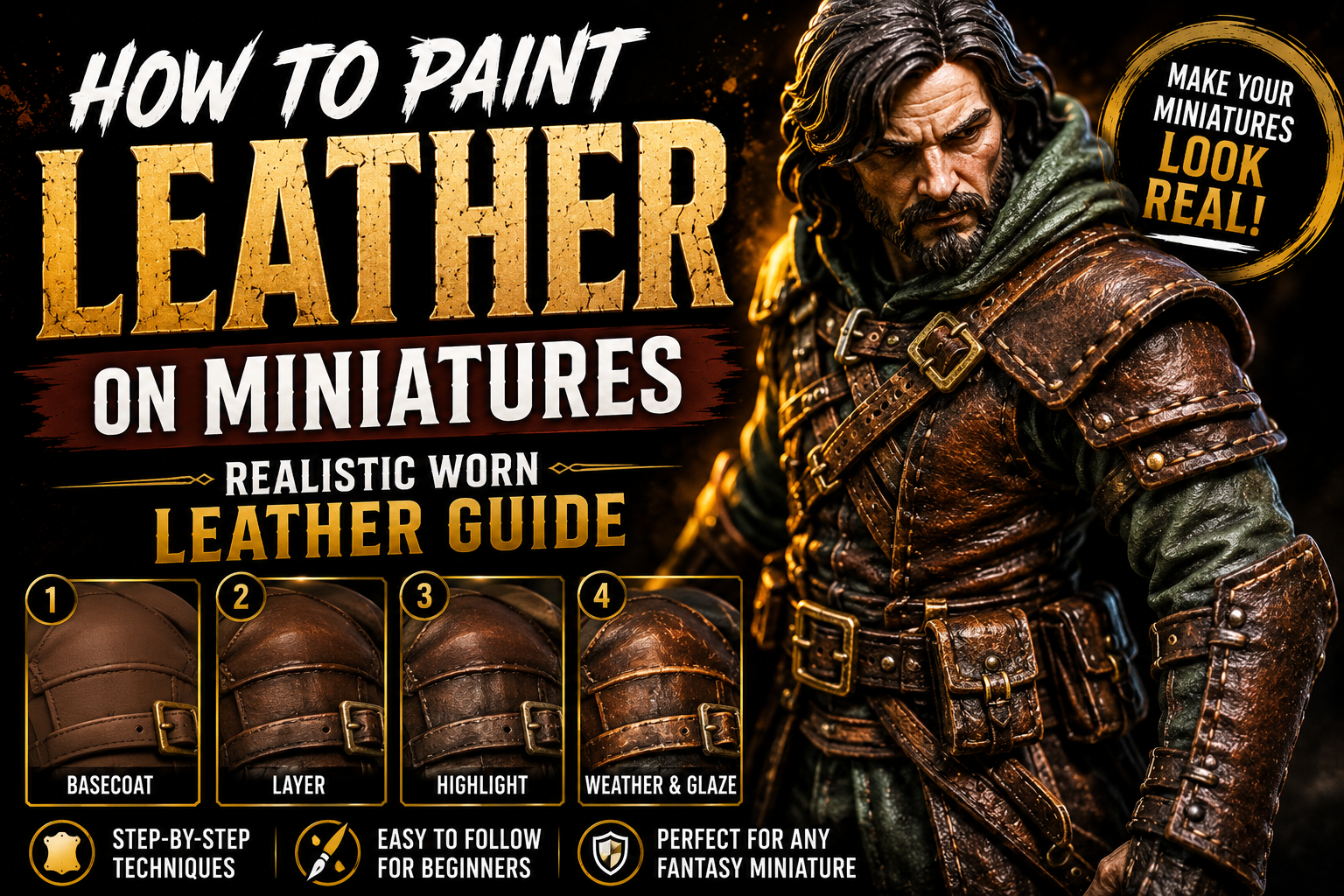
How to Paint Leather on Miniatures (Realistic Worn Leather Guide)

Leather is one of the most common materials found on fantasy miniatures, yet it’s also one of the easiest to paint incorrectly. Flat brown surfaces can make even beautifully sculpted models look lifeless, while realistic leather adds warmth, texture, and storytelling to any character.
Whether you’re painting a ranger’s boots, a barbarian’s armor, a wizard’s belt, or a rogue’s pouch, mastering leather effects will instantly improve your miniature painting skills.
In this guide, you’ll learn how to paint realistic leather using layering, glazing, and subtle weathering techniques that work for tabletop armies and display models alike.
Understanding Real Leather

Leather changes over time.
Fresh leather is smooth and rich in color, while older leather develops scratches, faded edges, wrinkles, and polished areas where it has been handled frequently.
Think about where equipment naturally wears out. Boots become lighter around the toes, belts wear along the edges, and armor develops scratches where it rubs against weapons and clothing.
Studying real leather is the best way to create convincing miniature effects.
Choosing the Right Colors

Different shades create different moods.
Popular leather colors include:
- Dark Brown
- Chocolate Brown
- Red Brown
- Tan
- Beige
- Black Leather
Using multiple brown tones instead of a single color creates depth and realism.
Warm browns work well for heroes, while darker tones suit grim or gothic characters.
Painting the Base Coat

Start with a smooth, even base coat.
Choose a medium or dark brown depending on the final look you want. Apply several thin coats to preserve sculpted details like stitching, folds, and wrinkles.
Avoid painting leather with one thick layer, as this hides texture and makes later highlights much harder.
A smooth foundation is essential for convincing leather.
Layering and Highlights

Leather reflects light differently from metal.
Build highlights gradually using lighter browns and tan colors. Concentrate these highlights along raised folds, edges, and worn areas rather than covering the entire surface.
Leave darker colors visible in recesses to create natural contrast.
Soft transitions produce much more realistic results than sharp highlights.
Adding Scratches and Wear

This is where leather truly comes to life.
Using a fine brush, paint thin irregular scratches with a lighter brown. Keep them short and random rather than perfectly straight.
Focus on high-contact areas such as belts, armor straps, boots, and pouches.
Adding only a few scratches is usually enough to suggest years of use.
Painting Different Leather Types

Not all leather looks the same.
Soft leather often appears lighter and smoother.
Heavy armor leather tends to be darker and more textured.
Old leather benefits from faded highlights and subtle grey-brown glazes.
Exotic fantasy leather—such as dragon hide—can incorporate red, green, or blue undertones for a magical appearance.
Using Glazes for Realism

Thin glazes unify all your previous work.
Apply transparent brown glazes over highlighted areas to soften transitions while preserving the texture beneath.
Multiple thin glazes create rich color variation that closely resembles natural leather.
Patience is rewarded here—several light applications always outperform one heavy coat.
Common Mistakes to Avoid

Avoid these common mistakes:
- Using only one shade of brown.
- Making scratches perfectly straight.
- Over-highlighting every edge.
- Painting leather too orange.
- Applying thick paint.
- Forgetting darker shadows in folds.
Natural variation is what makes leather convincing.
Final Thoughts
Leather may seem like a simple material, but it’s one of the most rewarding textures to master. By combining rich browns, controlled highlights, subtle scratches, and transparent glazes, you can create equipment that looks genuinely worn and believable.
These techniques work equally well on belts, boots, armor, cloaks, saddles, backpacks, pouches, and countless other fantasy accessories.
Frequently Asked Questions
What’s the best color for realistic leather?
Dark brown with lighter tan highlights creates one of the most versatile and natural-looking leather finishes.
Should leather have sharp highlights?
No. Leather usually has soft transitions, unlike polished metal.
How do I paint old leather?
Use faded highlights, thin scratches, and brown-grey glazes to suggest years of wear.
Can I paint black leather?
Absolutely. Start with dark grey rather than pure black and gradually build lighter grey highlights.
Do I need weathering?
Not always, but subtle scratches and worn edges add realism and tell the story of the character.
If you would like free D&D STL miniatures, visit our homepage and download yours now:https://echoartstudios.net/