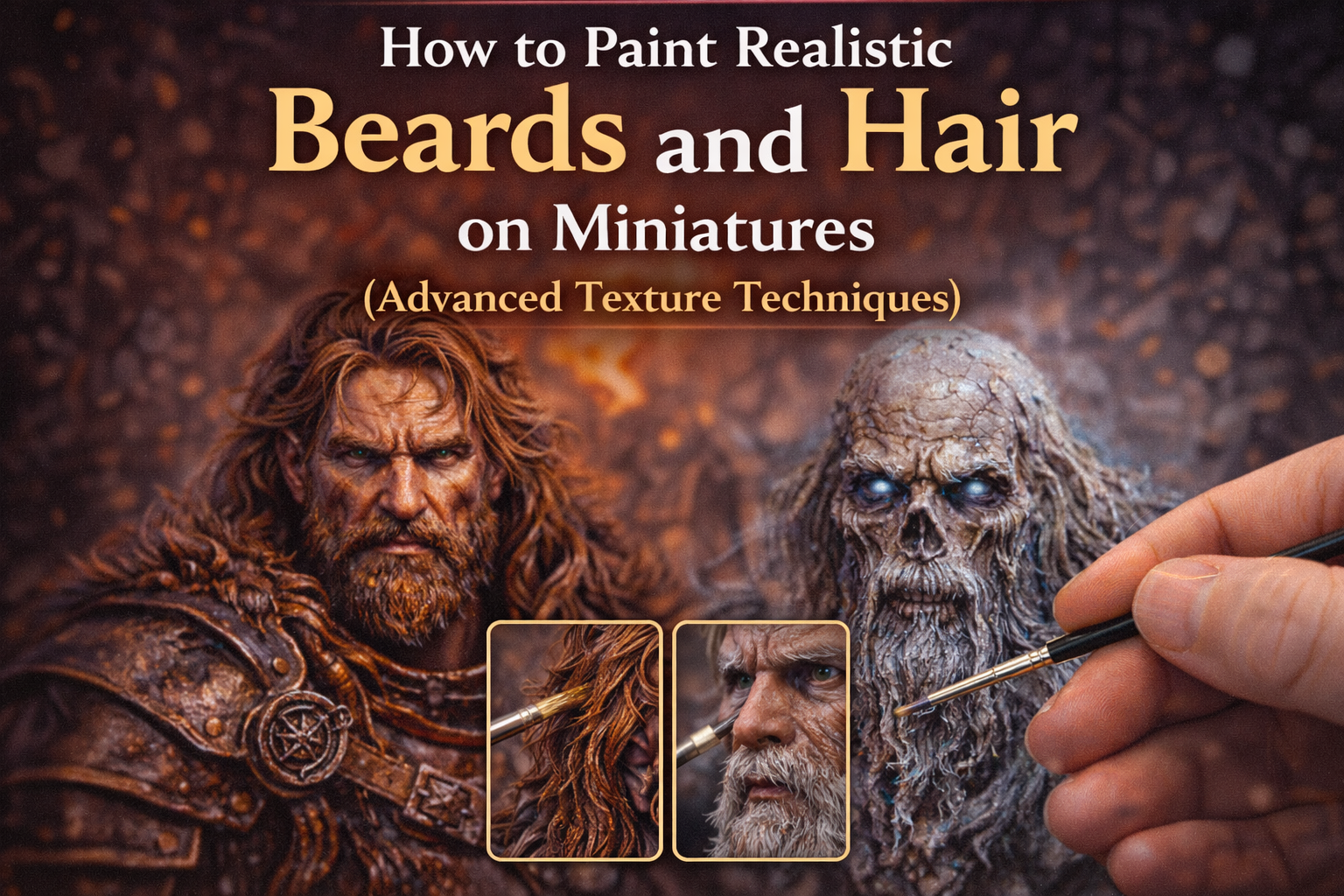
How to Paint Realistic Beards and Hair on Miniatures (Advanced Texture Techniques)
How to paint realistic beards and hair on miniatures is one of the most overlooked techniques in miniature painting. While armor, weapons, and magical effects often receive the most attention, hair and beards play a huge role in defining the personality of a character.
From rugged Viking warriors to grimdark sci-fi veterans, convincing hair textures help transform a miniature from a simple gaming piece into a character that feels alive.
In this guide, you’ll learn how to paint believable hair textures, add natural color variation, create realistic highlights, and adapt your techniques for different fantasy styles.
Understanding Hair Texture in Miniature Painting
Hair behaves differently than cloth, metal, or skin.
It reflects light in thin directional strands and naturally forms clusters. When painted correctly, these strands create depth and realism even at small scales.
Common hair types in miniatures include:
- Short warrior hair
- Long flowing hair
- Braided Viking hair
- Thick barbarian beards
- Thin undead hair
Each requires slightly different highlighting techniques.
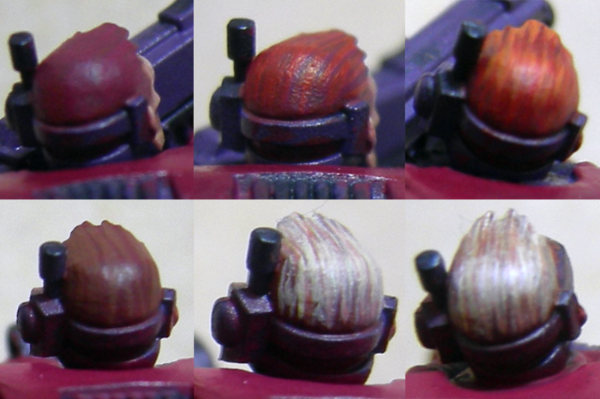
Base Colors for Natural Hair
Choosing the correct base color is essential.
Instead of starting with a bright tone, begin with a darker version of your target color.
Examples:
| Hair Type | Base Color |
|---|---|
| Blonde | Dark beige / tan |
| Brown | Dark chocolate brown |
| Black | Dark grey |
| Red | Dark reddish brown |
| Grey | Neutral mid grey |
Starting darker allows highlights to define the strands later.
The Layered Strand Technique
The best way to simulate hair strands is through directional layering.
Step 1 – Basecoat
Apply the base color evenly.
Step 2 – First Highlight
Use a slightly lighter tone and paint thin strokes following the direction of the sculpted hair.
Step 3 – Second Highlight
Use an even lighter tone but reduce the area.
Step 4 – Edge Strand Highlights
Add very thin lines to the most raised strands.
This layering technique creates natural hair movement.

4
Painting Viking Beards
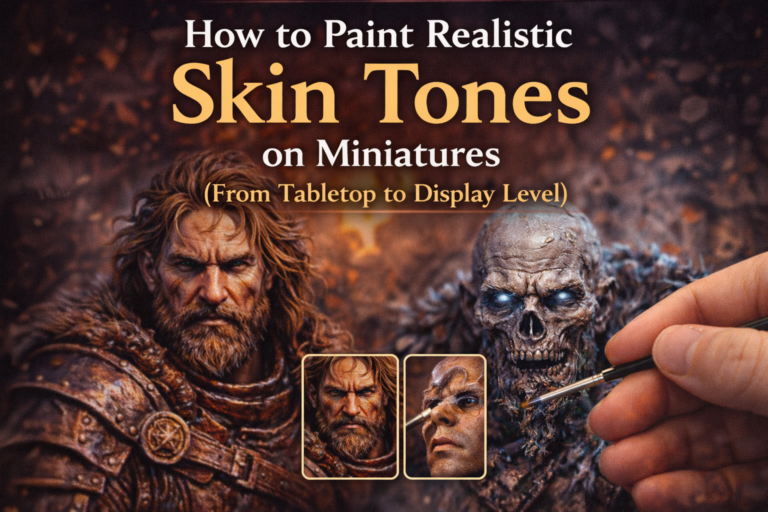
Viking miniatures often feature large, dramatic beards.
To paint them realistically:
- Start with dark brown base
- Drybrush medium brown lightly
- Add thin highlight strokes
- Introduce slight color variation
Some areas may contain:
- slightly reddish strands
- darker shadow clusters
- lighter sun-bleached tips
These variations help create realism, especially when painting Nordic warriors similar to those featured in winter-themed Norse miniature guides:
https://echoartstudios.net/how-to-paint-viking-miniatures-for-a-winter-themed-campaign

4
Adding Color Variation
Real hair is rarely uniform.
Subtle glazes add depth.
Try adding:
- reddish glaze to brown hair
- yellow tint to blonde hair
- cool grey tint to older hair
Even minimal color variation greatly improves realism.
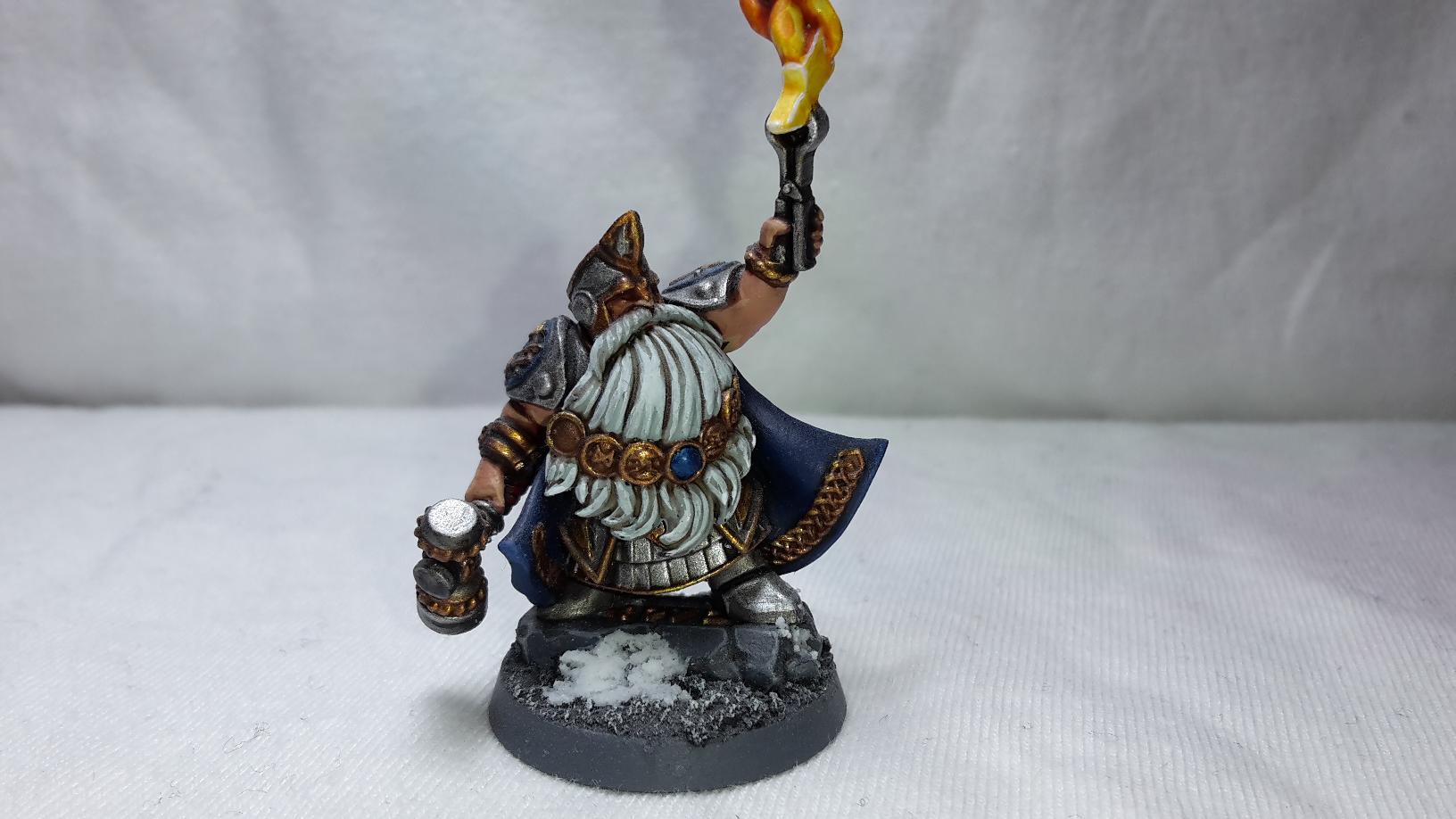
Painting White and Grey Hair
White hair should never start pure white.
Instead:
- Basecoat with mid grey
- Highlight with light grey
- Add white only to the brightest strands
Pure white everywhere removes depth.

4
Creating Volume Through Shadows
Hair needs strong shadows to feel three-dimensional.
Darken:
- areas under braids
- beard underside
- hair near the neck
- deep strand recesses
These shadows create separation between hair clusters.
This type of contrast control is also essential when pushing painting techniques beyond tabletop level into display-level work:
https://echoartstudios.net/advanced-techniques-for-painting-warhammer-40000-miniatures-from-intermediate-to-professional-level
Painting Hair on Undead Characters
Undead hair behaves differently.
It should appear:
- dull
- desaturated
- brittle
Use cooler tones such as:
- grey
- greenish grey
- pale brown
These effects work especially well on undead warriors and frozen corpses similar to Draugr-style miniatures:
https://echoartstudios.net/how-to-paint-draugr-miniatures-with-realistic-frost-and-undead-effects
Speed Painting Hair for Army Projects
When painting large units, efficiency matters.
A quick workflow:
- Basecoat dark color
- Heavy drybrush mid tone
- Light drybrush highlight
This technique creates readable hair textures quickly.
It pairs well with efficient batch painting strategies used when working on large miniature armies:
https://echoartstudios.net/speed-painting-warhammer-40000-miniatures-paint-armies-fast-without-losing-quality
Common Hair Painting Mistakes
Avoid these issues:
Flat single-tone hair
Too much drybrushing
Highlights not following strand direction
Pure white highlights
No shadow depth
Hair should always feel layered and directional.
Final Thoughts
Learning how to paint realistic beards and hair on miniatures adds personality and realism to your models. By using directional highlights, subtle color variation, and controlled shadows, you can transform simple sculpts into expressive characters.
Whether you’re painting Viking warriors, undead monsters, or fantasy heroes, believable hair textures greatly enhance the storytelling power of your miniatures.
If you would like free D&D STL miniatures, visit our homepage and download yours now:
https://echoartstudios.net/