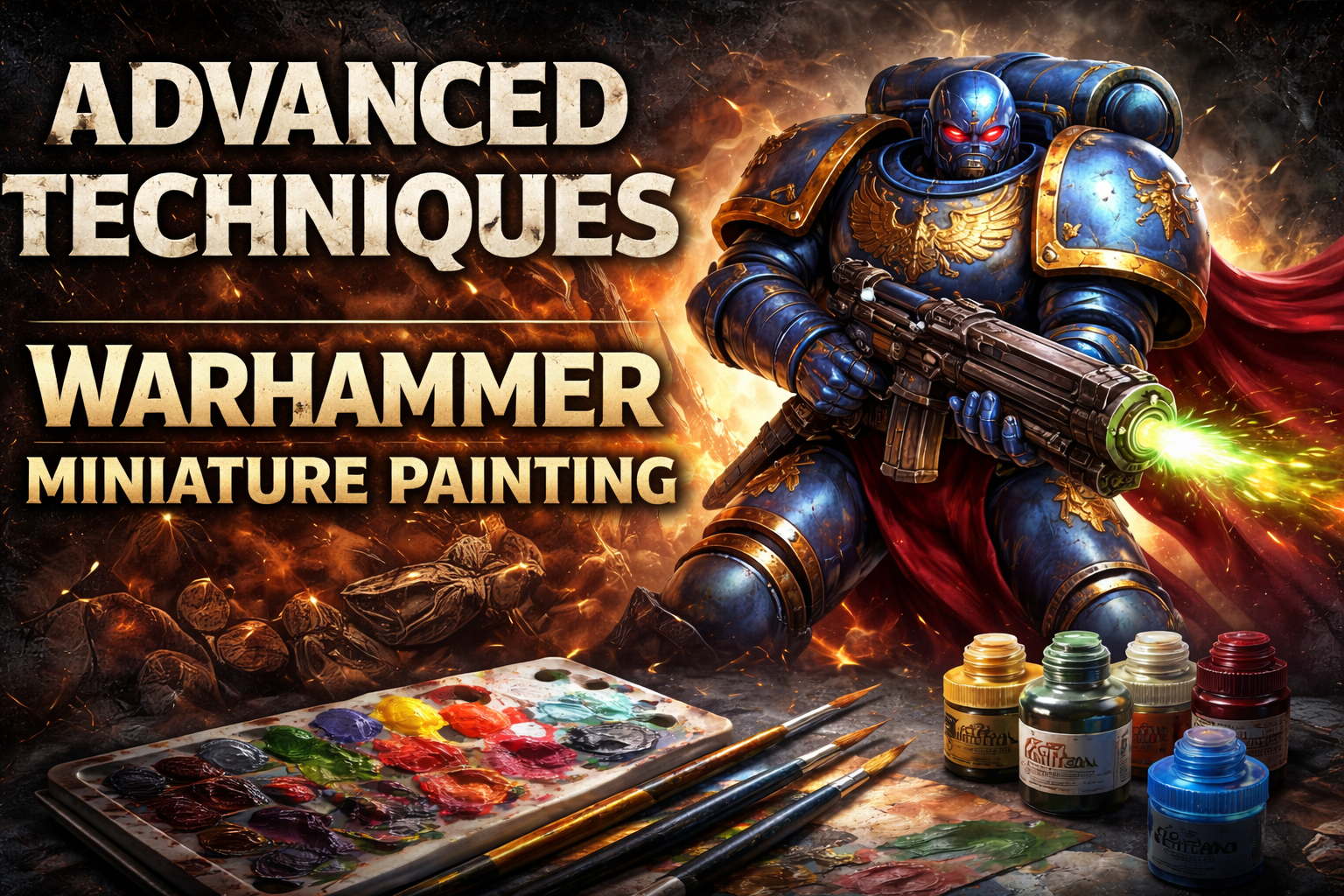
Advanced Techniques for Painting Warhammer 40,000 Miniatures: From Intermediate to Professional Level
Advanced Warhammer miniature painting techniques are the natural next step for hobbyists who already understand the basics and want to elevate their work to a professional standard. At this stage, painting is no longer about simply applying colors correctly — it becomes about controlling light, contrast, focus, and visual storytelling.
In this guide, you will learn how experienced and professional painters approach miniatures to create strong tabletop presence, visual impact, and clean, refined finishes that stand out both up close and from a distance.
What truly defines advanced Warhammer miniature painting?
Many painters assume that advanced painting means extreme detail or ultra-complex techniques. In reality, advanced Warhammer painting is defined by clarity, contrast, and intention.
An advanced miniature:
- Reads clearly from across the table
- Has strong light and shadow separation
- Uses color deliberately
- Directs the viewer’s eye naturally
Understanding these principles matters far more than mastering obscure techniques.

Contrast: the real secret behind professional results
Contrast is the difference between light and dark areas. Without enough contrast, even technically well-painted miniatures look flat and lifeless.
To improve contrast:
- Push shadows darker than feels comfortable
- Take highlights brighter than you normally would
- Separate materials clearly using value, not just color
Professional painters exaggerate contrast intentionally because miniatures are viewed at a distance.

Using zenithal highlighting as a lighting guide
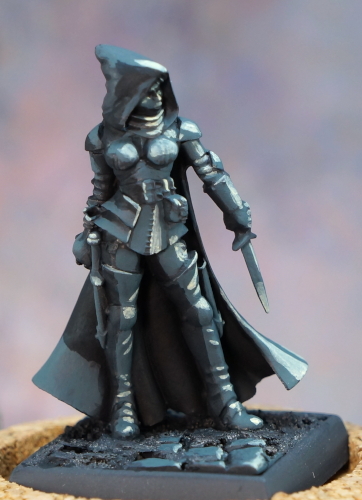
Zenithal highlighting is more than a quick priming trick — it is a visual roadmap for lighting.
When used correctly, zenithal lighting:
- Shows where light naturally hits the model
- Guides highlight placement
- Prevents random or inconsistent lighting
Even when painting over it, keeping the zenithal pattern in mind dramatically improves realism and cohesion.

Prioritizing volumes before small details
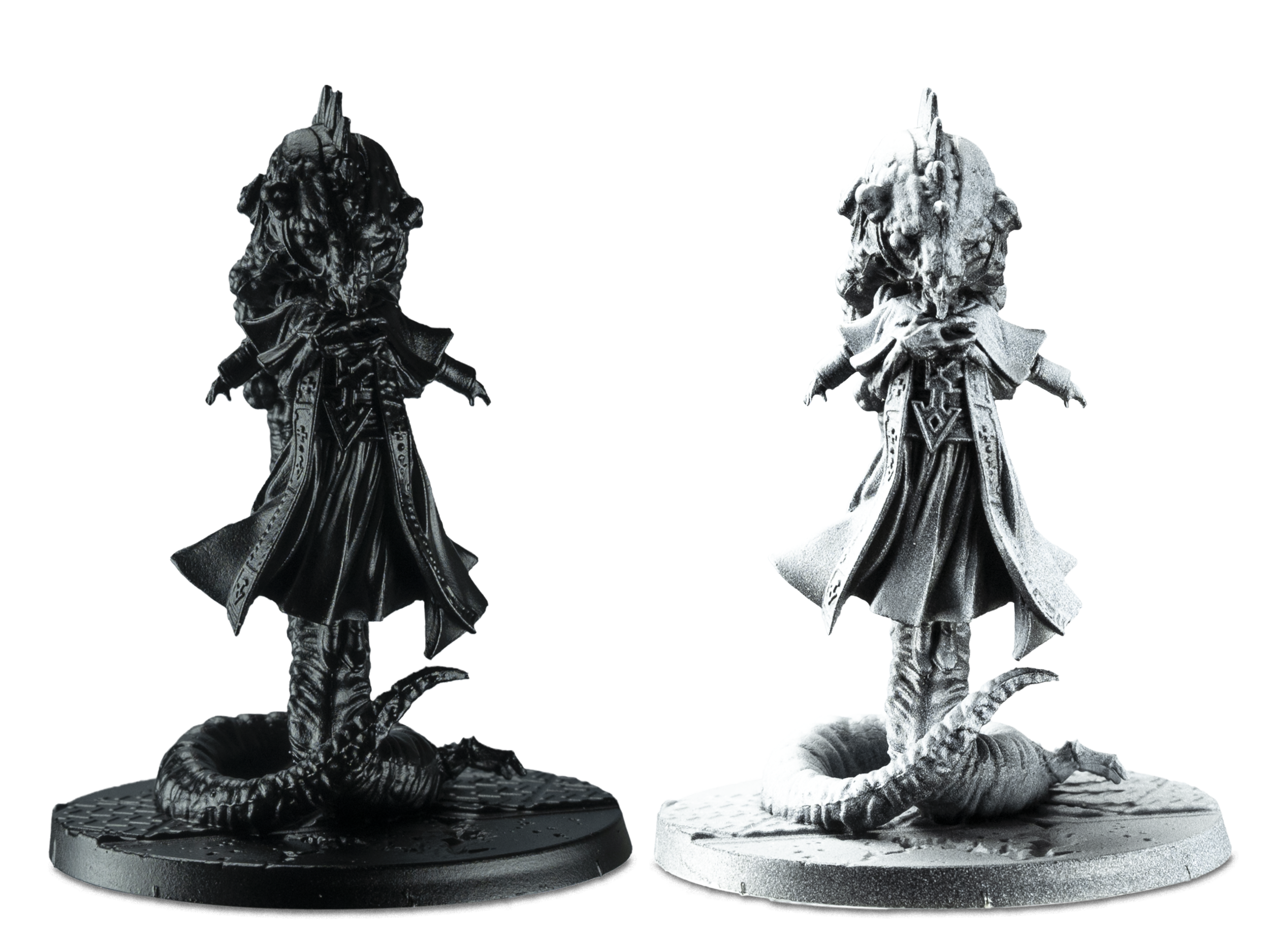
One of the most common mistakes at the intermediate stage is focusing on tiny details too early.
Before refining symbols, scratches, or textures, ask yourself:
- Are the main shapes readable?
- Is the lighting consistent?
- Does the miniature look good from arm’s length?
Advanced miniatures impress first at a distance — details only enhance what already works.

Advanced layering: smooth and controlled transitions
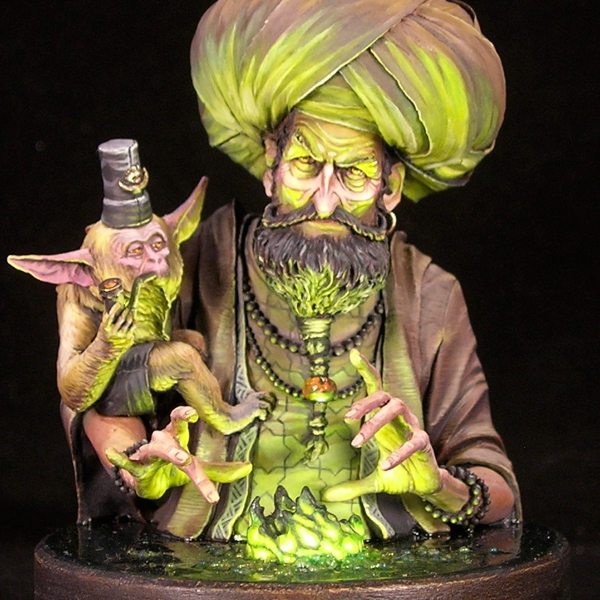
At a professional level, layering is no longer about placing lighter paint on raised areas. It becomes about creating smooth color transitions.
Effective advanced layering requires:
- Heavily thinned paint
- Multiple controlled passes
- Patience and restraint
Harsh transitions break immersion and reduce visual quality.
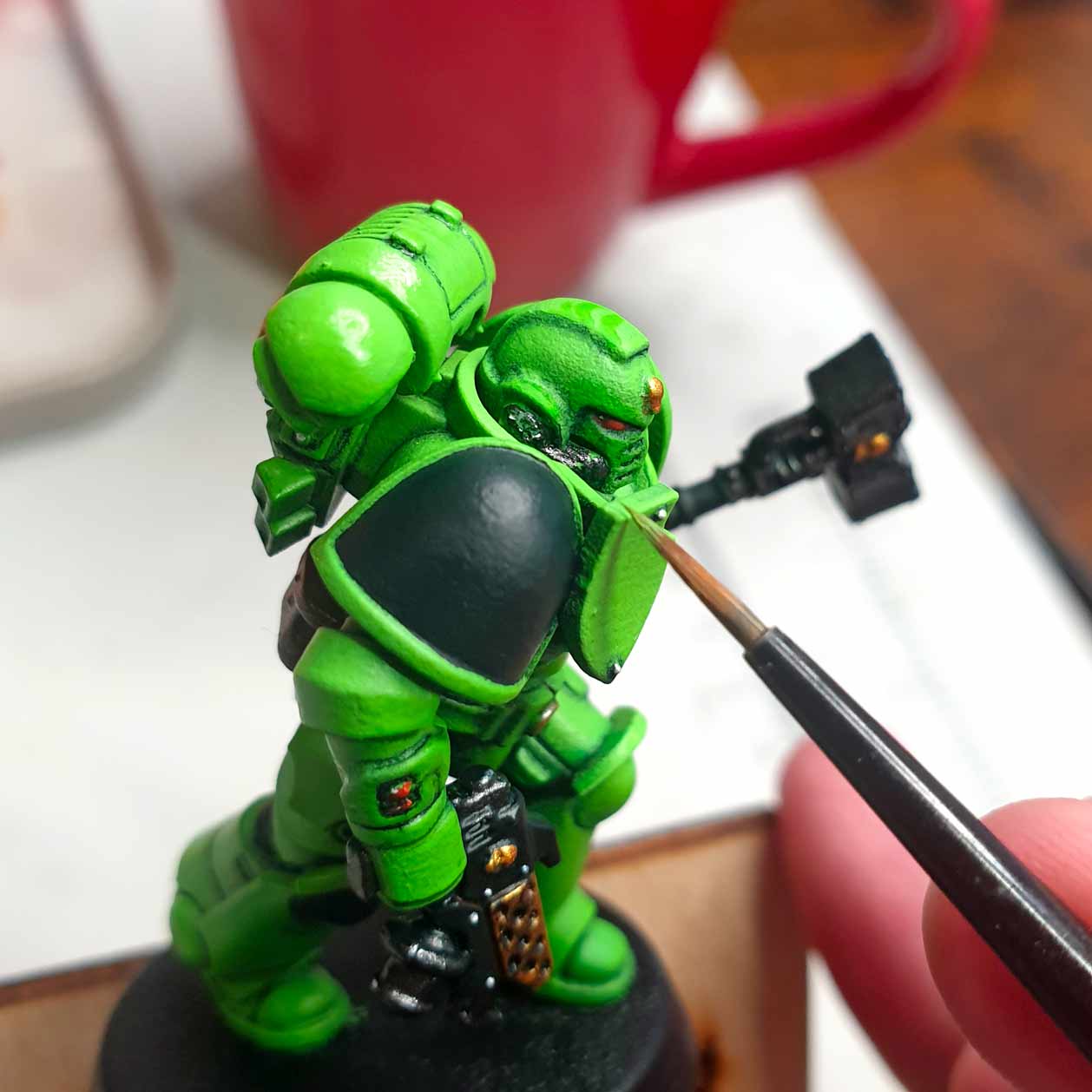
Selective edge highlighting (not every edge)
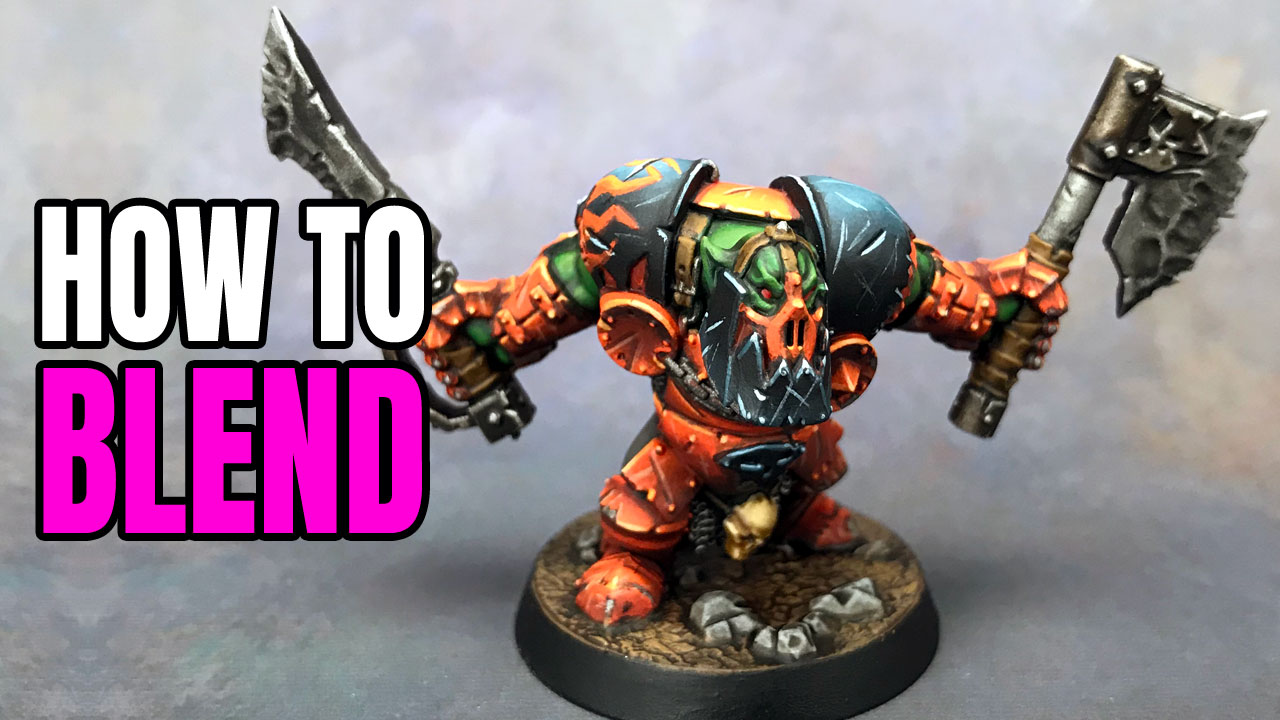
A common intermediate mistake is edge highlighting every single armor plate.
Advanced painters use selective edge highlighting, focusing only on:
- Edges that catch light naturally
- Areas near the focal point
- Surfaces facing the main light source
Less edge highlighting often results in a cleaner, more realistic finish.

Advanced use of washes and glazes
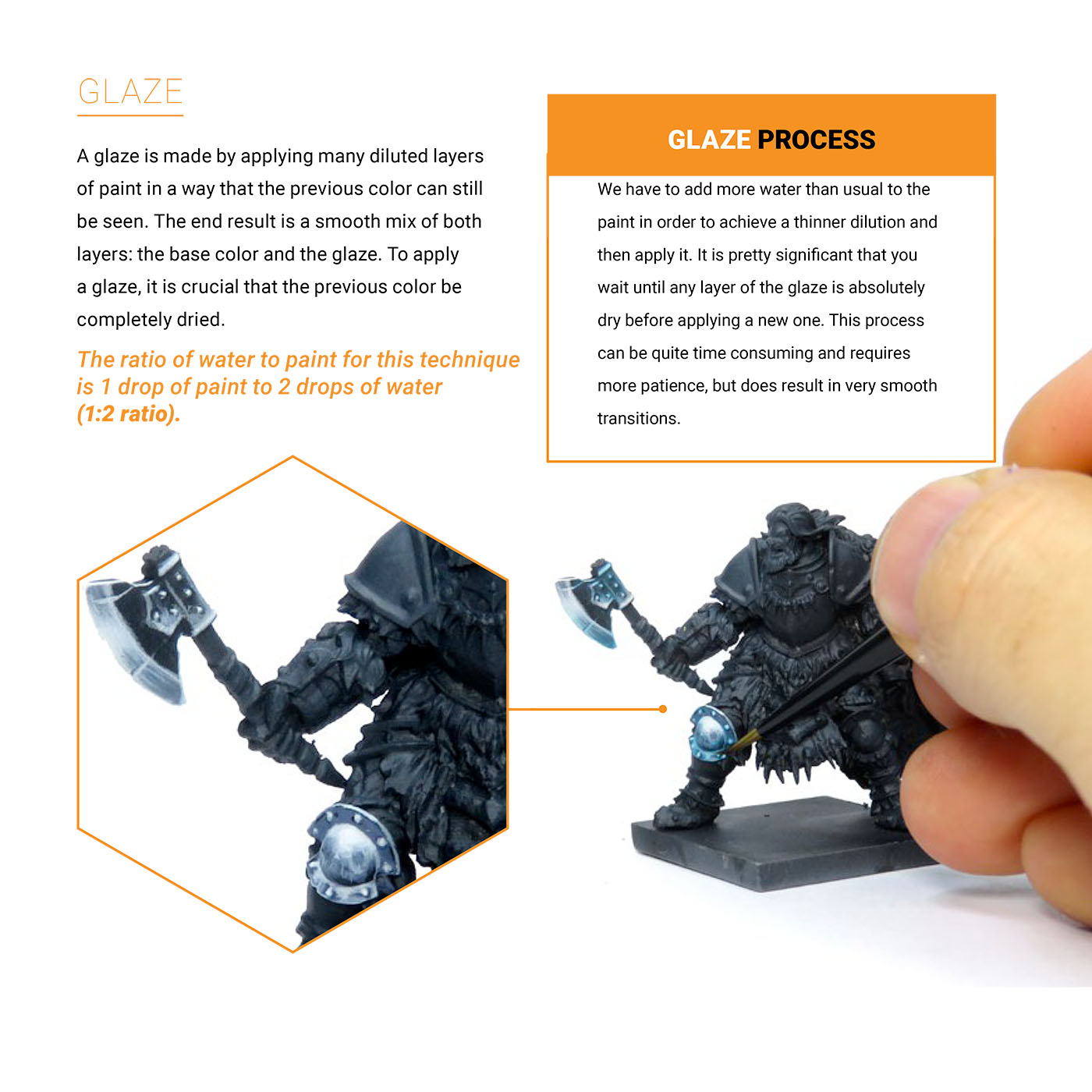
At a higher level, washes are no longer applied broadly across entire areas.
Instead, they are used to:
- Reinforce specific shadows
- Adjust color temperature subtly
- Add depth without staining highlights
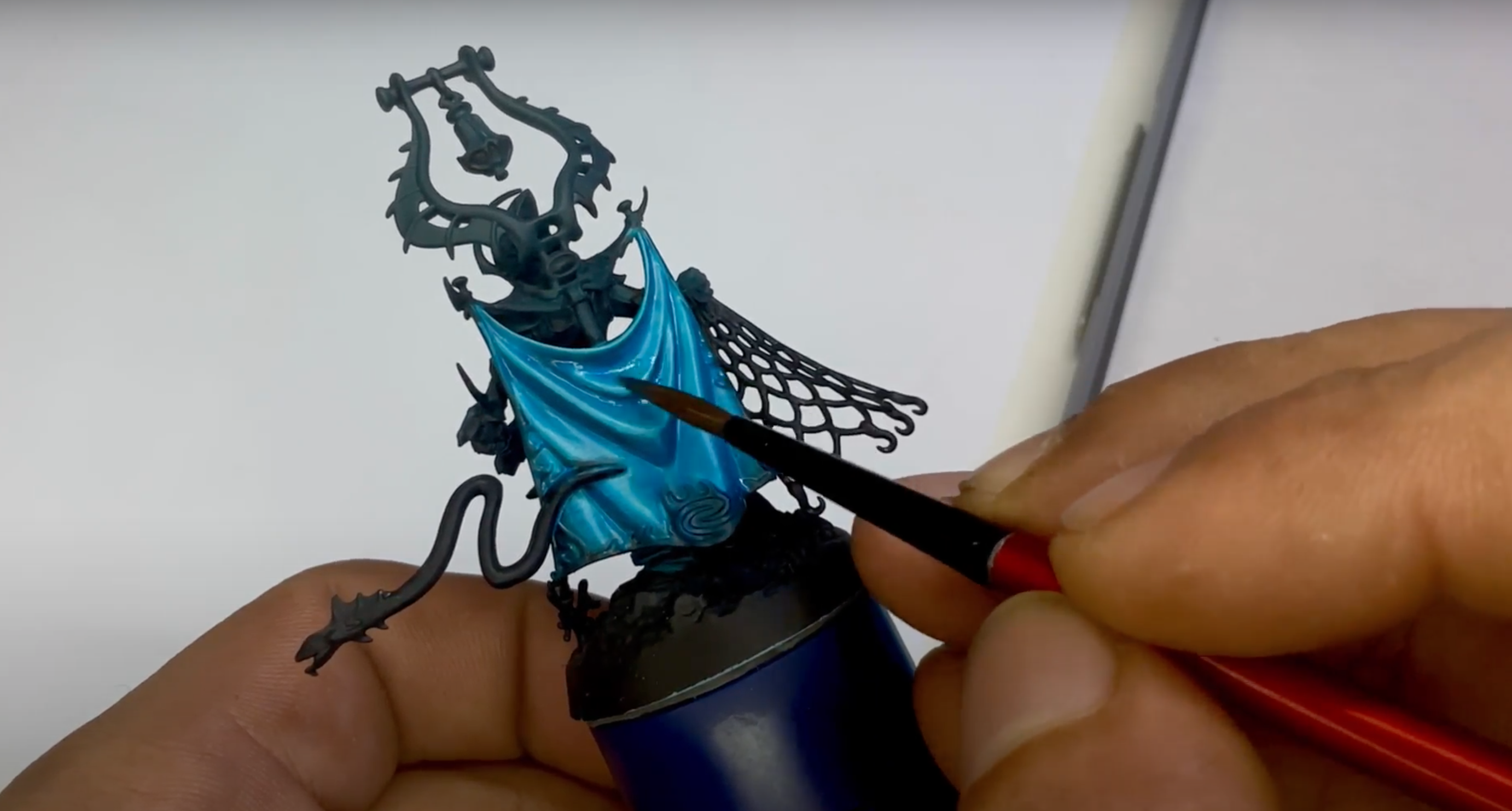
Glazes are especially powerful for smoothing transitions and enriching colors without adding texture.
Creating the illusion of different materials
Advanced Warhammer painting focuses heavily on material definition.
Each surface should behave differently:
- Metal reflects sharply
- Leather absorbs light softly
- Fabric shows gradual folds
Thinking about how light interacts with each material dramatically improves realism.

Establishing a strong focal point
Every miniature should have a clear visual focal point, usually:
- The face
- The main weapon
- A symbolic element
To reinforce a focal point:
- Increase contrast in that area
- Use sharper highlights
- Apply richer color saturation
This visual hierarchy makes the miniature easier and more satisfying to read.
Knowing when simplicity is the right choice
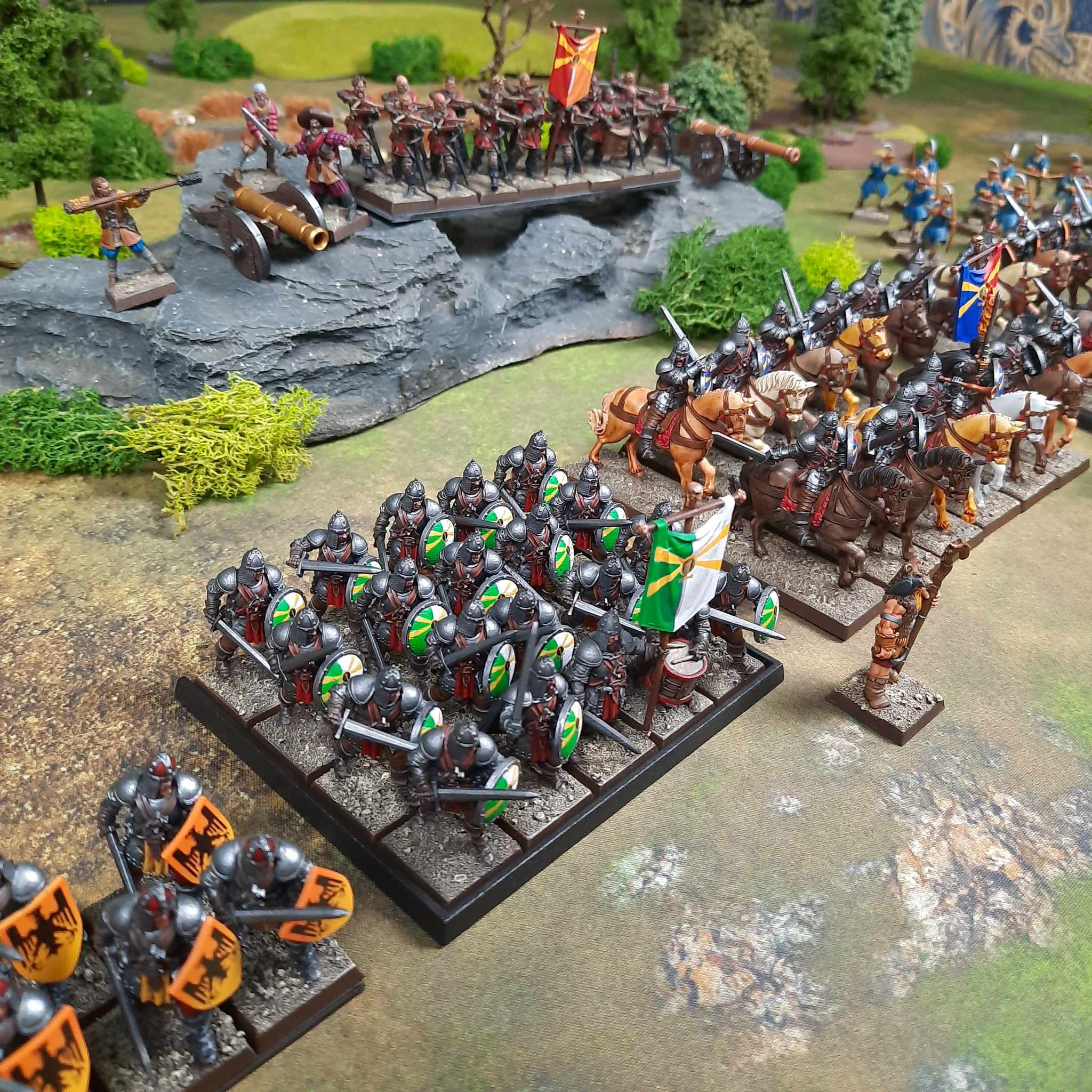
Professional painters understand that not every surface needs maximum detail.
Simplifying:
- Improves overall readability
- Speeds up the painting process
- Prevents visual noise
Advanced painting is as much about restraint as it is about skill.
Improving through consistency, not speed
True improvement comes from repetition and reflection, not rushing techniques.
To grow steadily:
- Paint regularly
- Compare new work to older pieces
- Identify one improvement goal per miniature
This approach leads to lasting progress without burnout.
Conclusion: mastering advanced Warhammer miniature painting
Mastering advanced Warhammer miniature painting techniques is not about doing everything at once — it is about understanding light, contrast, and visual intention. When these fundamentals are applied consistently, the quality of your miniatures rises naturally.
With practice and deliberate decision-making, your work can evolve from competent tabletop pieces into striking, professional-level miniatures that command attention.