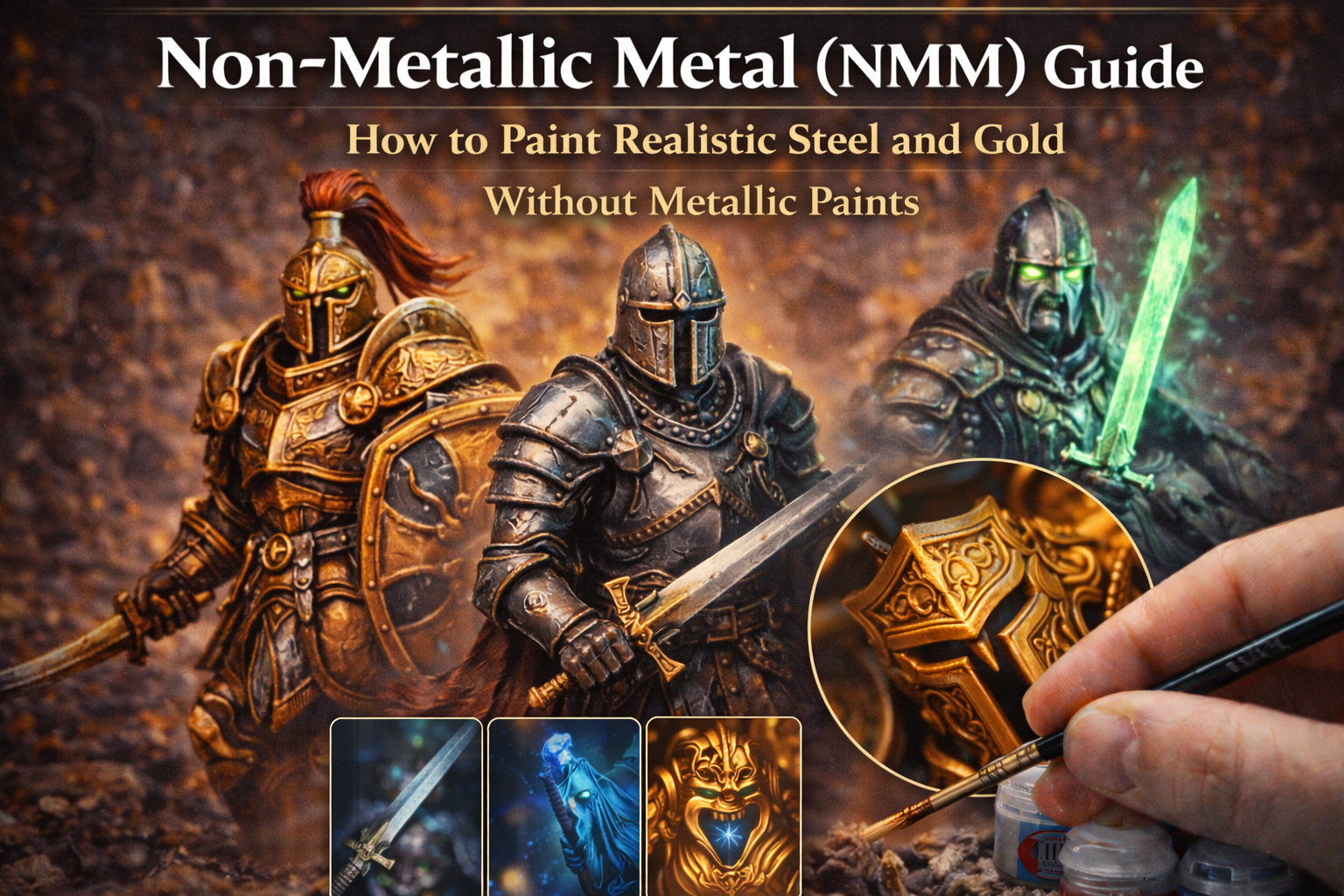
Non-Metallic Metal (NMM) Guide: How to Paint Realistic Steel and Gold Without Metallic Paints
Non-Metallic Metal (NMM) is one of the most advanced and visually striking techniques in miniature painting. If you’ve ever seen a model that looks like it’s made of polished steel or shining gold — but without using any metallic paint — you’ve seen NMM in action.
In this complete Non-Metallic Metal guide, you’ll learn how to paint realistic steel and gold effects using only matte paints, high contrast, and controlled light placement. Whether you’re aiming for display quality, competition level, or simply want to push your painting skills further, mastering NMM will dramatically elevate your miniatures.
What Is Non-Metallic Metal (NMM)?
Non-Metallic Metal (NMM) is a painting technique that simulates the look of reflective metal using regular opaque paints instead of metallic pigments.
Instead of relying on shimmer, NMM relies on:
- Extreme contrast
- Sharp transitions
- Light placement logic
- Reflection simulation
The illusion works because our eyes interpret contrast as reflection.

4
Why Choose NMM Instead of Metallic Paint?
Metallic paints are easier and faster. So why use NMM?
Because NMM gives you:
- Total control over light direction
- Stronger dramatic effect
- Cleaner photography
- Competition-level finish
NMM works especially well for:
- Hero characters
- Display miniatures
- Fantasy champions
- Golden Demon-style pieces
It’s slower — but visually powerful.
Understanding Light and Reflection
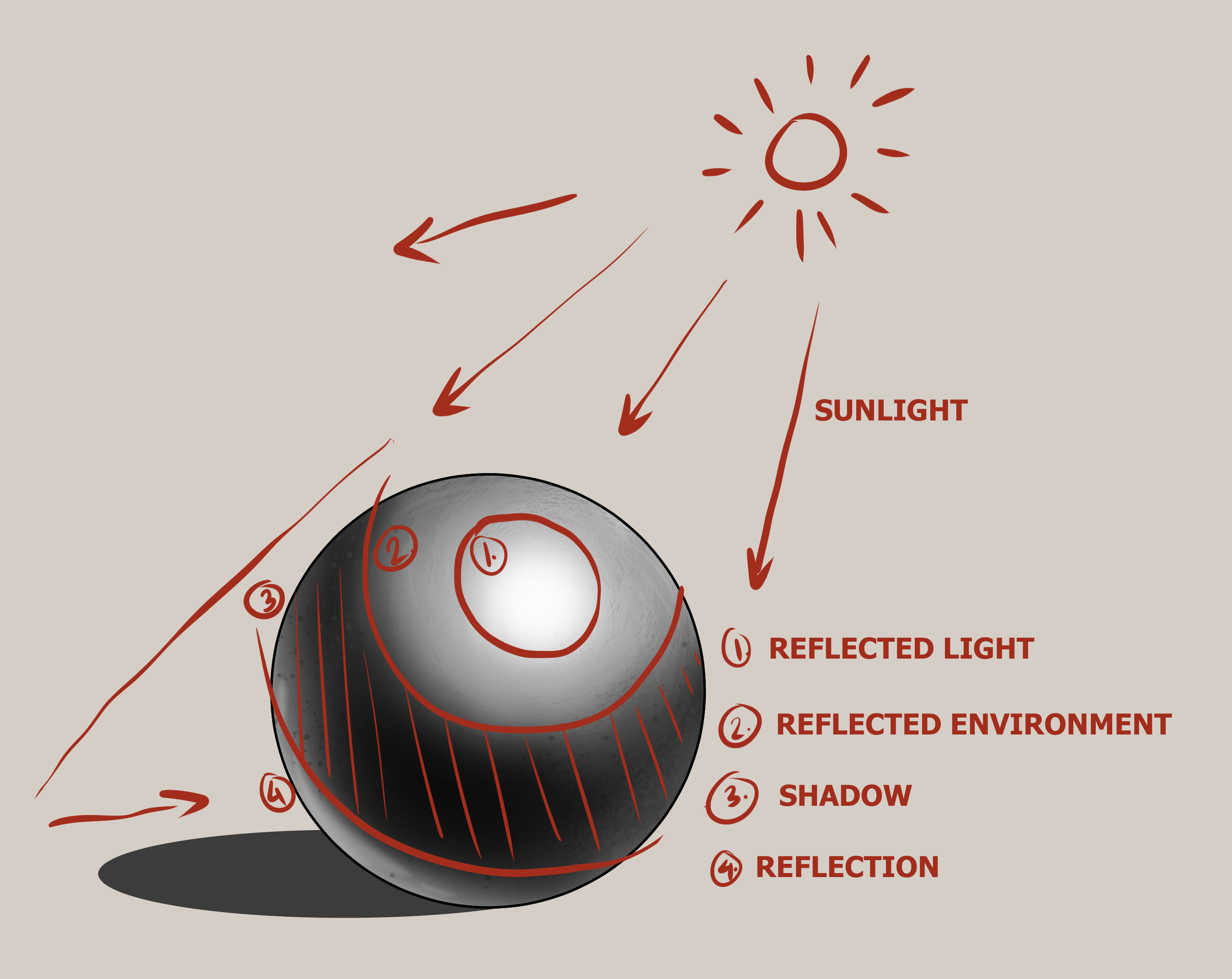
Before painting NMM, you must understand how light behaves on metal.
Metal reflections:
- Are very high contrast
- Have sharp highlight edges
- Transition quickly from dark to light
- Reflect environment colors
A steel sword often has:
- Dark lower edge
- Bright thin highlight line
- Mid-tone band
- Secondary reflection
This contrast sells the illusion.
4
Painting NMM Steel Step-by-Step
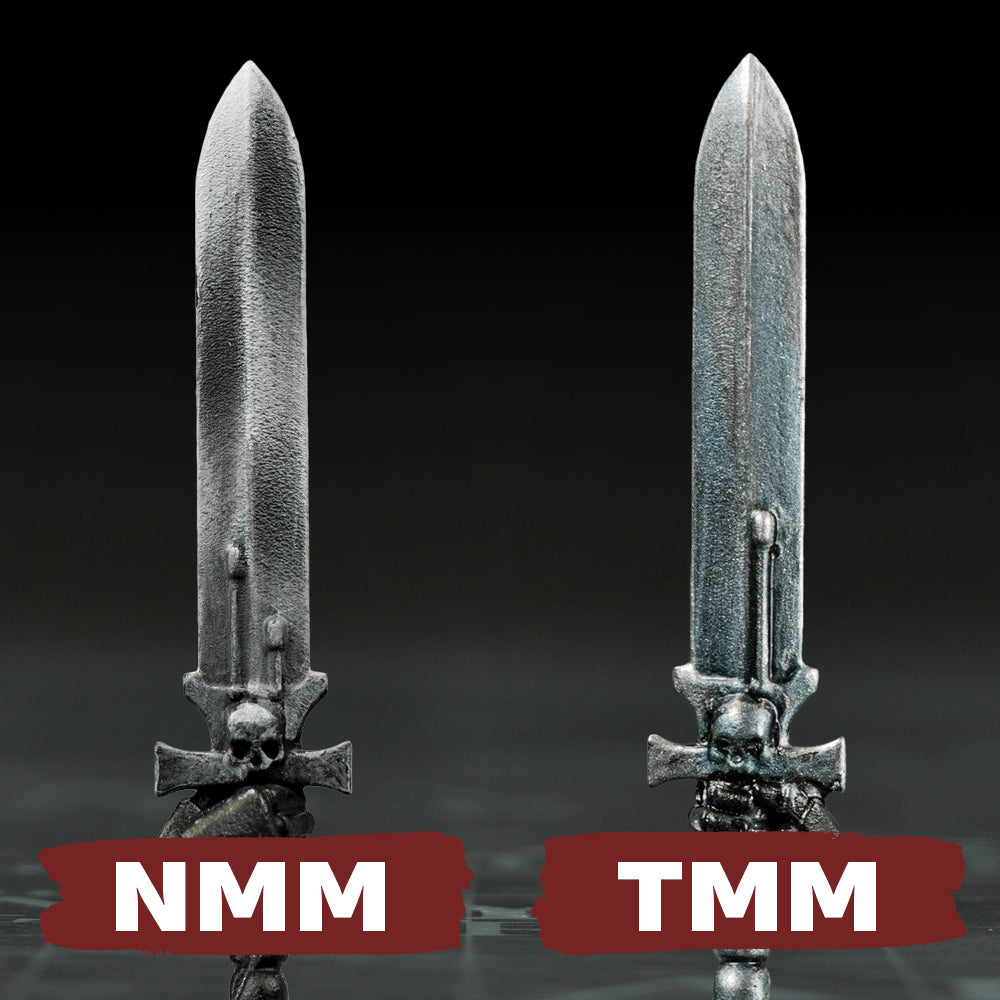
Here’s a simplified steel workflow:
1. Base with Dark Grey
Start with a dark neutral grey.
2. Build Mid-Tone Gradient
Layer lighter greys toward the light source.
Keep transitions smooth but controlled.
3. Add Sharp White Highlight
Add a thin, almost pure white highlight line.
This is critical for realism.
4. Add Secondary Dark Contrast
Reinforce darkest areas to increase contrast.
Steel NMM thrives on extreme contrast.

4
Painting NMM Gold
Gold NMM uses warm tones instead of cool greys.
Color progression:
- Dark brown
- Brown-yellow
- Warm ochre
- Pale yellow
- Almost white highlight
Gold requires stronger color transitions than steel.
Add slight red or orange glazes in shadow areas for richness.


4
Where to Place Highlights
Highlight placement depends on light direction.
If light comes from above:
- Upper edges receive brightest highlights
- Undersides remain dark
- Center reflections appear on flat surfaces
If using OSL, reflections must align with the glow.
Consistency is everything.
4
Blending Techniques for Smooth Transitions
NMM requires smooth gradients.
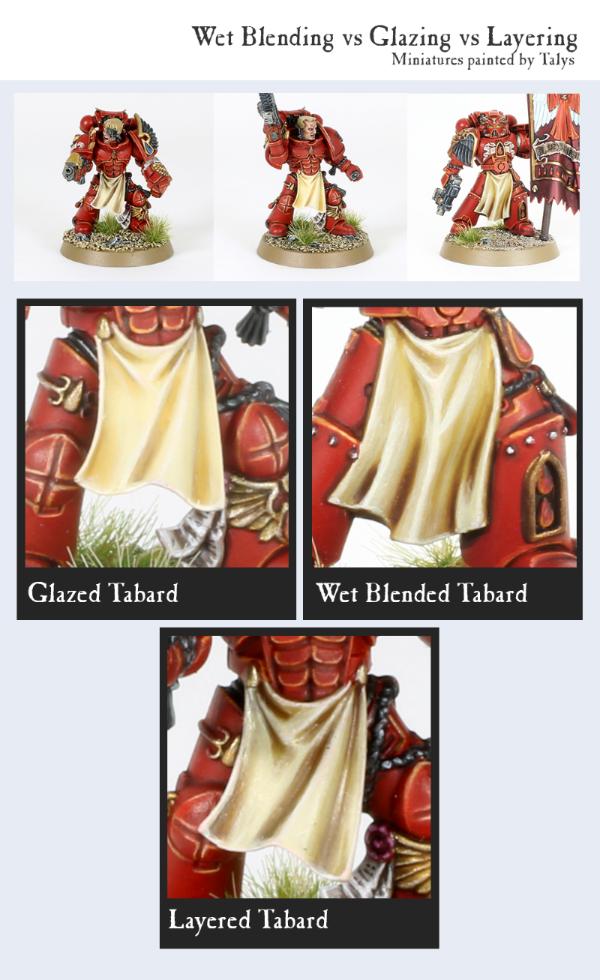
Techniques:
- Layering (most controlled)
- Glazing (for smoothing)
- Wet blending (advanced)
Avoid heavy dry brushing.
Smooth transitions create realism.
4
Common NMM Mistakes
- Not enough contrast
- Using too many mid-tones
- Soft highlights instead of sharp lines
- Ignoring light logic
- No dark reinforcement
If your NMM looks flat, increase contrast.
Push shadows darker. Push highlights brighter.
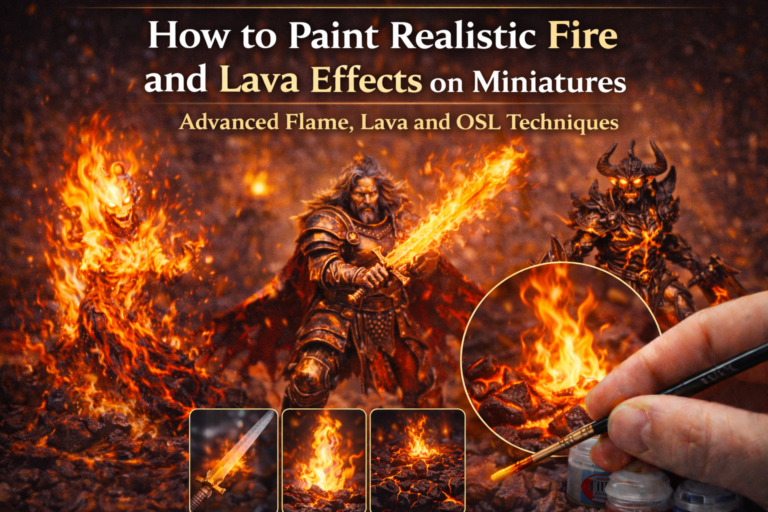
Combining NMM with OSL
Advanced painters combine NMM with Object Source Lighting.
Example:
- Glowing sword
- Reflected green light on steel
- Shadow side remains cool
This adds realism and complexity.
Be careful — mixing both requires precise light control.

4
When to Use NMM
Use NMM when:
- Painting display heroes
- Entering competitions
- Photographing models
- Building portfolio work
Avoid NMM for large army batches — it’s time-consuming.
Final Thoughts
Mastering Non-Metallic Metal (NMM) requires understanding light behavior, pushing contrast aggressively, and controlling smooth transitions. While metallic paints are practical for armies, NMM elevates your miniatures into artistic showcase pieces.
By refining highlight placement, deepening shadows, and embracing sharp contrast lines, you can create steel and gold surfaces that look incredibly realistic — without using a single metallic pigment.