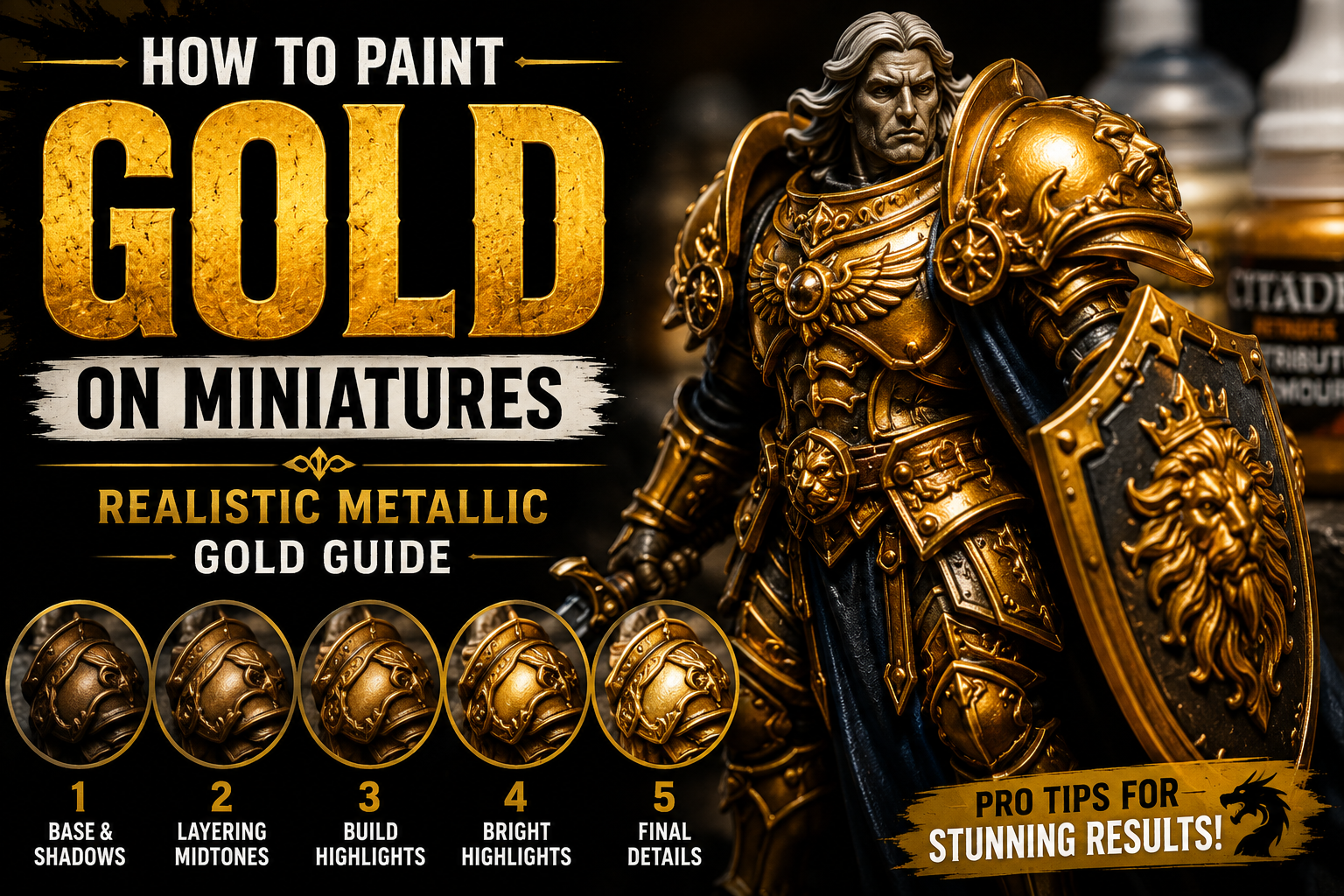
How to Paint Gold on Miniatures (Realistic Metallic Gold Guide)

Painting convincing gold is one of the biggest milestones in miniature painting. A well-painted gold surface instantly makes heroes, paladins, kings, dragons, and magical artifacts stand out on the tabletop. However, many painters struggle with metallic paints that appear dull, grainy, or flat.
The secret isn’t buying the most expensive paint—it’s understanding contrast. Real gold reflects light dramatically, with rich shadows, warm midtones, and bright highlights. Whether you’re painting D&D miniatures, Warhammer armies, or display pieces, mastering these techniques will dramatically improve your results.
In this guide, you’ll learn how to create vibrant metallic gold using simple methods that work for beginners and experienced painters alike.
Understanding How Gold Reflects Light

Unlike cloth or leather, polished gold acts almost like a mirror. Even on tiny miniatures, the brightest highlights should sit directly beside deep shadows. Without this contrast, metallic paint often looks like plain yellow paint with glitter.
Before applying any gold, identify where your imaginary light source is coming from. Upper surfaces such as helmets, shoulder pads, shield rims, and weapon guards receive the strongest reflections, while recesses and undersides stay much darker.
Thinking about light placement before painting every layer creates a much more realistic result than relying on metallic paint alone.
Choosing the Right Metallic Paints

Not every metallic gold behaves the same. Some paints are highly reflective but difficult to control, while others offer smoother coverage with slightly less shine.
A solid gold palette usually includes:
- Dark Bronze
- Rich Gold
- Bright Gold
- Silver
- Brown Wash
Starting with darker metallic colors provides better depth than painting everything with bright gold immediately. Thin your metallic paints slightly to avoid visible brush marks and preserve sculpted details.
Building Rich Shadows

Shadows are what separate premium-looking gold from basic tabletop painting.
Instead of covering the model with a heavy black wash, apply controlled shadows using dark brown or sepia washes. Push these darker tones into recesses around armor plates, decorative engravings, chainmail, and overlapping details.
If more contrast is needed, reinforce the deepest areas with a mix of dark brown and black. These richer shadows make the reflective metallic surfaces appear far brighter without adding extra highlights.
Allow each layer to dry completely before continuing to avoid streaking the metallic finish.
Layering the Midtones

Once the shadows are established, begin rebuilding the gold with thin layers.
Apply your main gold color over raised surfaces while leaving the darker recesses untouched. Multiple thin coats produce a smoother finish than one thick layer and preserve every sculpted detail.
Work gradually across the miniature, letting each layer transition naturally into the previous one. This controlled approach creates the illusion of polished metal catching light across curved armor and ornate decorations.
Adding Bright Highlights

Highlights give gold its signature brilliance.
Mix a small amount of silver into your brightest gold and carefully apply it only to the highest points. Focus on sharp armor edges, decorative trim, helmet crests, weapon guards, and raised ornaments.
Keep these highlights thin and deliberate. Small reflective accents are far more convincing than covering large sections with bright metallic paint.
A final pinpoint highlight on the corners of armor or gemstones creates the impression of highly polished metal.
Painting Ornate Details

Fantasy miniatures often feature intricate engravings, crowns, shields, and ceremonial armor. These tiny details deserve extra attention.
Use the side of your brush to gently catch raised patterns with brighter gold while keeping darker metallic colors inside engraved lines. This simple technique increases depth and makes decorative elements much easier to read from tabletop distance.
Take your time around filigree, symbols, and embossed details, as these areas often become natural focal points.
Weathering Gold Without Losing Its Shine

Not every character carries perfectly polished equipment. Ancient paladins, forgotten kings, and dungeon relics often benefit from subtle weathering.
Apply small amounts of brown or green glaze into recessed areas to simulate age. Tiny scratches painted with dark brown followed by a fine metallic highlight underneath create convincing wear without overpowering the finish.
Weathering should support the story of the miniature rather than hide the metallic effect.
Common Mistakes to Avoid
Several habits can prevent metallic gold from reaching its full potential:
- Applying thick coats of metallic paint.
- Using only one shade of gold.
- Covering the entire model with black wash.
- Adding too much silver to highlights.
- Ignoring the direction of the light source.
- Rushing drying times between layers.
Correcting these simple mistakes often produces a bigger improvement than buying new paints or brushes.
Final Thoughts
Realistic gold is created through contrast, patience, and careful placement of light. Rich shadows, smooth metallic layers, and restrained highlights combine to produce armor and decorations that immediately draw attention on the tabletop.
Whether you’re painting a legendary paladin, a dragon’s treasure, or an ancient king, mastering metallic gold is a skill you’ll use across countless fantasy miniatures. With practice, your finishes will become brighter, cleaner, and dramatically more realistic.
Frequently Asked Questions
What is the best base color under metallic gold?
A dark brown or bronze base coat creates deeper shadows and improves the richness of the final metallic finish.
Should I use black wash on gold?
Usually no. Brown or sepia washes preserve the warmth of the metal while creating more natural-looking shadows.
Can beginners paint realistic gold?
Absolutely. Thin layers, controlled washes, and careful highlights are more important than advanced techniques.
How do I make gold look brighter?
Increase the contrast by deepening shadows first, then add tiny highlights using a mix of bright gold and silver only on the highest edges.
Is metallic paint better than Non-Metallic Metal (NMM)?
Both techniques produce excellent results. Metallic paints are faster and ideal for most tabletop miniatures, while NMM is often chosen for advanced display pieces.
If you would like free D&D STL miniatures, visit our homepage and download yours now: https://echoartstudios.net/