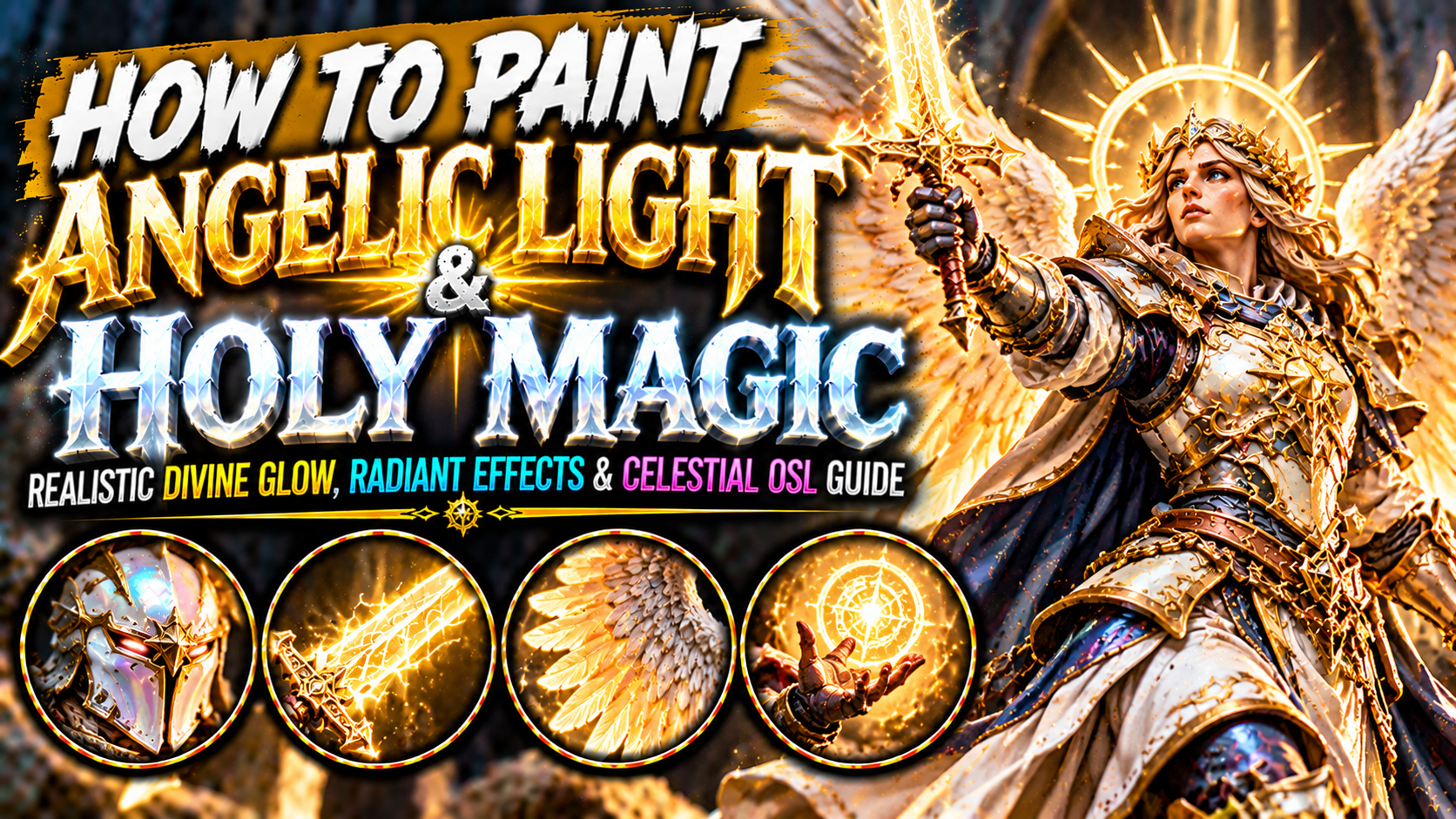
How to Paint Angelic Light and Holy Magic on Miniatures (Realistic Divine Glow, Radiant Weapons & Celestial OSL Guide)
Angelic light and holy magic are among the most beautiful effects you can create on fantasy miniatures.
Whether you’re painting a celestial paladin, a divine cleric, a radiant angel, a sacred warrior, or a powerful deity-inspired character, convincing holy magic can transform an ordinary miniature into a breathtaking fantasy centerpiece.
Unlike fire, lightning, or dark magical energy, divine light often has a softer, more elegant appearance.
It can appear as brilliant golden radiance, pure white illumination, warm sunlight, or supernatural blue-white energy.
Holy magic is frequently associated with purity, protection, healing, celestial power, and divine judgment.
These themes provide endless opportunities for creative miniature painting.
Imagine an angel descending from the heavens, surrounded by luminous golden wings.
Picture a paladin holding a sword that radiates brilliant white light.
Or envision a cleric casting a healing spell, illuminating nearby armor and clothing with a gentle golden glow.
However, realistic holy magic requires more than simply painting magical effects yellow or white.
You need to understand warm and cool lighting, smooth color transitions, radiant highlights, Object Source Lighting (OSL), glowing magical symbols, reflective armor, and the relationship between light and shadow.
In this comprehensive guide, you’ll learn how to paint realistic angelic light, golden divine energy, glowing holy weapons, celestial halos, radiant wings, sacred runes, healing magic, holy armor, and cinematic fantasy lighting effects.
These techniques are perfect for Dungeons & Dragons miniatures, tabletop RPG characters, fantasy armies, and display-quality models.

Understanding How Holy Light Works
Holy light is a fantasy interpretation of powerful supernatural illumination.
Its visual appearance often resembles sunlight, candlelight, or intense white radiance.
However, unlike ordinary environmental lighting, magical illumination can originate from weapons, hands, wings, halos, runes, and enchanted objects.
For miniature painting, the most important principle is identifying the light source.
If a paladin’s sword is glowing, the blade should be the brightest element.
Nearby armor, gloves, and clothing may reflect the magical light.
If an angel’s halo emits light, the face and upper shoulders may receive warm illumination.
If a cleric casts a healing spell, the hands and surrounding surfaces can reflect the spell’s color.
The brightness should decrease as the distance from the source increases.
This creates a convincing relationship between the magical energy and the surrounding miniature.
Holy light often benefits from soft transitions.
However, the brightest sections should still contain strong highlights.
The combination of gentle surrounding glow and intense central brightness creates the illusion of divine energy.

Choosing the Best Holy Magic Color Palette
Different types of divine magic can use different color palettes.
Golden light creates a classic celestial appearance.
White light suggests purity and overwhelming magical power.
Blue-white light can represent moonlight, celestial protection, or supernatural energy.
Soft green or turquoise can work beautifully for healing magic.
| Holy magic effect | Recommended color progression |
|---|---|
| Golden divine light | Dark Orange → Golden Yellow → Pale Yellow → Ivory → White |
| Pure holy radiance | Warm Grey → Ivory → White |
| Celestial blue light | Navy → Royal Blue → Ice Blue → White |
| Healing magic | Dark Emerald → Green → Pale Mint → White |
| Angelic halo | Warm Brown → Gold → Pale Yellow → White |
| Sacred fire | Burgundy → Orange → Yellow → Ivory |
| Moonlit divine energy | Dark Blue → Lavender → Ice Blue → White |
| Radiant holy runes | Ochre → Golden Yellow → Ivory → White |
The brightest colors should occupy the smallest areas.
For golden holy magic, use warm orange and yellow around the source.
Then introduce pale ivory and white toward the center.
Avoid making the entire magical effect pure white.
Without surrounding colors, the light may appear flat.

Preparing the Miniature for Divine Lighting Effects
Before painting holy magic, examine the miniature’s sculpted details.
Identify the potential light sources.
These might include a magical sword, glowing staff, halo, sacred book, shield, or spell effect.
Then determine which surrounding surfaces face those sources.
For example, a glowing sword held in the right hand may illuminate the fingers, forearm, chest armor, and nearby fabric.
A halo behind the head may illuminate the hair, shoulders, and upper back.
Consider the direction of the light before beginning.
This will help you place the reflections consistently.
Remove mold lines and prepare the miniature normally.
Apply a smooth primer coat.
For bright celestial miniatures, white or light grey primer can be useful.
For dramatic high-contrast effects, black primer provides a strong foundation.

Painting the Dark Foundation for Holy Magic
Even bright divine light benefits from darker foundation colors.
For golden light, begin with dark orange or warm brown.
For blue celestial energy, use dark blue.
For white radiance, begin with warm grey or pale beige.
Apply the foundation across the magical effect.
Keep the paint thin.
Avoid obscuring sculpted details.
At this stage, the effect may look darker than expected.
This is intentional.
The darker foundation creates contrast for the brighter layers.
Once dry, identify the areas that should receive the strongest illumination.
These will become the focal points of the magical effect.

Building Golden Divine Highlights
Golden divine light is one of the most recognizable holy magic effects.
Begin with dark orange.
Introduce golden yellow across the raised surfaces.
Then add saturated yellow.
Keep the darkest colors visible near the outer edges.
Next, introduce pale yellow.
Concentrate it toward the central magical source.
Finish selected sections with ivory.
For the brightest points, add white.
Avoid covering the entire effect with yellow.
A convincing glow requires a clear transition from darker outer regions to brighter central areas.
For larger magical effects, use smooth layering.
For small details, carefully placed highlights may be sufficient.

Painting Pure White Holy Radiance
Pure white light can create an especially powerful celestial appearance.
However, painting a convincing white glow requires careful control.
Begin with warm grey or pale ivory.
Introduce progressively lighter tones.
Keep the surrounding surfaces slightly darker.
Then paint the central source pure white.
For a warm divine effect, use ivory and pale yellow around the white center.
For a cool celestial effect, use pale blue or lavender.
Avoid painting the entire effect white.
The surrounding colors help communicate brightness.
White should remain concentrated in the most intense areas.
This technique works beautifully for divine shields, magical halos, sacred symbols, and celestial spell effects.

Painting Celestial Blue-White Light
Blue-white holy light creates a mysterious and elegant appearance.
It works particularly well for moon clerics, celestial sorcerers, divine guardians, and supernatural beings.
Begin with dark blue.
Introduce royal blue.
Then build toward ice blue.
Add pale blue highlights.
Finish the central source with white.
Keep the surrounding reflections softer than the source itself.
For additional depth, introduce subtle lavender tones.
This can make the light appear more magical.
Avoid using too much saturated blue.
A pale blue-white center helps distinguish celestial illumination from ordinary arcane magic.

Painting Angelic Halos
Halos are one of the most recognizable symbols of celestial characters.
They can appear as golden rings, radiant circles, or complex magical structures.
Begin with a dark golden basecoat.
Introduce warm gold.
Then add pale yellow highlights.
Finish selected sections with ivory or white.
If the halo emits light, paint subtle golden reflections on nearby hair, skin, and armor.
Keep the strongest illumination closest to the halo.
Avoid making the entire character uniformly yellow.
For a more supernatural appearance, add small bright points around the ring.
These can suggest concentrated magical energy.

Painting Radiant Angel Wings
Angel wings are often among the most visually important features of celestial miniatures.
They can appear white, ivory, golden, or softly illuminated.
Begin with a pale grey or ivory basecoat.
Shade the deepest feather recesses with muted blue-grey or warm beige.
Then build toward lighter ivory.
Highlight the exposed feather edges with white.
For golden divine illumination, introduce subtle yellow glazes near the light source.
Keep the outer feathers slightly darker.
This helps create depth.
Avoid painting every feather pure white.
Natural variation makes the wings appear more realistic.
For a magical appearance, add a few concentrated white highlights near the brightest sections.

Painting Golden Angel Wings
Golden wings can create a majestic celestial appearance.
They work beautifully for archangels, divine champions, and legendary fantasy creatures.
Begin with warm brown or ochre.
Introduce golden yellow.
Then add pale gold highlights.
For a luminous effect, build toward ivory along selected feather edges.
Keep the deepest recesses darker.
Avoid painting every feather equally bright.
The variation between warm shadows and pale highlights creates depth.
For additional realism, introduce subtle orange reflections near the feather bases.
A few white highlights can suggest intense divine illumination.

Painting Glowing Holy Swords
A glowing holy sword can become the main focal point of a paladin or celestial warrior.
Begin by painting the blade normally.
For a metallic sword, establish the main steel reflections.
Then introduce the magical light.
For golden holy energy, glaze yellow along selected areas.
Add pale ivory highlights.
Finish the brightest sections with white.
For a fully luminous blade, begin with warm yellow and build toward white.
Keep the edges sharply defined.
You can also paint subtle golden reflections on nearby armor and hands.
Avoid making the surrounding reflections brighter than the blade.

Painting Radiant Holy Hammers
Holy hammers are common weapons for clerics, paladins, and divine warriors.
They often feature glowing runes, golden decorations, and magical energy.
Begin by painting the hammer normally.
Establish the metallic or stone surfaces.
Then identify the magical areas.
These might include engraved symbols, cracks, or the hammer’s central core.
Paint the recesses dark orange.
Introduce golden yellow.
Then add pale yellow and ivory.
Finish selected sections with white.
You can also introduce subtle golden reflections on the surrounding metal.
Keep the effect concentrated around the magical source.

Painting Sacred Shields
Sacred shields can contain glowing symbols, magical barriers, or divine energy.
Begin by painting the shield normally.
For a golden shield, establish warm metallic highlights.
For a white shield, use ivory and pale grey.
Then identify the sacred symbol.
Paint the symbol using a dark version of the magical color.
Build toward brighter highlights.
For golden runes, use ochre, yellow, ivory, and white.
Keep the surrounding shield darker.
For a magical barrier, introduce subtle translucent-looking color transitions around the edges.
Avoid making every section equally bright.
The sacred symbol should remain the focal point.

Painting Glowing Sacred Runes
Sacred runes can make armor, weapons, and magical artifacts appear divinely enchanted.
Begin by painting the surrounding material normally.
Then sketch the runes using dark ochre or orange.
Introduce golden yellow.
Build toward pale yellow.
Finish the center of selected runes with ivory or white.
Keep the lines controlled.
Avoid making every rune equally bright.
Some symbols can appear more luminous than others.
For additional realism, apply subtle yellow glazes around the engraved areas.
This creates the impression of light spilling onto the surrounding material.

Painting Holy Magic in a Cleric’s Hands
Clerics often cast divine spells directly from their hands.
This creates an excellent opportunity to practice magical lighting.
Begin by identifying the spell’s origin.
For golden magic, use dark orange around the center.
Introduce yellow.
Then build toward pale ivory.
Finish the brightest sections with white.
Paint subtle golden reflections on the fingers and palms.
Keep the strongest illumination closest to the spell.
For a healing effect, use softer transitions.
For a powerful offensive spell, introduce sharper highlights and stronger contrast.
Avoid making the entire arm equally bright.

Painting Healing Magic
Healing magic often benefits from a gentle, comforting appearance.
Golden light is a classic choice.
However, pale green, turquoise, and white can also work beautifully.
Begin with a darker version of the chosen color.
For green healing magic, use emerald.
Introduce soft green.
Then add pale mint.
Finish the central source with white.
Keep the surrounding glow subtle.
Avoid using excessively sharp contrasts across the entire effect.
Healing magic often looks more convincing when the transitions are smooth.
For additional realism, introduce gentle reflections on nearby hands, clothing, and skin.

Painting Divine Fire
Divine fire can combine the appearance of ordinary flames with supernatural white or golden energy.
Begin with dark orange or red-orange.
Introduce saturated orange.
Then add golden yellow.
Build toward pale yellow.
Finish the hottest sections with ivory or white.
Unlike ordinary flames, divine fire can contain larger regions of pale golden light.
Keep the flame shapes irregular.
For a magical appearance, introduce small white highlights near the source.
You can also paint subtle golden reflections on nearby armor and clothing.
Avoid making every flame equally bright.

Painting Celestial Armor Reflections
Celestial armor often appears bright, polished, and elegant.
It can reflect nearby holy magic dramatically.
Begin by painting the armor normally.
For silver armor, establish dark grey, medium grey, and bright metallic highlights.
For gold armor, use warm brown, gold, and pale yellow.
Then identify the surfaces facing the magical light.
Apply thin glazes of the light’s color.
For golden magic, use yellow or warm ivory.
For blue-white magic, use pale blue.
Keep the reflections directional.
Avoid covering the entire armor.
The underlying material should remain visible.

Creating Object Source Lighting from Holy Magic
Object Source Lighting is essential for making holy magic appear believable.
The technique involves painting the illumination cast by a light source onto nearby surfaces.
Imagine a paladin holding a glowing golden sword.
The blade emits light.
Nearby armor, gloves, and fabric reflect that illumination.
Begin with thin yellow or orange glazes.
Apply them to surfaces facing the sword.
Keep the strongest reflections closest to the blade.
Gradually reduce the brightness farther away.
For white holy light, use pale ivory or warm grey reflections.
For blue celestial magic, use pale blue.
Avoid applying the light equally across the miniature.
Surfaces facing away from the source should remain darker.
The magical source itself should remain the brightest element.

Painting Divine Light on Faces
A character’s face can become especially expressive when illuminated by holy magic.
Imagine a cleric holding a glowing spell near the face.
The cheeks, nose, forehead, and chin may receive reflected light.
Begin by painting the skin normally.
Then identify the surfaces facing the magical source.
Apply thin glazes of the light’s color.
For golden light, use warm yellow or pale orange.
Keep the strongest reflections on the nearest raised areas.
Avoid covering the entire face.
Preserve the underlying skin tones.
For a dramatic appearance, keep the opposite side of the face darker.
This creates a strong sense of directional lighting.

Painting Holy Light on White Robes
White robes can reflect divine illumination beautifully.
However, white fabric requires careful shading.
Begin with pale grey or ivory.
Introduce subtle shadows in the folds.
Then build toward white highlights.
For golden magical illumination, apply thin yellow glazes to surfaces facing the light.
Keep the deepest folds slightly darker.
Avoid making every section pure white.
The contrast between illuminated folds and shadowed recesses helps define the fabric.
For blue-white celestial magic, introduce pale blue reflections.
This can create a cooler supernatural appearance.

Painting Celestial Light on Feathers
Feathers can reflect magical light in beautiful ways.
Begin by painting the feathers normally.
For white feathers, use pale grey, ivory, and white.
Then identify the sections facing the magical source.
Apply thin glazes of the light’s color.
For golden light, use pale yellow.
For blue celestial light, use ice blue.
Keep the strongest highlights on exposed feather edges.
Avoid illuminating every feather equally.
Some should remain in shadow.
This creates depth and helps the wings maintain their sculpted structure.

Painting Radiant Celestial Beams
Some miniatures feature sculpted beams of divine energy.
These can appear as vertical rays, magical pillars, or concentrated blasts of light.
Begin with a darker version of the chosen color.
For golden beams, use orange-yellow.
Introduce saturated yellow.
Then build toward pale yellow.
Finish the central region with ivory or white.
Keep the outer edges slightly darker.
For blue-white beams, use royal blue, ice blue, and white.
Avoid making the entire beam uniformly bright.
A bright central channel surrounded by softer color creates a stronger illusion of radiance.

Painting Holy Magic on Miniature Bases
Divine magic can interact with the surrounding environment.
A paladin might stand on stone illuminated by a glowing sword.
An angel might descend onto a sacred altar.
A cleric could cast a healing spell over a battlefield.
Begin by painting the base normally.
Then identify the surfaces facing the magical source.
Apply thin glazes of the light’s color.
For golden magic, use warm yellow or orange.
Keep the brightest reflections closest to the source.
Gradually reduce the intensity farther away.
For sacred runes carved into stone, use dark ochre, yellow, ivory, and white.
Avoid making the entire base glow equally.

Painting Celestial Portals
Celestial portals can create spectacular fantasy display pieces.
They may appear as golden rings, radiant gateways, or supernatural openings filled with white light.
Begin with a dark foundation around the portal.
Introduce golden yellow along the magical structure.
Then build toward pale yellow.
Finish the brightest areas with ivory and white.
For the portal interior, use smooth transitions.
You can also introduce subtle blue or lavender tones.
Keep the strongest illumination near the center.
Paint reflected light onto nearby terrain and characters.
Avoid making every part of the portal equally bright.
The contrast between the glowing center and darker surroundings creates depth.

Painting Holy Magic on Dark Miniatures
Holy magic can look especially dramatic on dark-colored miniatures.
Black armor, dark robes, and shadowed environments provide strong contrast against bright golden light.
Begin by painting the character normally.
Keep the shadows relatively dark.
Then establish the magical source.
For golden magic, build from orange through yellow to white.
Introduce subtle reflections on nearby dark surfaces.
Avoid covering all the shadows.
The contrast between darkness and divine illumination is what makes the effect powerful.
This approach works beautifully for fallen angels, dark paladins, celestial warriors, and dramatic fantasy characters.

Creating Cinematic Angelic Lighting
Cinematic holy magic relies on strong composition.
Choose a clear focal point.
This might be a glowing sword, radiant halo, magical staff, or divine spell.
Keep the surrounding surfaces relatively subdued.
Build the magical effect using warm or cool colors.
Then introduce intense highlights.
For golden light, use orange, yellow, ivory, and white.
For celestial blue light, use navy, blue, ice blue, and white.
Apply subtle reflected light to nearby surfaces.
Keep the strongest illumination concentrated around the source.
You can also introduce contrasting environmental colors.
For example, warm golden holy light looks especially dramatic against cool blue shadows.
This contrast creates a cinematic appearance while preserving the miniature’s sculpted details.

Common Mistakes When Painting Holy Magic
One of the most common mistakes is painting the entire magical effect pure white.
This removes the color transitions necessary to communicate brightness.
Use surrounding yellow, ivory, blue, or lavender tones.
Another mistake is making every surface equally illuminated.
Object Source Lighting should follow the direction of the light.
Avoid applying bright reflections to surfaces facing away from the source.
Another problem is excessive yellow.
Too much saturated yellow can make holy magic resemble ordinary paint rather than glowing energy.
Introduce pale ivory and white highlights.
Don’t make the surrounding reflections brighter than the magical source.
Avoid excessive glazing.
Too many uncontrolled layers can create muddy colors.
Finally, don’t overwhelm the miniature with magical effects.
A few concentrated areas of intense light can create a stronger result than covering the entire model with glow.

Final Thoughts
Painting convincing angelic light and holy magic requires controlled color transitions, strong contrast, carefully placed highlights, directional illumination, and realistic Object Source Lighting.
Begin by choosing the type of divine energy you want to create.
Golden light provides a classic celestial appearance.
White radiance suggests purity and overwhelming magical power.
Blue-white light creates a mysterious supernatural atmosphere.
Soft green or turquoise works beautifully for healing magic.
Start with a darker foundation.
Gradually build toward brighter colors.
Keep the brightest sections concentrated near the magical source.
For golden effects, transition from orange to yellow, ivory, and white.
For blue celestial magic, use navy, blue, ice blue, and white.
Introduce subtle reflected light on nearby armor, skin, clothing, feathers, and terrain.
These techniques work beautifully for angels, paladins, clerics, celestial warriors, divine guardians, enchanted weapons, magical portals, and fantasy display miniatures.
The most important principle is that holy magic should appear to illuminate the miniature rather than simply decorate it.
Its brightness, color, and direction should interact naturally with the surrounding surfaces.
When painted effectively, even a small glowing symbol or radiant weapon can transform an ordinary fantasy miniature into a powerful and memorable celestial character.
Frequently Asked Questions
What colors should I use for golden holy magic?
Dark orange, golden yellow, pale yellow, ivory, and white create an effective progression for radiant divine light.
How do I paint glowing holy swords?
Paint the blade using progressively brighter colors, concentrate the strongest highlights near the magical source, and add subtle reflections on nearby armor.
How do I make divine magic look like it is glowing?
Use strong contrast between the bright magical source and darker surrounding surfaces, then apply controlled Object Source Lighting.
What colors work best for angelic halos?
Warm brown, gold, pale yellow, ivory, and white create a convincing golden halo effect.
How do I paint realistic angel wings?
Begin with pale grey or ivory, shade the feather recesses, and highlight exposed edges with white.
How do I paint healing magic on miniatures?
Use smooth transitions between green, pale mint, and white, or create a warm golden glow with soft yellow and ivory highlights.
How do I create OSL from holy magic?
Apply thin glazes of the magical color to nearby surfaces facing the light source, keeping the strongest reflections closest to the source.
How do I make holy magic look cinematic?
Use a clear focal point, strong light-to-dark contrast, concentrated bright highlights, and subtle reflected illumination on surrounding surfaces.
If you would like free D&D STL miniatures, visit our homepage and download yours now: