How to Paint Vampire Skin on Miniatures (Realistic Pale & Undead Flesh Guide)

Vampire skin is one of the most distinctive flesh effects in fantasy miniature painting. Unlike zombies or skeletons, vampires often still resemble living humans—but something about their appearance should immediately feel unnatural.
The secret isn’t simply painting the skin white.
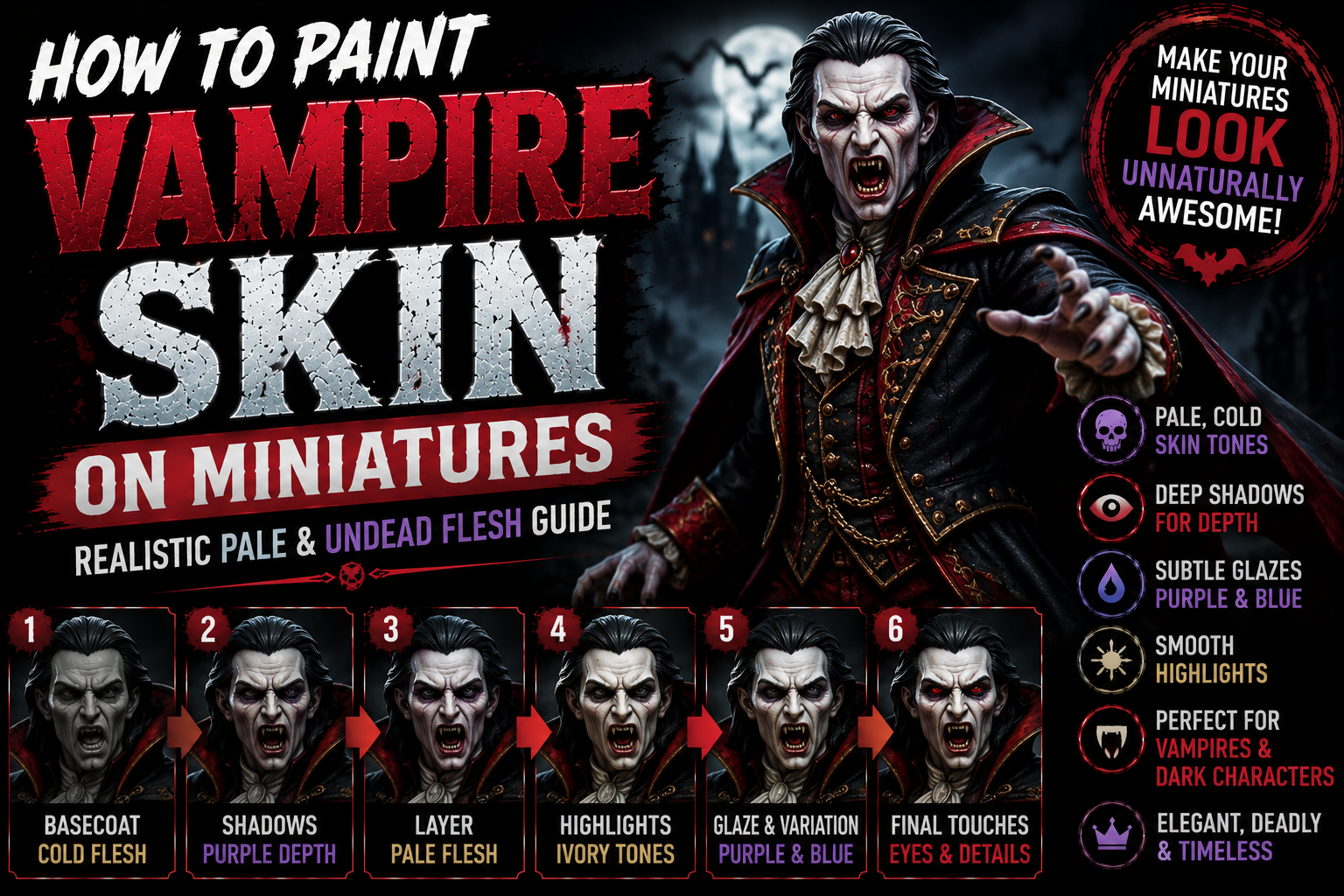
Convincing vampire flesh combines pale skin tones with cold shadows, subtle purple and blue coloration, carefully controlled highlights, and strong facial contrast.
When these elements work together, the character can appear elegant, ancient, and supernatural without looking like an unpainted miniature.
In this guide, you’ll learn how to paint realistic vampire skin using layering, glazing, cold shadows, facial highlights, and subtle supernatural effects.
Understanding Vampire Skin

Vampire skin should usually retain some characteristics of human flesh.
The difference is temperature.
Healthy skin often contains warm red, orange, and pink tones. Vampire flesh works better when those colors are reduced and replaced with colder greys, purples, and blues.
This creates the impression that the character hasn’t seen sunlight for decades—or centuries.
Keep some subtle flesh color underneath, however.
Completely grey skin can quickly make the vampire look more like a zombie.
Choosing Your Vampire Skin Palette

A versatile vampire palette can include:
- Pale Flesh
- Ivory
- Blue Grey
- Desaturated Purple
- Cold Beige
- Dark Burgundy
- Off-White
The base should remain relatively pale while the shadows introduce colder colors.
Burgundy is particularly useful around the eyes, mouth, and deepest facial shadows.
It adds contrast without making the skin appear healthy.
Painting the Base Coat

Begin with a desaturated flesh tone.
Instead of starting with extremely pale ivory, choose a slightly darker cold beige or grey-flesh color.
Apply several thin coats until the skin is evenly covered.
This darker foundation gives you room to gradually increase brightness.
Preserve all facial details, especially around the eyes, nose, lips, and cheekbones.
The face will eventually become the main focal point of the miniature.
Creating Cold Shadows

Cold shadows are what separate vampire skin from normal human flesh.
Mix your base skin color with small amounts of purple or blue-grey.
Apply these shadows around:
- Eye sockets
- Beneath cheekbones
- Under the jaw
- Around the nose
- Between fingers
- Beneath muscles
- Around the temples
Avoid pure black.
Purple and blue-grey create much richer shadows while preserving the supernatural appearance of the skin.
Building Pale Skin Highlights

Gradually mix ivory into your original skin color.
Apply increasingly lighter layers across raised surfaces.
On the face, concentrate highlights around:
- Forehead
- Nose
- Cheekbones
- Upper lip
- Chin
- Eyebrows
For the body, focus on shoulders, knuckles, fingers, and raised muscles.
Keep the brightest highlights small.
If everything becomes ivory, you’ll lose the contrast that makes the pale skin convincing.
Adding Purple and Blue Undertones
Transparent glazes can make vampire skin dramatically more interesting.
Apply extremely thin purple around the eyes and temples.
Add subtle blue-grey to colder shadow areas.
Small amounts of burgundy around the mouth can also create an excellent contrast against pale skin.
These colors should barely be visible individually.
The goal is to make the viewer sense something unnatural beneath the flesh without immediately noticing exactly why.
Painting the Vampire Face

The face deserves your strongest contrast.
Deep eye sockets combined with pale cheekbones immediately create the classic vampire appearance.
Keep the area around the eyes darker than normal human skin.
You can introduce purple, burgundy, or blue-grey depending on the character.
Then carefully highlight the forehead, nose, cheeks, and chin.
The contrast between these pale highlights and dark eyes creates an intense supernatural expression.
Painting Vampire Eyes

Vampire eyes can completely change the personality of the miniature.
Red works beautifully for aggressive vampires.
Yellow or orange creates a more monstrous appearance.
Pale blue can suggest ancient supernatural power.
For glowing eyes, keep the center extremely bright and apply a tiny amount of the same color around the eyelids.
Don’t spread the glow too far.
The effect should remain concentrated around the eyes.
Painting Fangs and Hair

Small details help complete the character.
Avoid painting fangs pure white immediately.
Start with beige or ivory and reserve tiny white highlights for the tips.
For dark hair, begin with black or extremely dark blue before gradually highlighting with blue-grey.
White-haired vampires can use grey shadows followed by ivory highlights.
Creating contrast between the hair and pale face helps keep the character readable from a distance.
Creating an Ancient Vampire Look

Older vampires can receive stronger supernatural coloration.
Deepen the shadows around the eyes and cheekbones.
Introduce additional purple and blue-grey across the temples.
You can also make the hands slightly darker or colder than the face.
For extremely ancient vampires, subtle visible veins beneath pale skin can add incredible character.
Paint very thin blue or purple lines and glaze your skin color over them afterward.
This makes the veins appear beneath the surface.
Common Mistakes to Avoid

Avoid these common mistakes:
- Painting vampire skin pure white.
- Using black for every shadow.
- Removing all natural flesh tones.
- Making the entire face equally pale.
- Overusing purple or blue.
- Painting fangs completely white.
- Making glowing eyes too large.
Subtle color variation creates much more convincing supernatural flesh.
Final Thoughts
Painting realistic vampire skin is about balancing human anatomy with unnatural colors.
Start with a desaturated flesh tone, create cold purple and blue-grey shadows, gradually build pale ivory highlights, and introduce subtle color variation through transparent glazes.
Then concentrate additional contrast around the face and eyes.
These techniques work beautifully on vampire lords, undead nobles, dark elves, necromancers, gothic characters, and countless D&D miniatures.
A great vampire shouldn’t simply look pale.
The character should look almost human—while still giving the viewer the unmistakable feeling that something is very wrong.
Frequently Asked Questions
What’s the best base color for vampire skin?
A desaturated flesh tone or cold beige provides an excellent foundation.
Should vampire skin be white?
No. Pale flesh, ivory, grey, purple, and blue undertones create a much more realistic result.
What’s the best color for vampire shadows?
Purple and blue-grey work particularly well because they create cold supernatural shadows.
How do I make vampire skin look extremely pale?
Gradually build ivory highlights while keeping darker cold shadows visible underneath.
What color should vampire eyes be?
Red, orange, yellow, pale blue, and even purple can all work depending on the character.
What’s the biggest mistake when painting vampires?
Using pure white across the entire skin instead of creating depth with cold shadows and subtle color variation.
If you would like free D&D STL miniatures, visit our homepage and download yours now:
https://echoartstudios.net/