
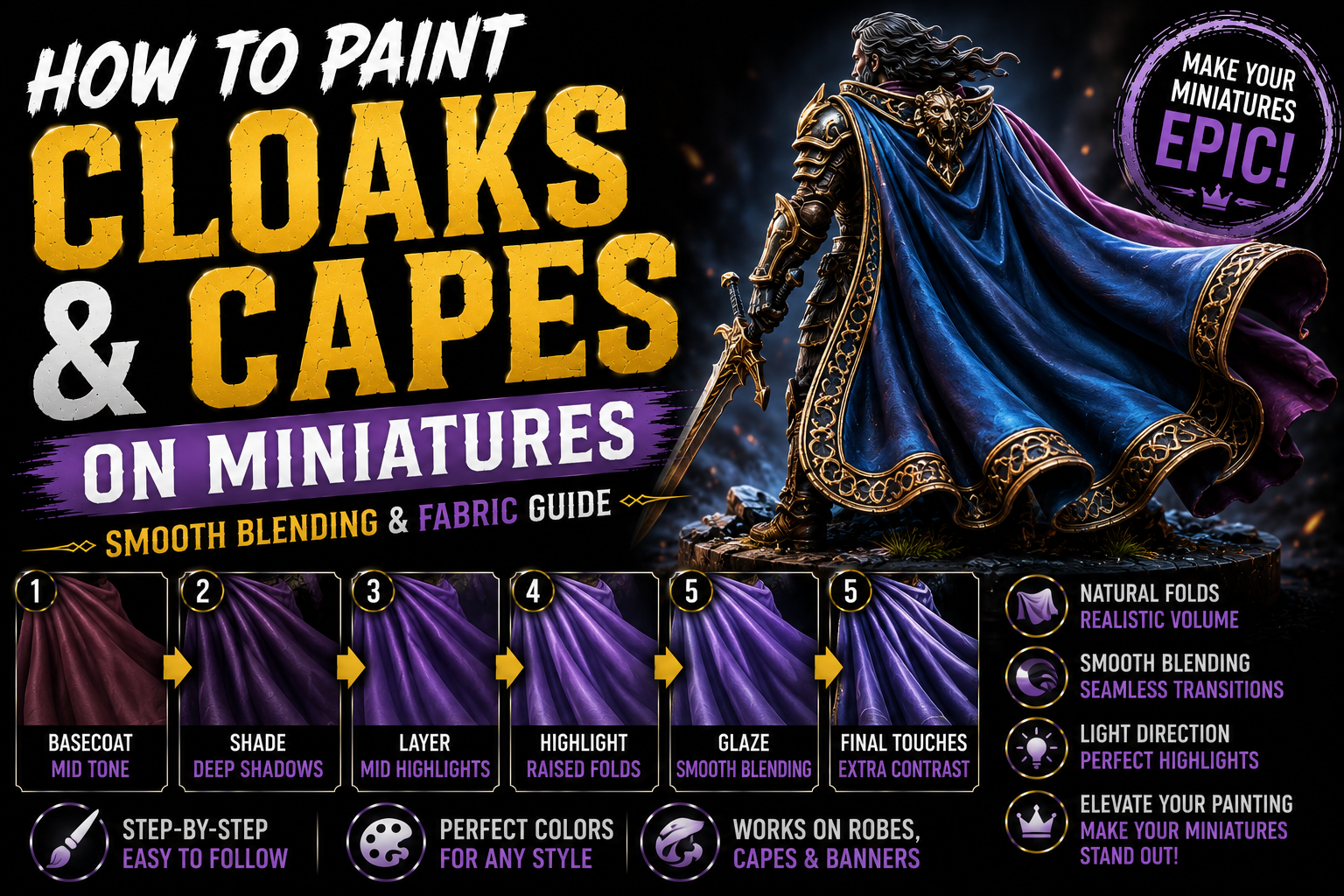
How to Paint Cloaks and Capes on Miniatures (Smooth Blending & Fabric Guide)

A beautifully painted cloak can completely transform a fantasy miniature. Flowing capes naturally attract attention because they occupy a large portion of the model and create dramatic movement. Whether you’re painting a noble paladin, an elven ranger, a vampire lord, or a mysterious wizard, mastering fabric will instantly elevate your painting skills.
Many painters struggle with cloaks because large, smooth surfaces reveal every brushstroke. The key isn’t using more paint—it’s understanding light, folds, and gradual color transitions.
In this guide, you’ll learn how to paint realistic cloaks and capes using layering, glazing, and smooth blending techniques that work on every fantasy miniature.
Understanding Fabric Folds

Before picking up your brush, study how real fabric behaves.
Every fold creates three distinct areas:
- Bright highlights on raised ridges.
- Mid-tones across smooth transitions.
- Deep shadows inside folds.
Unlike armor or stone, cloth reflects light softly, creating gentle transitions instead of sharp reflections.
Learning to identify these areas is the foundation of realistic fabric painting.
Choosing Your Color Palette

Almost any color can become a beautiful cloak.
Popular choices include:
- Crimson Red
- Royal Blue
- Forest Green
- Deep Purple
- Black
- Ivory
- Dark Brown
Choose a mid-tone as your base color, then prepare one darker shade for shadows and one lighter shade for highlights.
Keeping all three colors within the same family creates smooth, believable blends.
Painting the Base Coat

Apply two or three thin coats until the fabric is completely covered.
Avoid thick paint that fills the sculpted folds.
A smooth, even base coat allows every later layer to blend naturally.
Large fabric surfaces reward patience.
Building Smooth Highlights

Begin highlighting the raised folds using progressively lighter colors.
Each highlight should cover a slightly smaller area than the previous one.
Focus on:
- Upper folds
- Outer edges
- Raised creases
- Wind-swept sections
The brightest highlights should remain small and controlled.
Deepening the Shadows

Deep shadows create the illusion of flowing cloth.
Apply darker glazes inside each fold, especially where fabric overlaps itself.
Several transparent layers look much smoother than one heavy coat.
The strongest shadows should appear in the deepest recesses.
Blending with Glazes

Glazing is the secret to professional-looking fabric.
Thin your paint heavily and apply several transparent layers between highlights and shadows.
Each glaze softens visible brushstrokes and creates seamless transitions.
Take your time—beautiful blending is built gradually.
Painting Different Fabric Types

Not every cloak reflects light the same way.
Velvet often has softer, richer highlights.
Heavy wool benefits from muted colors and stronger shadows.
Silk reflects more light, requiring brighter highlights and smoother blends.
Choosing the right finish helps reinforce your character’s personality.
Common Mistakes to Avoid

Avoid these common mistakes:
- Using harsh transitions.
- Applying thick paint.
- Highlighting every fold equally.
- Ignoring the direction of the light.
- Using pure white for large highlights.
- Rushing the glazing process.
Smooth transitions are what make fabric feel realistic.
Final Thoughts
Painting realistic cloaks is one of the most valuable skills a miniature painter can develop. Since cloaks often dominate the silhouette of fantasy characters, mastering smooth blending and natural fabric folds dramatically improves the overall appearance of your miniatures.
Whether you’re painting a medieval knight, a mysterious assassin, a powerful mage, or an elven hero, these techniques will help your cloaks look elegant, dynamic, and full of life.
Frequently Asked Questions
What’s the easiest cloak color for beginners?
Dark blue and crimson are forgiving colors that make smooth blends easier to achieve.
Should cloaks have sharp highlights?
Generally no. Fabric reflects light softly, so highlights should transition smoothly.
What’s the best technique for blending fabric?
Thin glazes are one of the easiest ways to create smooth transitions without visible brushstrokes.
Can I use these techniques on robes?
Absolutely. Robes, banners, tabards, sleeves, and cloaks all follow the same lighting principles.
What’s the biggest mistake when painting fabric?
Creating harsh transitions instead of soft, gradual blends that mimic real cloth.
If you would like free D&D STL miniatures, visit our homepage and download yours now:https://echoartstudios.net/