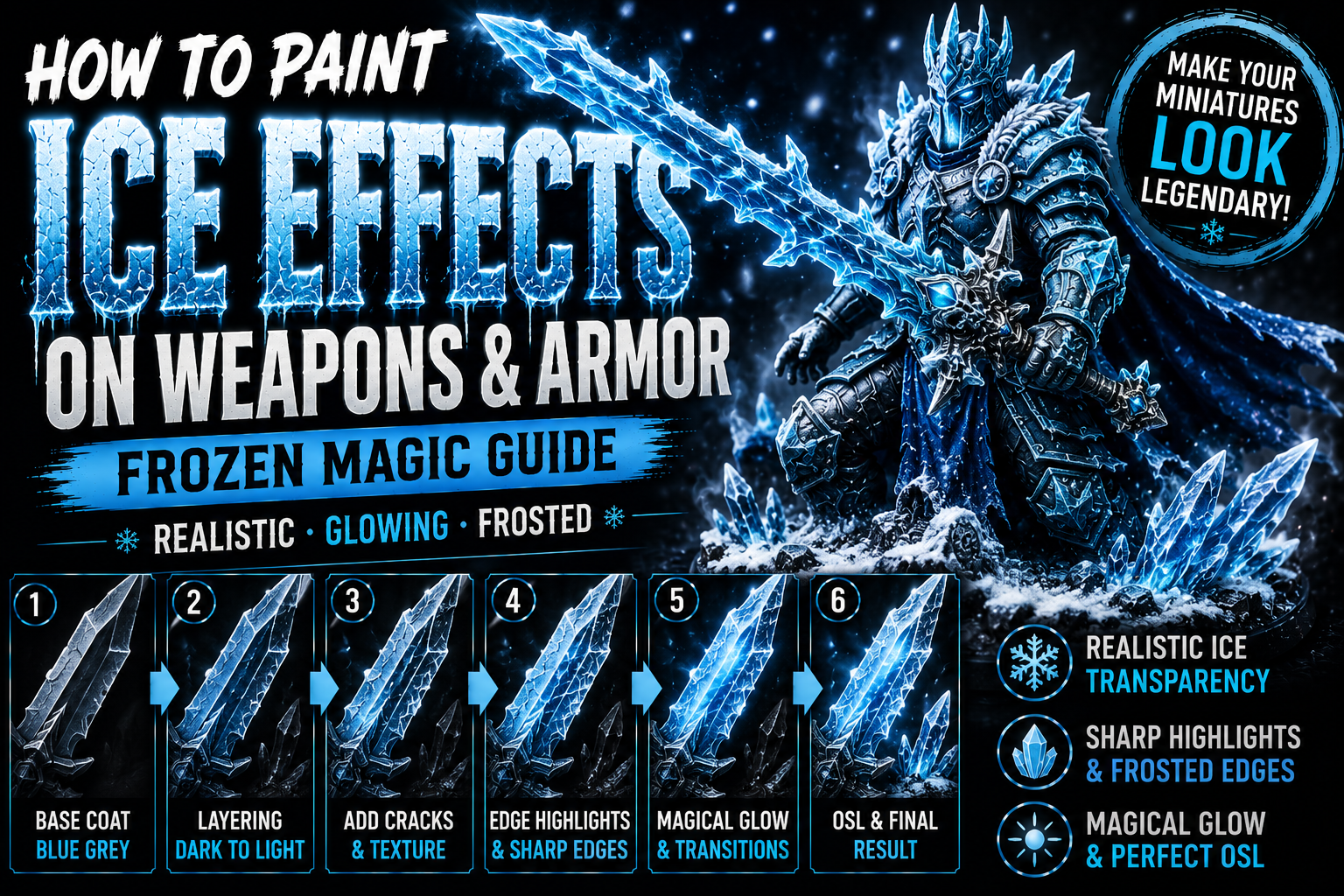
How to Paint Ice Effects on Weapons and Armor (Frozen Magic Painting Guide)

Frozen weapons and ice-covered armor are some of the most visually striking effects in miniature painting. Whether you’re creating an ancient frost knight, an ice dragon, a winter sorcerer, or a legendary blade infused with glacial magic, realistic ice effects immediately give your miniature a powerful fantasy aesthetic.
Many painters simply use light blue paint and call it ice. In reality, frozen surfaces combine transparency, sharp highlights, frosted edges, subtle color gradients, and reflected light that create the illusion of solid ice.
In this guide, you’ll learn how to paint realistic frozen weapons and armor using layering, glazing, edge highlighting, and Object Source Lighting (OSL).
Understanding How Ice Reflects Light

Ice behaves differently from stone or metal.
Instead of reflecting light evenly, it creates sharp reflections, translucent areas, and subtle internal color shifts. The thickest sections often appear darker blue, while thin edges become nearly white.
Studying frozen lakes, icicles, or clear ice cubes provides excellent reference material.
The more you observe real ice, the easier it becomes to recreate it on a miniature.
Choosing Your Ice Colors

A convincing frozen palette usually includes:
- Pure White
- Ice Blue
- Cyan
- Pale Turquoise
- Light Grey
- Blue Grey
Avoid using only bright blue.
The combination of cool whites and subtle blues creates a much more realistic frozen appearance.
Painting the Base Coat

Begin with a medium blue-grey base coat.
Apply thin, smooth layers while preserving every edge and engraved detail.
This darker foundation will later provide contrast against the bright icy highlights.
Don’t rush this stage—clean base coats make every later effect stronger.
Creating Frosted Highlights

Highlight every sharp edge using progressively lighter blues.
Finish with thin white edge highlights on the outermost corners.
These crisp lines imitate the way frozen surfaces catch light.
Keep the highlights clean and controlled rather than soft and blended.
Painting Ice Cracks and Texture

Small cracks add incredible realism.
Using a fine brush, paint thin irregular white lines across larger frozen surfaces.
Some cracks should split into smaller branches before fading naturally.
Avoid symmetrical patterns.
Natural ice fractures are always unpredictable.
Adding Magical Glow

Fantasy weapons often contain magical frost.
Apply transparent cyan glazes toward the center of the blade or magical crystal.
Reinforce the brightest areas with tiny white highlights.
The result should appear as though cold energy is trapped inside the weapon.
Applying Object Source Lighting (OSL)

Glowing ice illuminates nearby objects.
Thin your blue paint into a glaze and lightly brush surrounding armor, gloves, snow, or nearby rocks.
The glow should fade smoothly away from the frozen object.
Subtle lighting always looks more convincing than excessive brightness.
Common Mistakes to Avoid
Avoid these common mistakes:
- Using only bright blue.
- Skipping white edge highlights.
- Making every crack identical.
- Applying thick paint.
- Ignoring transparency.
- Overusing OSL.
Ice should feel crisp, clean, and luminous.
Final Thoughts
Frozen weapons and armor combine sharp reflections, cool color transitions, and magical lighting to create some of the most impressive fantasy effects in miniature painting. By layering blues, adding bright edge highlights, painting natural cracks, and incorporating subtle OSL, you can create miniatures that truly look infused with ancient frost magic.
Whether you’re painting an ice dragon, a frost giant, a legendary sword, or a frozen battlefield hero, these techniques will help your miniatures stand out on any display shelf or gaming table.
Frequently Asked Questions
What’s the best base color for frozen weapons?
A medium blue-grey provides an excellent foundation for icy highlights and glowing effects.
Should ice have pure white highlights?
Yes. Sharp white edge highlights are essential for creating the illusion of reflective frozen surfaces.
Can I paint glowing ice without an airbrush?
Absolutely. Thin glazes with a regular brush create beautiful icy glow effects.
How do I make frozen armor look magical?
Combine cyan glazes, crisp white highlights, subtle cracks, and gentle blue OSL on nearby surfaces.
What’s the biggest mistake when painting ice?
Using only blue paint without creating sharp reflections and bright white highlights.
If you would like free D&D STL miniatures, visit our homepage and download yours now:https://echoartstudios.net/