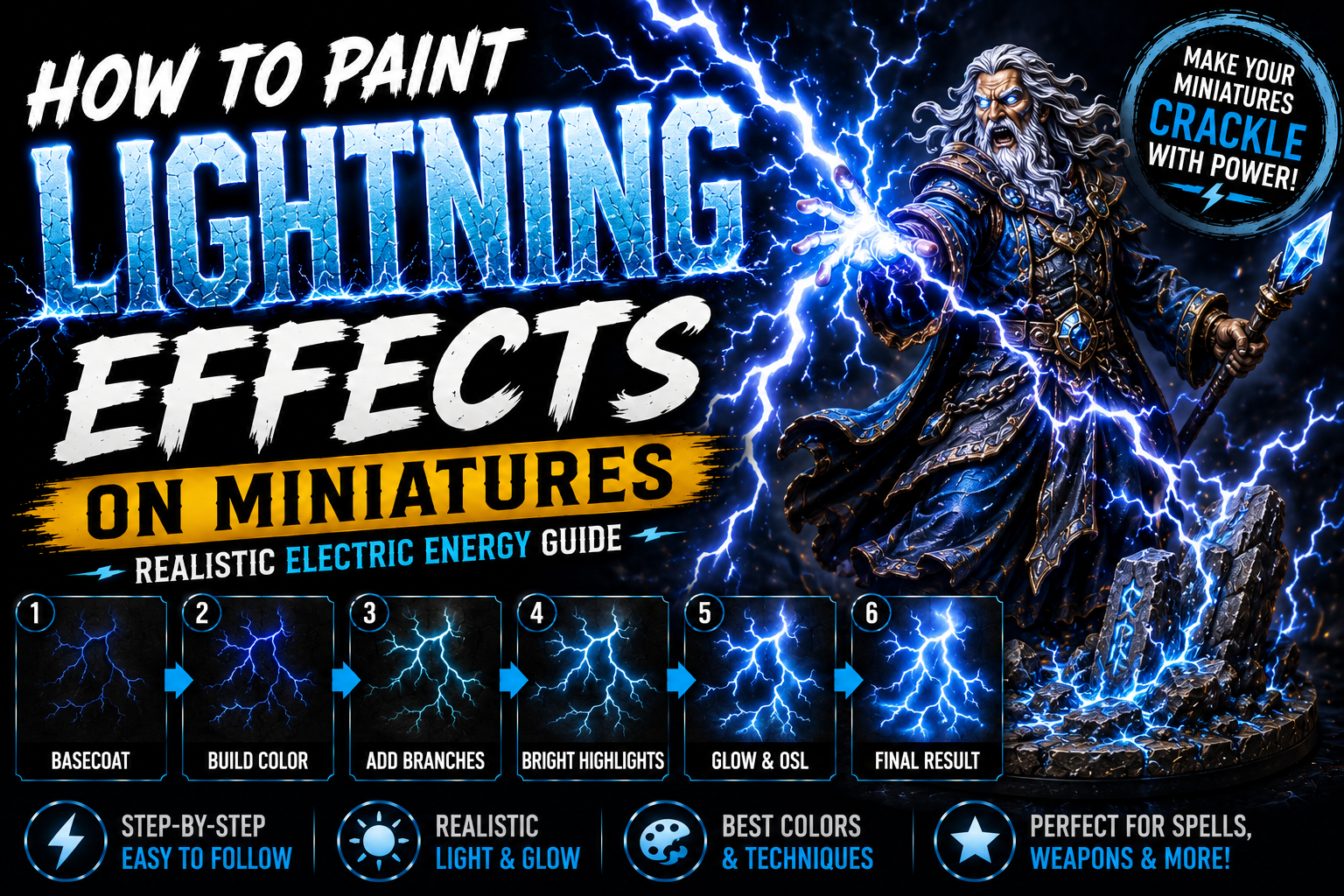
How to Paint Lightning Effects on Miniatures (Realistic Electric Energy Guide)

Lightning is one of the most exciting magical effects you can paint on a miniature. Whether it’s a wizard unleashing a devastating spell, a storm-forged weapon crackling with energy, or a god of thunder commanding the battlefield, realistic lightning instantly becomes the centerpiece of the model.
Unlike fire or smoke, lightning is incredibly bright, fast, and unpredictable. Sharp branches, intense highlights, and powerful Object Source Lighting (OSL) are what make electrical effects feel alive.
In this guide, you’ll learn how to paint realistic lightning using layering, color transitions, and lighting techniques that work on weapons, spell effects, and fantasy miniatures.
Understanding How Lightning Behaves

Real lightning isn’t a smooth line.
Instead, it branches into smaller arcs that split unpredictably before fading into darkness. The center of each bolt is the brightest point, surrounded by a soft colored glow.
Electricity also illuminates nearby surfaces with a cold, intense light.
Keeping these characteristics in mind will make your painted effects far more convincing.
Choosing Your Lightning Colors

Most fantasy lightning uses cool colors.
Popular combinations include:
- White
- Ice Blue
- Cyan
- Electric Blue
- Violet
- Pale Turquoise
The brightest areas should always remain white, while the surrounding glow transitions into cooler colors.
Painting the Base Effect

Begin with a medium blue base.
Paint the overall lightning shape first, keeping the lines thin and irregular.
Once the structure is established, gradually reinforce the center using lighter blues before finishing with pure white.
Multiple thin layers produce a much brighter result than thick paint.
Creating Electric Branches

The branching pattern is what makes lightning believable.
Allow the main bolt to split into several smaller arcs.
Some branches should fade before reaching their destination, while others reconnect or continue outward.
Avoid perfectly symmetrical shapes.
Nature is chaotic, and your lightning should reflect that.
Adding the Glow

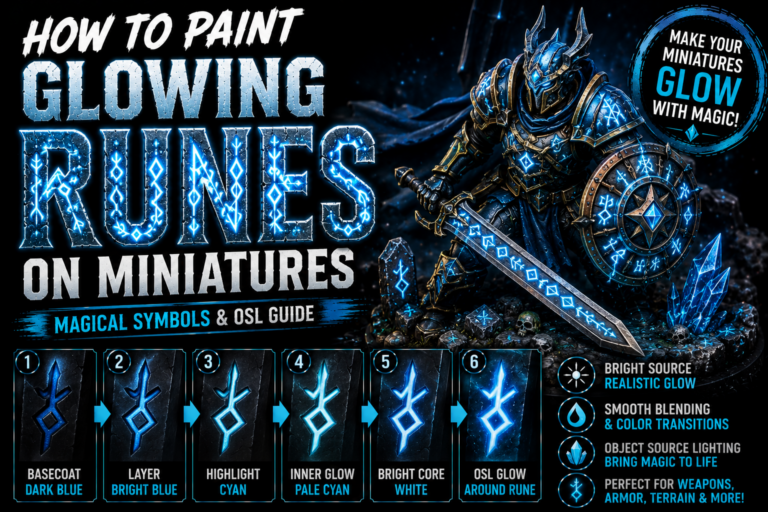
Lightning emits intense light.
Thin your blue paint into a transparent glaze and apply it around the electrical arcs.
Nearby armor, hands, faces, and weapons should receive subtle reflections.
The glow should always be strongest closest to the lightning before fading naturally.
This creates a convincing electrical OSL effect.
Painting Lightning Weapons

Storm-forged weapons are a favorite in fantasy painting.
Apply lightning along the blade or hammer head, keeping the arcs thin and dynamic.
Reinforce the brightest areas with white highlights and allow blue glazes to spill gently across the surrounding metal.
Even a few carefully placed arcs can transform an ordinary weapon into a legendary artifact.
Painting Magical Storm Effects

Large spell effects allow more dramatic compositions.
Create several independent lightning bolts that connect through glowing magical energy.
Add subtle clouds, smoke, or magical mist beneath the bolts to suggest powerful storms gathering around the caster.
The combination of electricity and atmosphere creates spectacular fantasy scenes.
Common Mistakes to Avoid
Avoid these common mistakes:
- Painting thick lightning bolts.
- Skipping the white center.
- Making every branch identical.
- Using only blue.
- Forgetting nearby OSL.
- Creating perfectly straight lightning.
Natural lightning is thin, chaotic, and intensely bright.
Final Thoughts
Lightning effects combine sharp detail with dramatic lighting, making them one of the most rewarding techniques in miniature painting. By building thin electric branches, layering cool colors around brilliant white centers, and adding subtle OSL, you can create miniature spell effects that truly feel charged with magical energy.
Whether you’re painting a thunder god, an arcane sorcerer, or an enchanted weapon, mastering lightning effects will give your miniatures an unforgettable presence on the tabletop.
Frequently Asked Questions
What’s the best color for realistic lightning?
White combined with electric blue and cyan produces the most natural-looking magical lightning.
Should the center of the bolt be white?
Yes. The brightest part of the lightning should always be pure white, with colored glows surrounding it.
Can I use lightning effects on weapons?
Absolutely. Swords, hammers, axes, staffs, and spears all look fantastic with subtle electrical arcs.
How do I paint convincing OSL for lightning?
Use transparent blue glazes on nearby surfaces, keeping the strongest glow closest to the electrical effect.
What’s the biggest mistake when painting lightning?
Making the bolts too thick and uniform instead of creating thin, branching arcs with bright white centers.
If you would like free D&D STL miniatures, visit our homepage and download yours now:https://echoartstudios.net/