
How to Paint Skin on Miniatures (Realistic Skin Tone Painting Guide)

Painting realistic skin is one of the biggest milestones in miniature painting. Whether you’re working on a brave human knight, a fierce barbarian, an elegant elf, or a rugged dwarf, believable skin tones instantly make your miniature feel alive.
Many beginners struggle because skin isn’t just one color. Real skin contains warm and cool tones, natural shadows, subtle highlights, and tiny variations that create depth and realism. The good news is that you don’t need complicated techniques to achieve impressive results.
In this guide, you’ll learn how to paint realistic skin tones on fantasy miniatures using layering, glazing, and smooth blending techniques.
Understanding Skin Tones

Before painting, observe real skin.
Skin reflects light softly and contains many subtle color shifts. Areas like the nose, cheeks, fingers, elbows, and ears are often slightly warmer, while shadows tend to appear cooler.
Avoid treating skin as a single flat color. Even the smallest changes in tone help create a much more lifelike appearance.
Studying portraits and natural lighting is one of the fastest ways to improve your results.
Choosing the Right Color Palette
Your palette depends on the character you’re painting.
Popular combinations include:
- Fair Skin
- Warm Tan
- Olive Skin
- Deep Brown
- Pale Undead Skin
- Sunburned Barbarian Skin
Instead of using only beige, introduce subtle reds, browns, yellows, or muted purples to create natural variation.
Fantasy miniatures benefit from rich, layered color rather than flat paint.
Painting the Base Coat

Start with a smooth base coat.
Apply two or three thin layers rather than one thick coat. This preserves facial details such as lips, eyelids, wrinkles, and muscles.
Choose a mid-tone skin color as your foundation rather than beginning with highlights or shadows.
A clean base coat makes blending much easier later.
Building Natural Highlights

Skin catches light gently.
Highlight raised areas like:
- Forehead
- Nose
- Cheekbones
- Chin
- Shoulders
- Muscles
Each highlight should cover a smaller area than the previous one, creating smooth transitions between light and shadow.
Reserve your brightest highlights for only the highest points.
Deepening the Shadows

Natural shadows bring the face to life.
Use darker versions of your base color rather than pure brown or black.
Apply shadows around:
- Eye sockets
- Under the nose
- Under the lower lip
- Neck
- Between muscles
- Fingers
Transparent glazes produce much smoother shadows than thick paint.
Adding Warm Color Variation

One of the biggest secrets to realistic skin is subtle color variation.
Thin red, orange, or pink glazes can be applied to the cheeks, nose, elbows, and fingertips.
Very thin purple glazes work well beneath the eyes or in cooler shadow areas.
These tiny adjustments dramatically increase realism without making the miniature look overly colorful.
Painting Fantasy Skin

Fantasy races allow much more creativity.
Elves often feature smoother, slightly cooler skin.
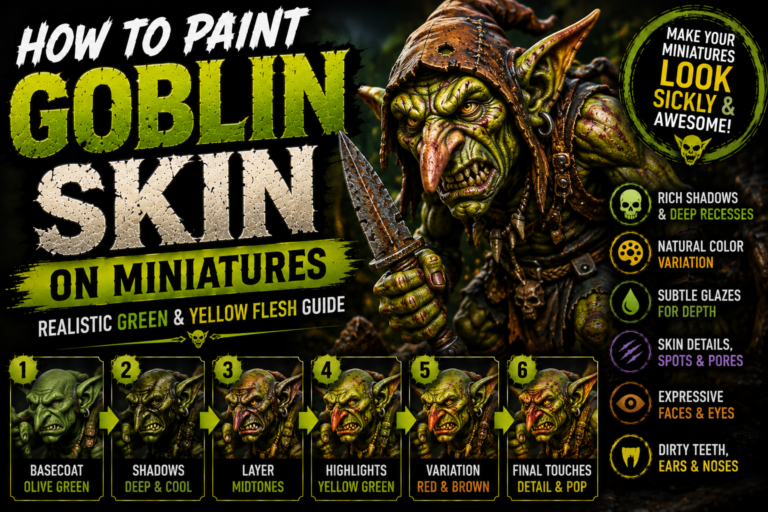
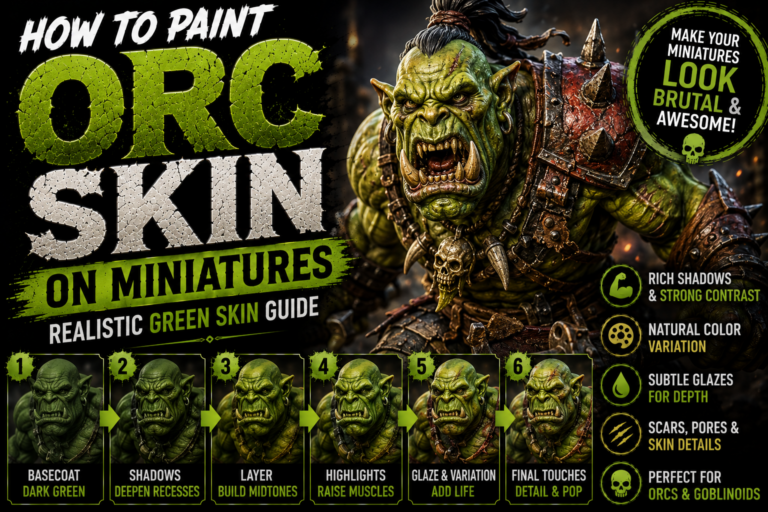
Orcs commonly use green mixed with earthy browns.
Dwarves benefit from weathered, sun-exposed tones.
Undead characters often combine pale flesh with blue or grey glazes.
Keep the lighting realistic even when using fantasy colors.
Common Mistakes to Avoid

Avoid these common mistakes:
- Using only one flesh color.
- Applying thick paint.
- Highlighting too aggressively.
- Using black for every shadow.
- Ignoring warm color variation.
- Painting every face exactly the same.
Natural skin always contains subtle differences.
Final Thoughts
Realistic skin painting is less about complicated techniques and more about observation. By combining smooth layering, transparent glazes, gentle highlights, and subtle color variation, you can create faces and exposed skin that immediately draw attention.
Since almost every fantasy miniature includes visible skin, mastering this skill will improve everything from heroes and monsters to NPCs and display pieces.
Frequently Asked Questions
What’s the easiest skin tone for beginners?
A warm tan or light flesh tone is very forgiving and blends smoothly with both highlights and shadows.
Should I use pure white for highlights?
No. Use lighter flesh tones instead. Pure white should rarely appear on skin.
How do I make faces look more realistic?
Add subtle red glazes to the cheeks and nose while keeping transitions smooth.
Can I paint fantasy skin colors?
Absolutely. Greens, blues, greys, and purples work beautifully when combined with realistic lighting.
What’s the biggest mistake when painting skin?
Using a single flat flesh color without adding variation, highlights, or soft shadows.
If you would like free D&D STL miniatures, visit our homepage and download yours now:https://echoartstudios.net/