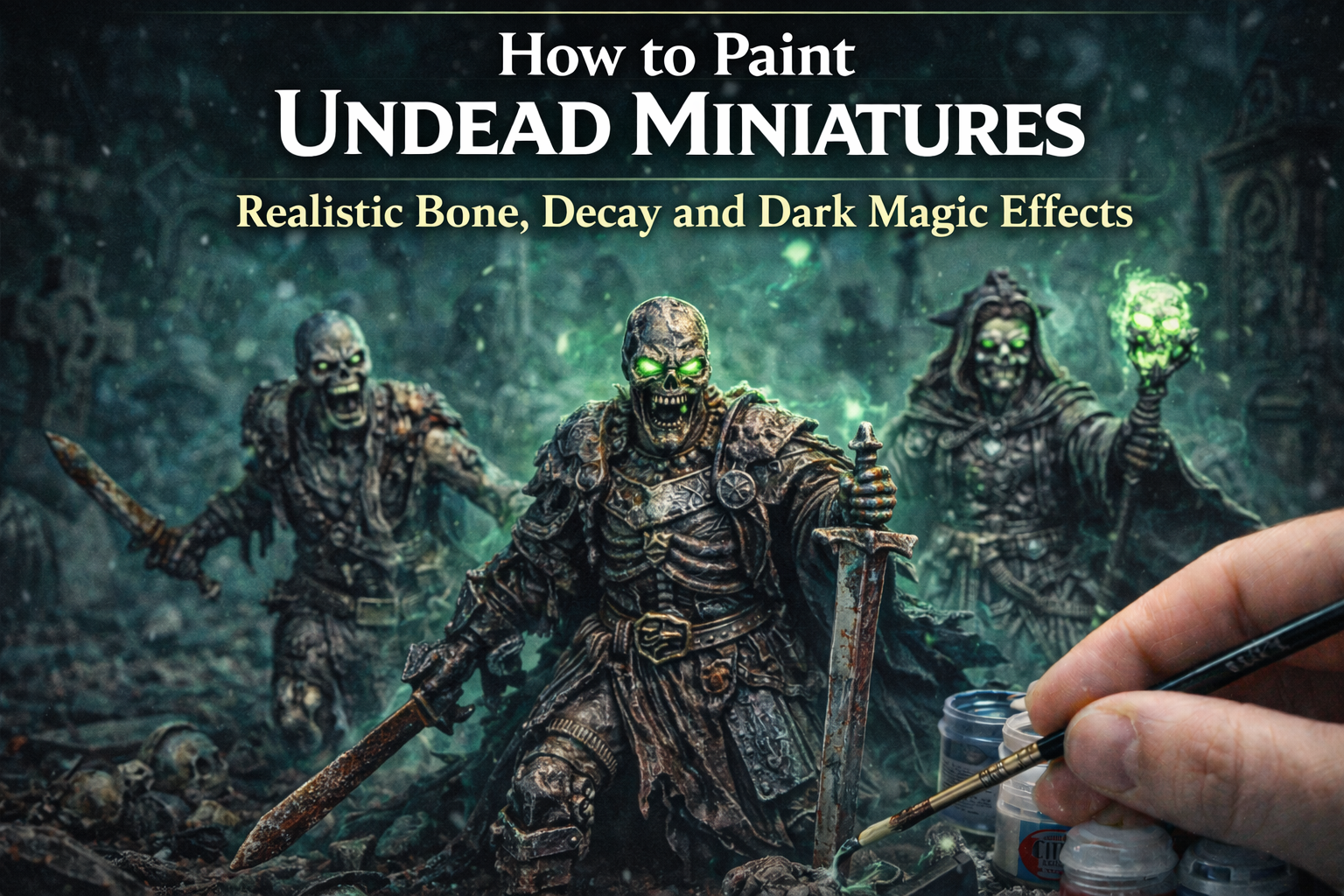
How to Paint Undead Miniatures: Realistic Bone, Decay and Dark Magic Effects
How to paint undead miniatures is one of the most searched topics among fantasy miniature painters, especially for those building necromancer armies, cursed warbands, or dark campaign settings. Undead models allow for dramatic contrast, glowing effects, weathered bone textures, and cinematic basing — making them visually powerful on the tabletop.
In this complete guide, you’ll learn how to paint undead miniatures with realistic bone tones, aged armor, subtle decay effects, glowing magical details, and atmospheric basing that brings your army of the dead to life.
Understanding the Undead Color Identity
Before starting, define what kind of undead you’re painting.
Undead miniatures can fall into different styles:
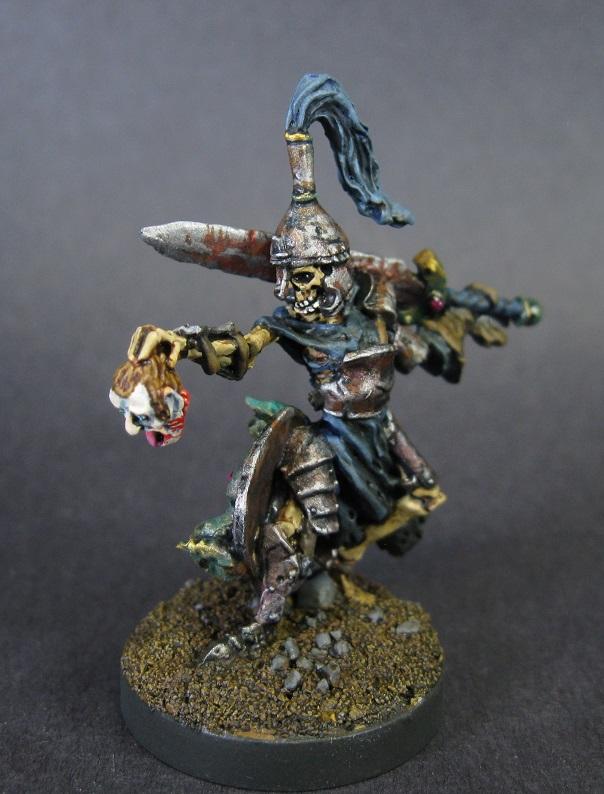
- Ancient skeleton warriors
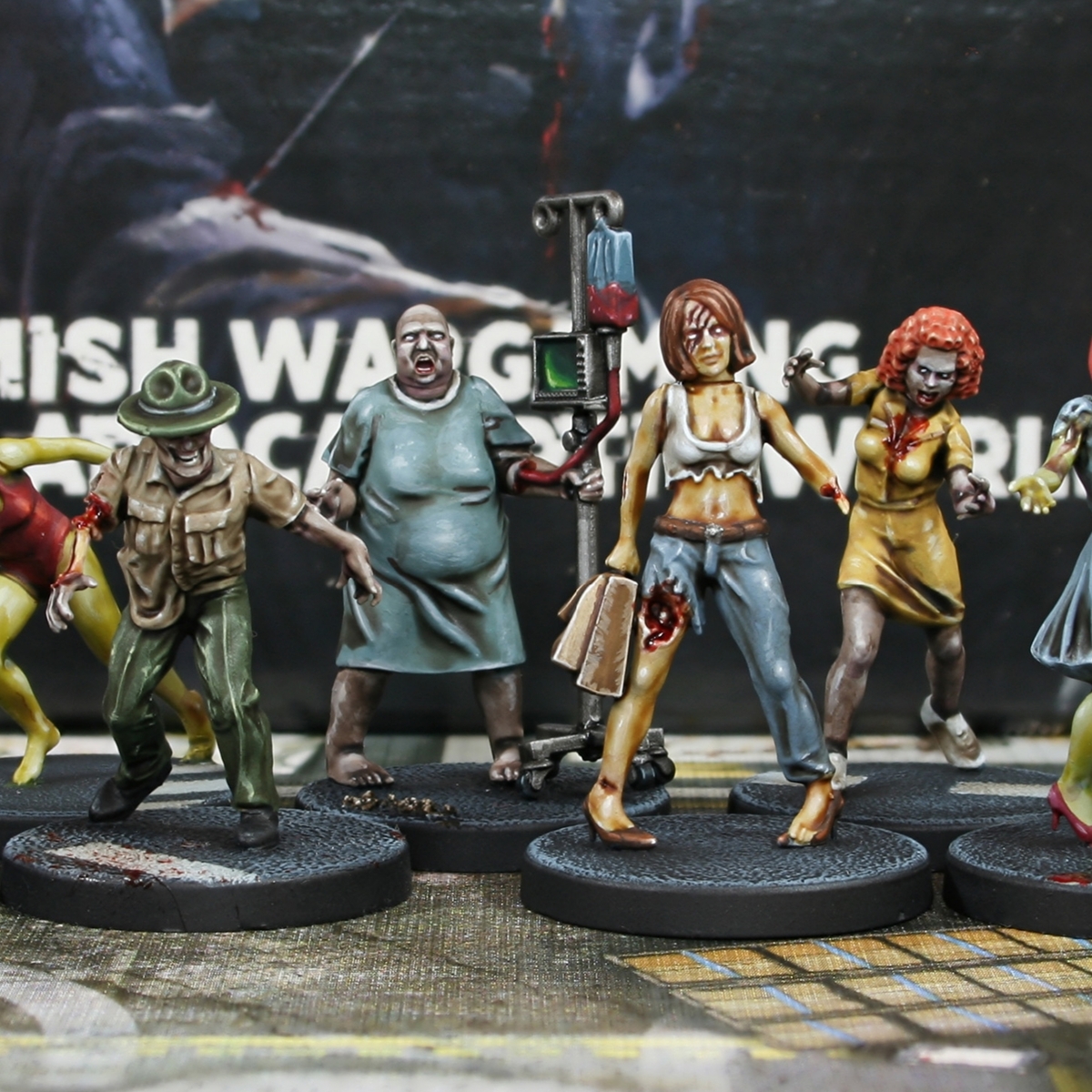
- Decaying zombies
- Frost-preserved corpses
- Dark magic revenants
- Shadow-infused spirits
Each version requires a slightly different color approach.
Core undead palette:
- Bone off-whites
- Desaturated browns
- Cold greys
- Muted greens
- Deep purples
- Dark metallics
Avoid bright saturated colors unless used for magical effects.
4
Priming for Depth and Atmosphere
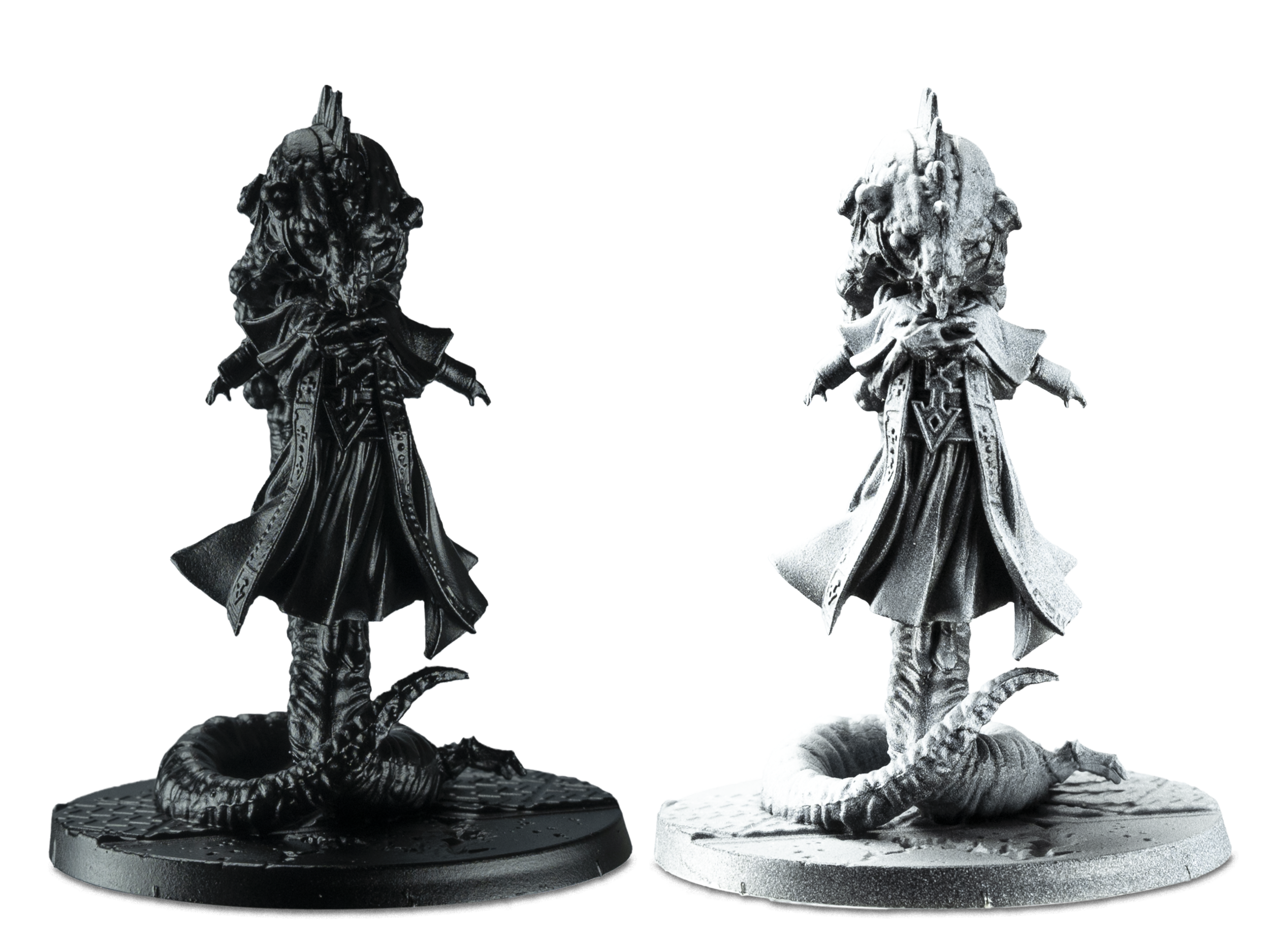
Proper priming makes painting undead miniatures much easier.
Best approach:
- Black primer for deep shadows
- Light grey zenithal spray
- Optional brown undercoat for warm bone tone
Zenithal priming enhances rib cages, skull recesses, and cloth folds automatically.
The stronger your base contrast, the faster your painting process.

4
Painting Realistic Bone
Bone is the foundation of most undead miniatures.
Step-by-step bone method:
- Base coat dark brown
- Layer mid-tone bone color
- Wash with sepia or brown
- Re-highlight raised areas
- Add final edge highlights
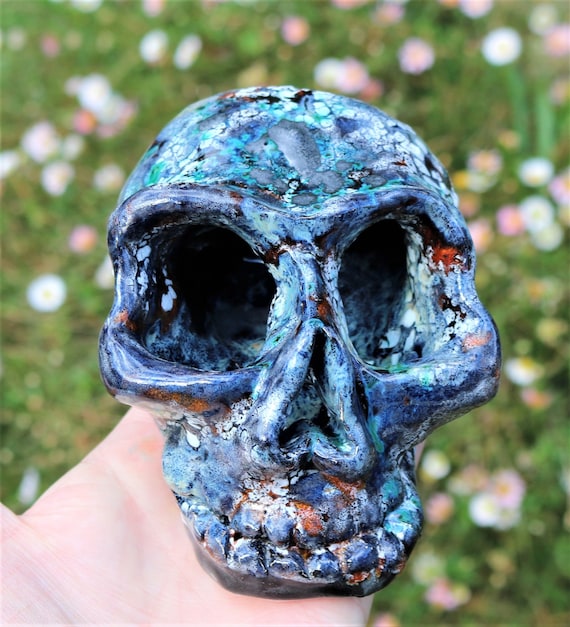
Avoid pure white. Bone should feel aged.
For ancient skeletons:
- Add subtle green glaze in recesses
- Light brown staining near cracks
Contrast makes skulls visually striking.
4
Creating Decay Effects
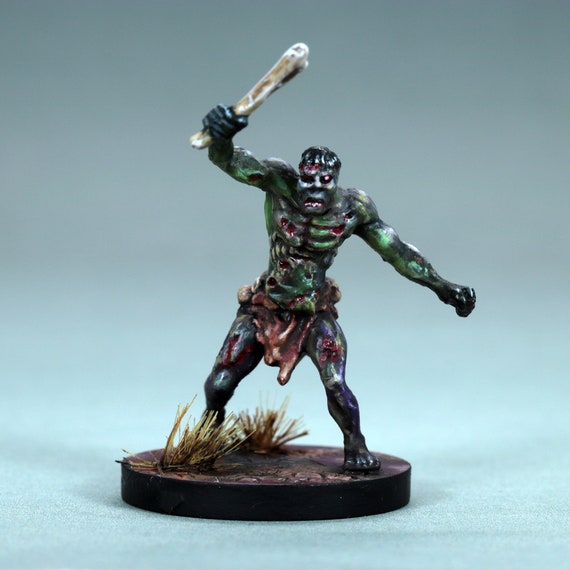
If you’re painting zombies or partially preserved corpses, decay adds realism.
Techniques include:
- Thin green or purple glazes
- Subtle dark red in torn flesh
- Controlled stippling
- Gloss varnish for wet effects
Less is more. Overdoing gore reduces realism.
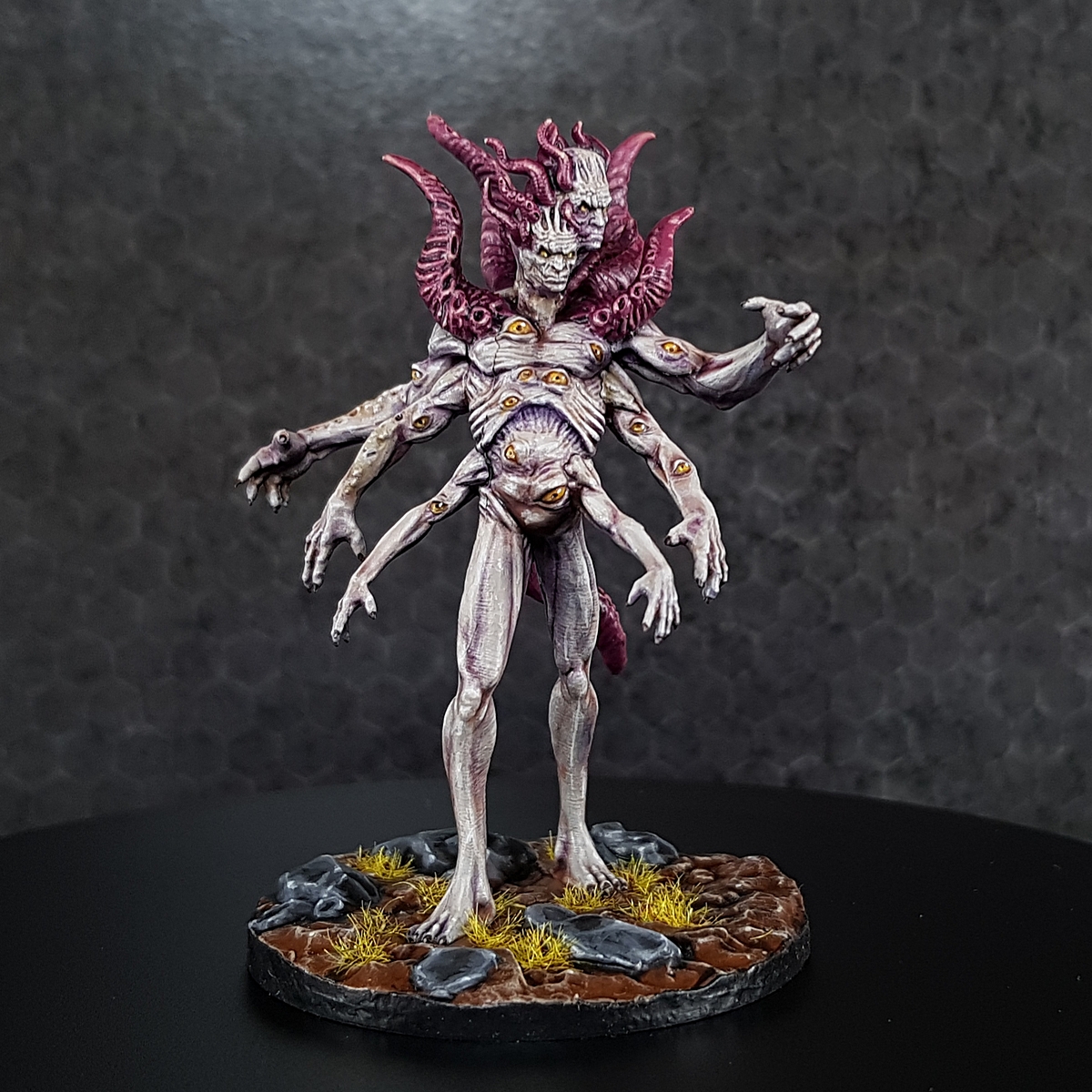
Keep decay concentrated in logical areas:
- Open wounds
- Rib cavities
- Joints
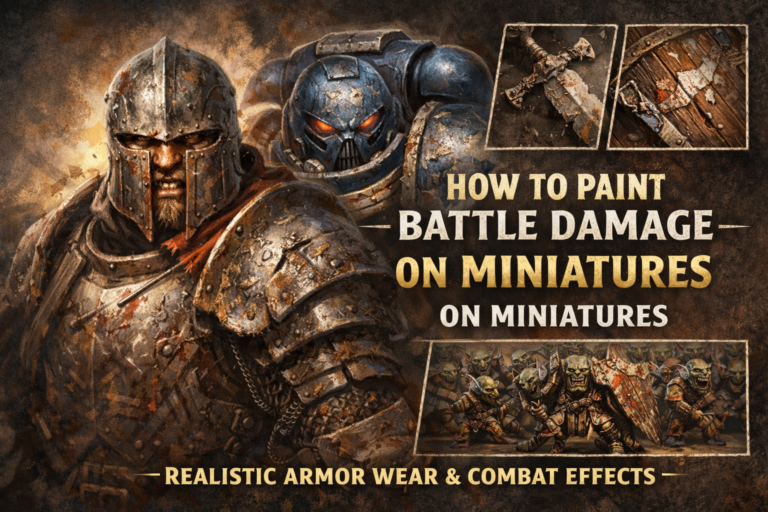
Aged Armor and Weapons
Undead warriors often wear corroded armor.
Metal workflow:
- Dark metallic base
- Heavy black wash
- Add brown rust glaze
- Edge highlight selectively
Avoid bright silver dominance.
Weapons should feel abandoned for centuries.
For magical undead, keep armor darker and colder.


4
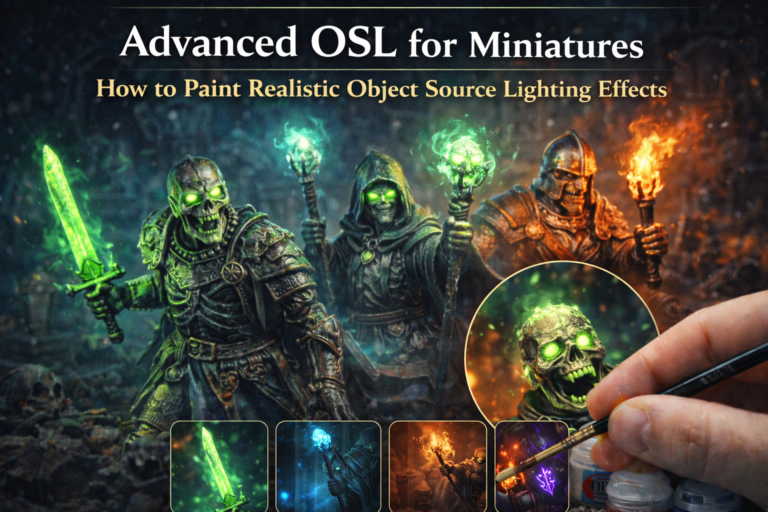
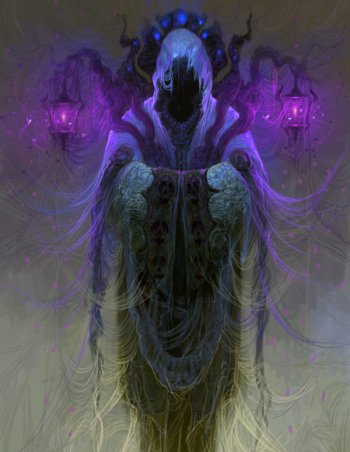
Painting Glowing Eyes and Magic Effects
Glowing eyes instantly add personality to undead miniatures.
Simple glow method:
- Paint eye socket white
- Add thin bright color glaze (green, blue, purple)
- Dot pure white center
- Light glaze around socket
Keep glow subtle and controlled.
Overdone glow can look cartoonish.

Cloth and Tattered Fabric
Undead miniatures often feature torn cloaks or robes.
Technique:
- Base coat muted color
- Heavy wash
- Rough drybrush
- Add small tears with fine highlights
Keep colors desaturated.
Dark red, faded blue, and dirty beige work well.
Basing for Undead Armies
Basing completes the atmosphere.
Common undead base themes:
- Graveyard terrain
- Broken ruins
- Dark forest floor
- Cracked earth
- Ash-covered battlefield
Texture first, paint dark, drybrush lightly.
Add small skulls or tomb fragments for narrative.

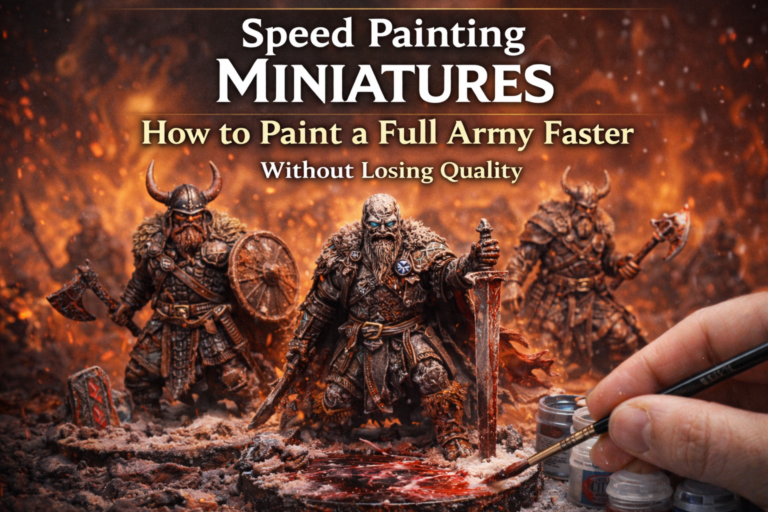
Speed Painting Undead Units
Undead armies are perfect for batch painting.
Efficient workflow:
- Paint all bone at once
- Wash entire unit
- Highlight quickly
- Add glow last
Because bone color is consistent, undead units are faster than multi-colored armies.
Leaders can receive extra glow or richer highlights.
Common Mistakes When Painting Undead
- Using pure white bone
- Overusing bright green
- Excessive rust
- Flat cloth shading
- Ignoring contrast
Undead miniatures thrive on strong shadows and layered texture.
Final Thoughts
Learning how to paint undead miniatures effectively requires strong contrast, aged bone tones, controlled decay effects, and atmospheric basing. By focusing on realistic bone, subtle weathering, and careful glow placement, your undead army will look cinematic and cohesive.
Whether you’re building skeleton legions, zombie hordes, or cursed revenants, mastering these techniques will elevate your tabletop presence dramatically.