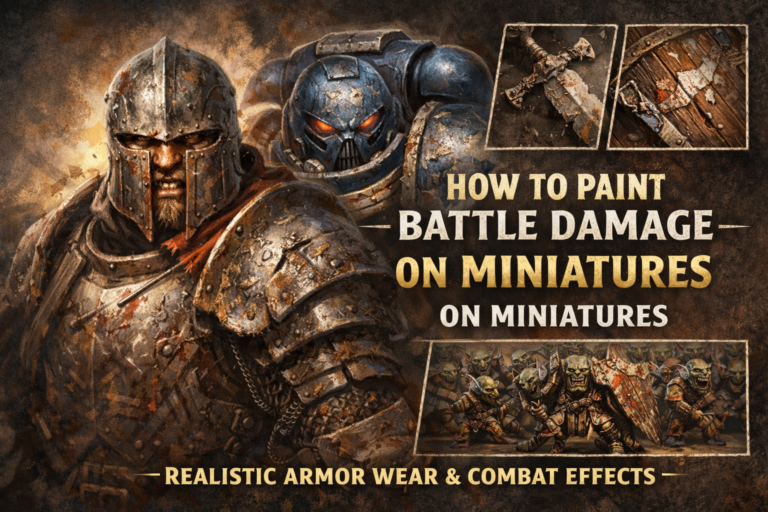
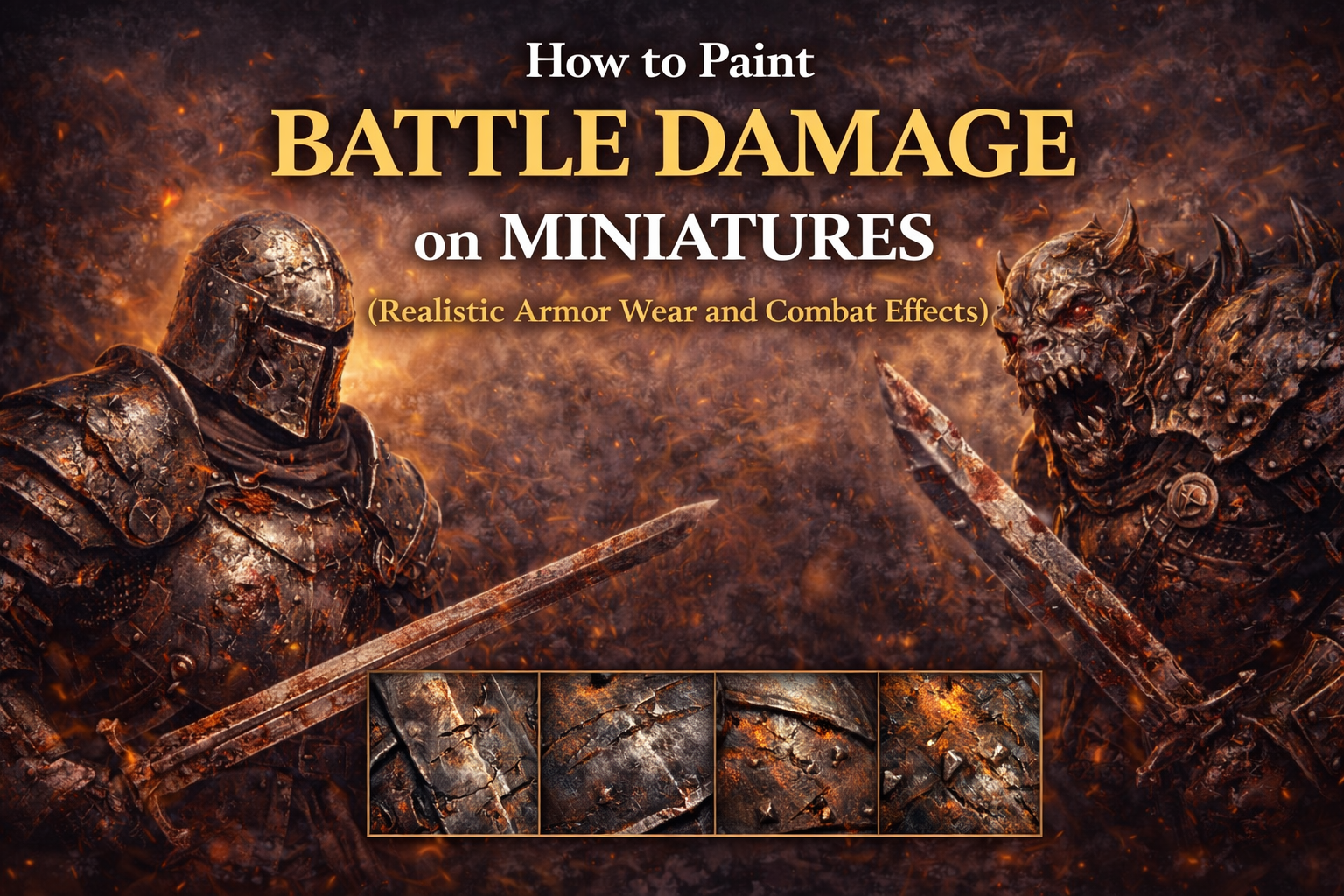
How to Paint Battle Damage on Miniatures (Realistic Armor Wear and Combat Effects)
Battle damage is one of the most powerful techniques in miniature painting. While pristine armor can look beautiful, adding realistic wear, scratches, and combat damage tells a story about the miniature’s past battles.
Whether you are painting Dungeons & Dragons heroes, Warhammer armies, or display pieces, battle damage adds depth and realism that instantly makes a miniature feel more believable.
In this guide, we will explore professional techniques to paint realistic battle damage on armor, shields, and weapons, helping you transform your miniatures into warriors that truly look like they’ve survived countless battles.
Why Battle Damage Makes Miniatures Look More Realistic
Real armor used in combat rarely remains perfect. Weapons scrape against metal, shields are battered, and armor edges become worn over time.
Adding battle damage helps your miniatures look:
- More realistic
- More cinematic
- More immersive on the tabletop
A pristine knight may look impressive, but a warrior with scratched armor and chipped paint tells the story of countless battles fought and survived.
Many painters combine battle damage with atmospheric themes such as frost, decay, or harsh environments. For example, when painting undead warriors in frozen environments, similar weathering techniques are used in our guide on painting Draugr miniatures with frost and undead effects:
https://echoartstudios.net/how-to-paint-draugr-miniatures-with-realistic-frost-and-undead-effects
Understanding Where Damage Appears on Armor
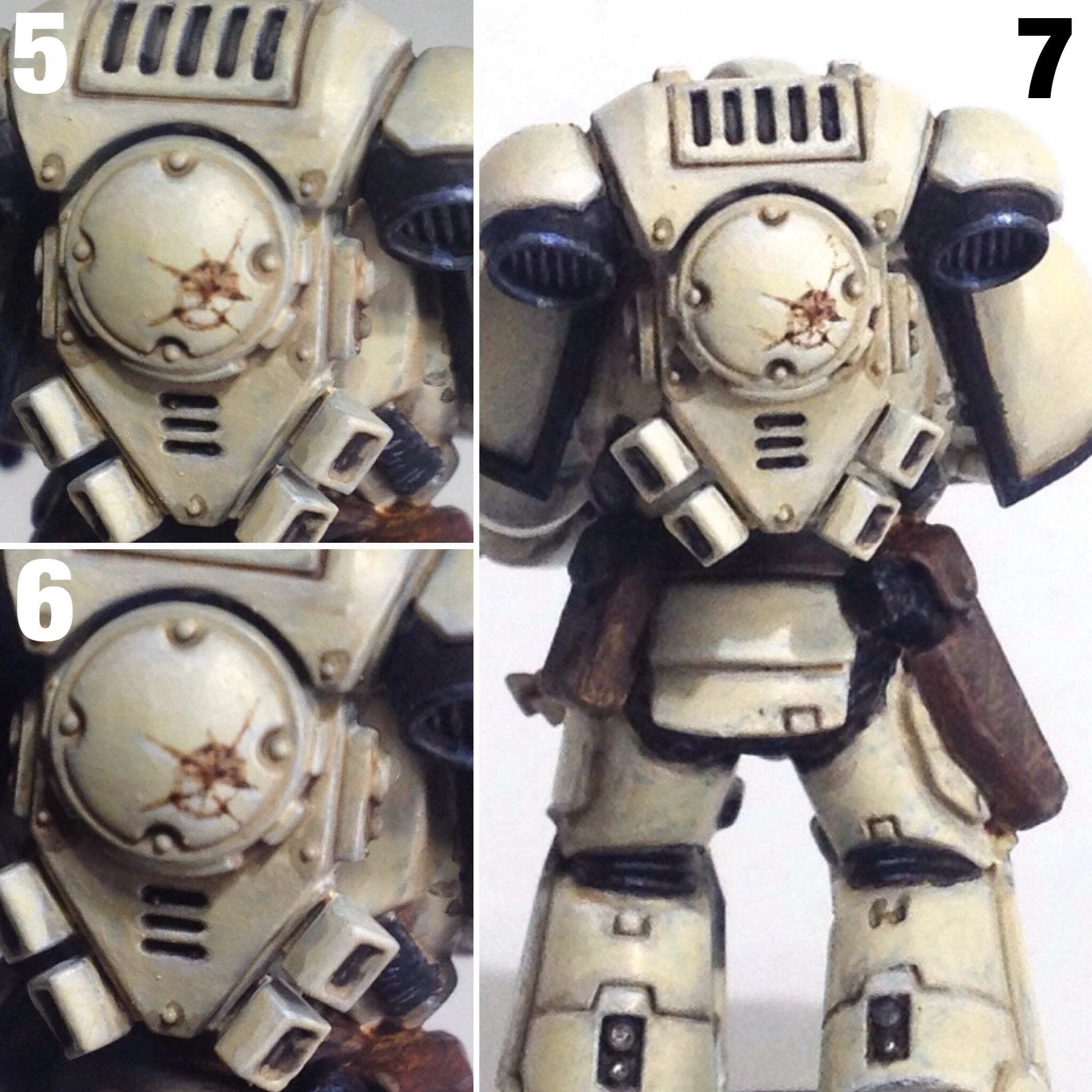
One common mistake beginners make is placing scratches randomly.
In reality, damage appears most often in areas that experience friction or impact.
Common Areas of Wear
Edges of armor plates
These are the first surfaces to lose paint and show metal underneath.
Shoulders and gauntlets
Frequent movement causes scratches here.
Knees and boots
Armor often hits the ground or terrain.
Shield edges
Shields absorb the most punishment during combat.
Thinking about how a warrior moves helps you paint damage more convincingly.
The Sponge Technique for Fast Battle Damage
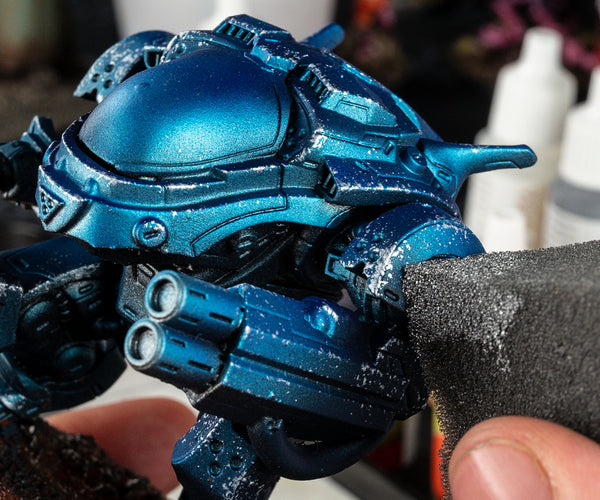
One of the easiest ways to paint battle damage is the sponge technique.
This method creates natural-looking scratches quickly.
How to Use the Sponge Method
- Tear a small piece of sponge (packing foam works well).
- Dip it lightly in dark brown or dark gray paint.
- Remove excess paint on paper.
- Gently dab the sponge onto armor edges.
The irregular sponge pattern naturally creates convincing paint chips.
For metallic armor, you can then add a small highlight of silver inside the chip to simulate exposed metal.
Painting Deep Scratches and Sword Marks
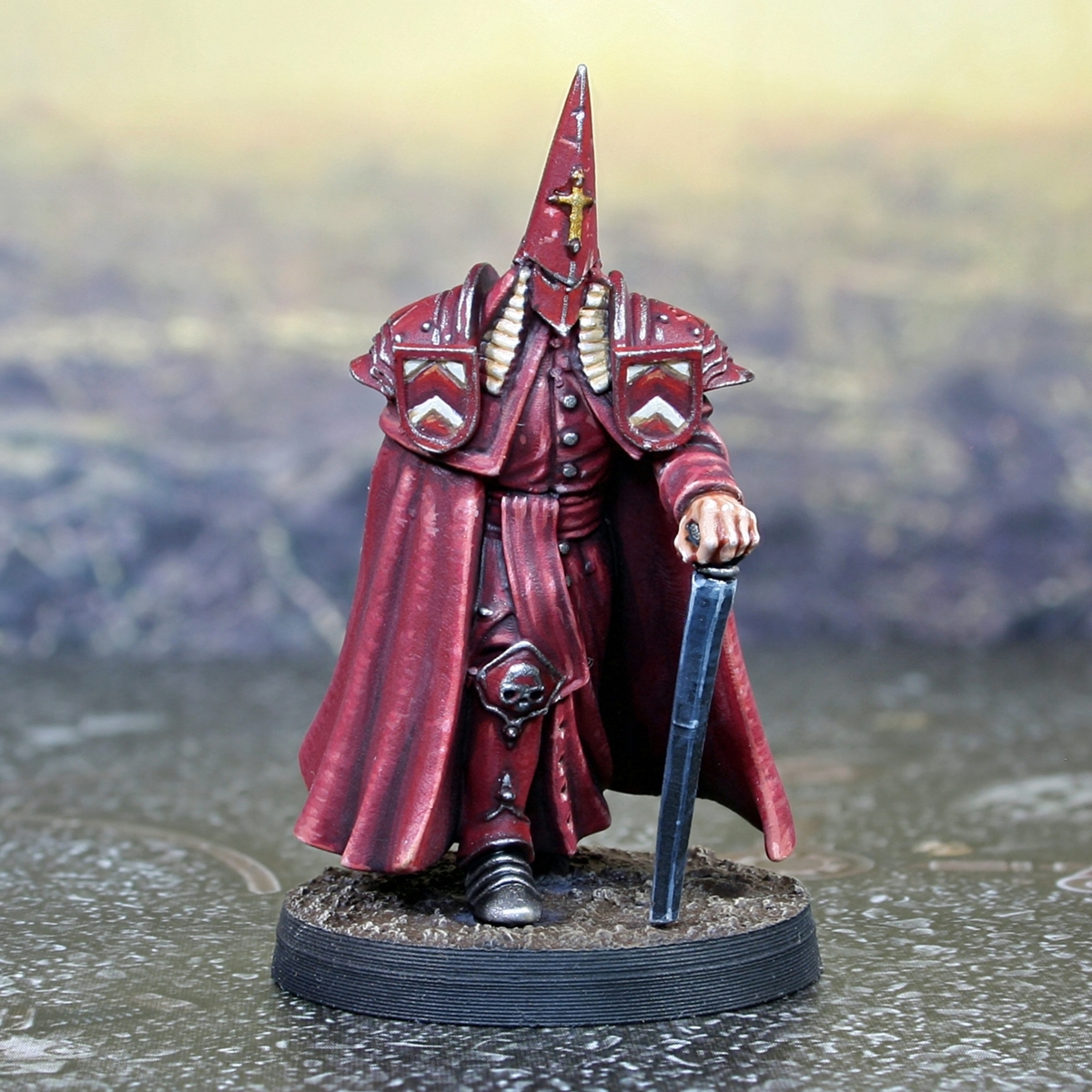
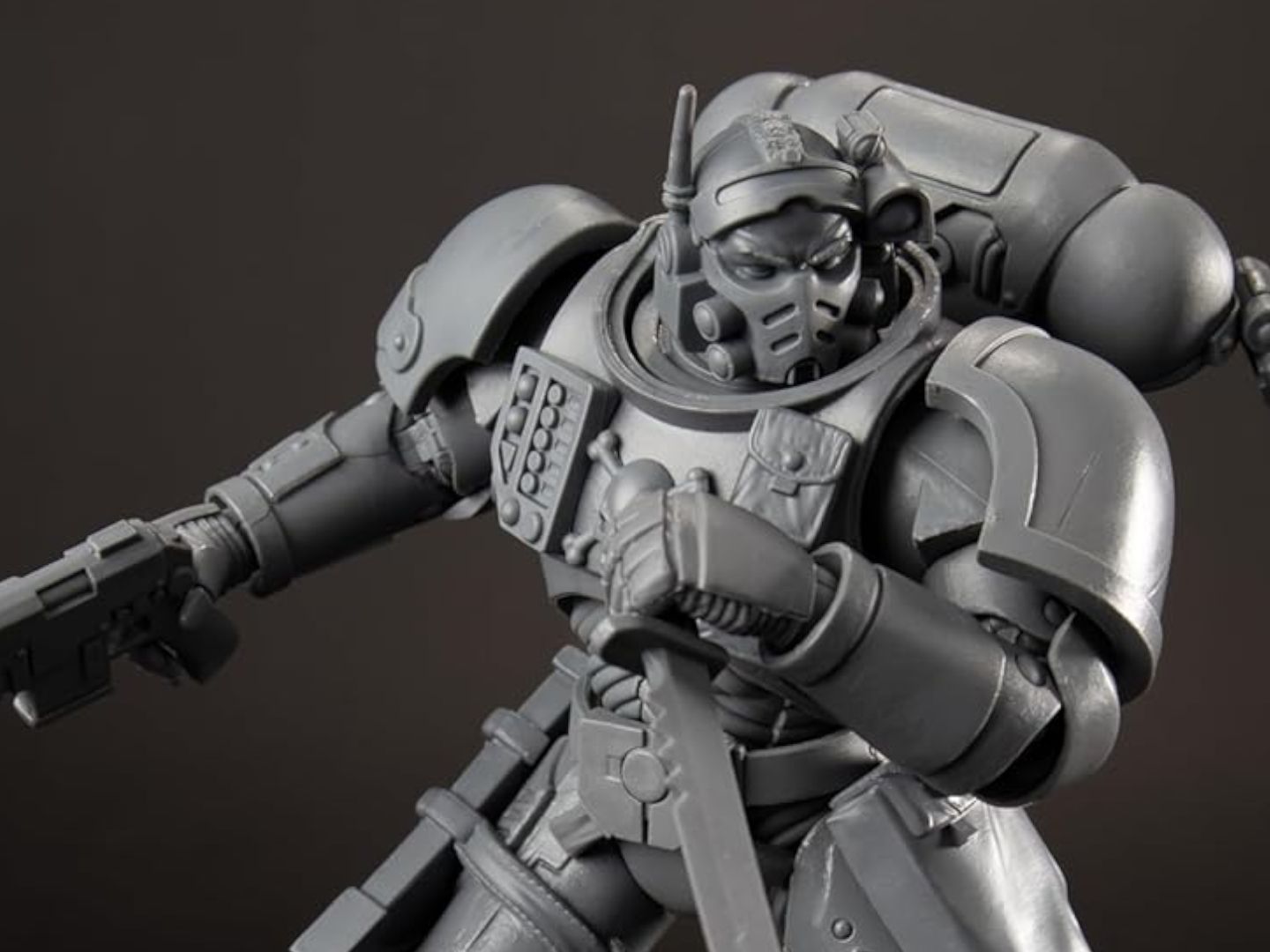
4
For larger battle scars, you can paint scratches manually.
Step-by-Step Scratch Technique
- Paint a thin line using dark brown or dark gray.
- Add a smaller silver highlight below the line.
- This creates the illusion that the metal has been gouged.
The key is subtlety. Too many scratches can make armor look messy instead of realistic.
Adding Rust and Age to Damaged Armor

Not all battle damage is fresh. Older armor often develops rust or corrosion.
Rust Color Palette
Base rust:
Dark Brown
Mid rust:
Orange Brown
Highlight rust:
Light Orange
Apply rust around scratches and damaged areas to simulate oxidation.
This technique works especially well for:
- undead armies
- ancient armor
- abandoned weapons
Fast Battle Damage for Warhammer Armies
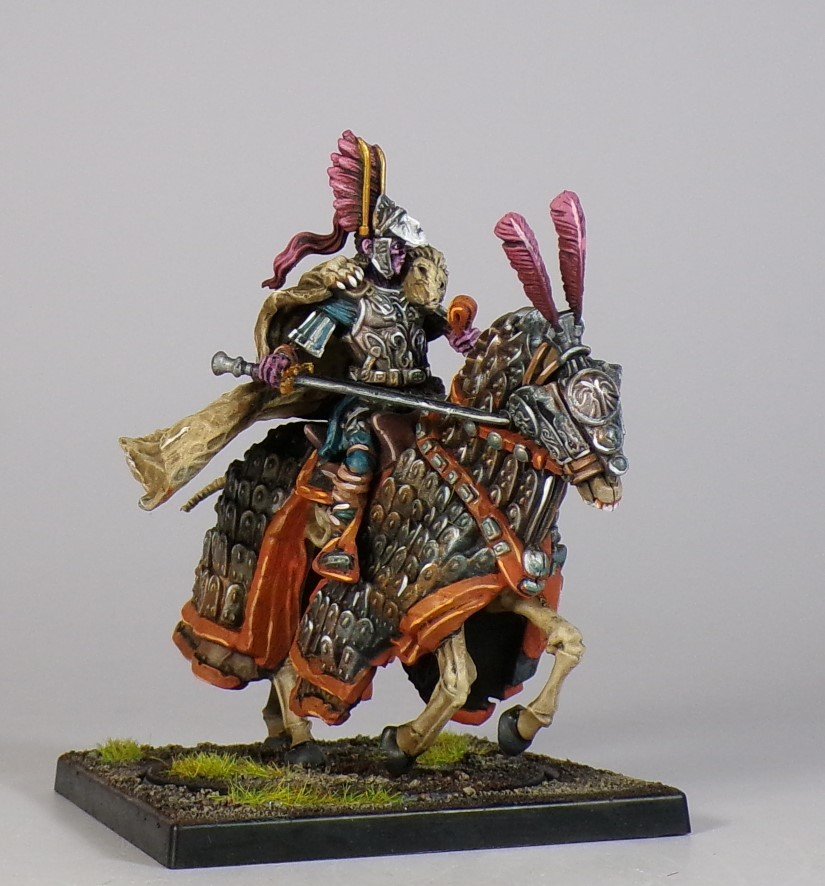
If you’re painting large Warhammer forces, detailed weathering on every model may take too long.
Instead, use a simplified workflow.
Fast Weathering Method
- Basecoat armor
- Apply dark wash
- Sponge dark brown damage
- Add quick metallic highlights
This method adds convincing wear while keeping the process efficient.
Efficient workflows are essential when painting entire armies. If you want to speed up your process, our guide on speed painting Warhammer 40K miniatures explores powerful techniques to paint armies quickly without sacrificing quality:
https://echoartstudios.net/speed-painting-warhammer-40000-miniatures-paint-armies-fast-without-losing-quality
Advanced Weathering Techniques
Advanced painters often combine several weathering methods.
Layered Damage
Use multiple techniques together:
- sponge chipping
- scratch painting
- rust glazing
This creates complex armor textures.
Edge Highlight Wear
Instead of bright highlights, use slightly desaturated metal tones to simulate worn edges.
If you want to push your painting to a higher level, explore professional techniques in our guide on advanced Warhammer miniature painting methods:
https://echoartstudios.net/advanced-techniques-for-painting-warhammer-40000-miniatures-from-intermediate-to-professional-level
Common Mistakes When Painting Battle Damage
Here are some mistakes to avoid.
Too much damage
Armor should still look functional.
Random scratches
Place damage where contact occurs.
Too bright metal highlights
Real scratches are often darker than expected.
Ignoring scale
Large scratches may look unrealistic on small miniatures.
Final Thoughts
Battle damage is one of the easiest ways to make miniatures feel more alive. Scratched armor, worn shields, and chipped paint tell the story of warriors who have fought countless battles.
Whether you’re painting a heroic Dungeons & Dragons character or a massive Warhammer army, adding subtle damage can dramatically increase the realism of your miniatures.
With practice, these techniques become fast and intuitive, allowing you to bring narrative depth and cinematic realism to every model you paint.
If you would like free D&D STL miniatures, visit our homepage and download yours now:
https://echoartstudios.net/